Thursday, June 28, 2012

Meet Our FBM Missionaries - Ken & Sarah Beckley

Ken & Sarah Beckley
Marc (15), Andrew (14), Benjamin (11), Stephen (8)


Today we will continue to acquaint you with our new FBM missionaries.  Ken and Sarah Beckley are currently serving the Lord in Mali with their four boys, Marc, Andrew, Benjamin, and Stephen.

Briefly share your salvation experience and your call to ministry.
Ken – I was raised in Mali – my parents served in Mali with Evangelical Baptist Missions (EBM) for 38 years. I attended elementary school at McCaba Academy boarding school in Niamey, Niger. Devotions one morning convicted me that I would go to hell if I died. After devotions, I asked my older sister how to be saved, and she helped me make that decision.
Growing up in Mali, seeing my parents' love for the people, gave me a desire to return to Mali and continue their work. The Lord confirmed that call my senior year in high school.

Sarah – My father was in a veteran’s hospital since I was four years old. However, my mom taught me that God could be the best Father I could ever have if I put my trust in His Son Jesus who died for me. I asked Jesus to be my Savior at the age of 5 in the privacy of my bedroom. Through the influence of many missionaries who came through our church and home, at a young age, I was burdened for lost people. My sophomore year in Bible college, knowing God was calling me to serve Him, I gave Him my life for missionary service.

What did you do before you were a missionary?
Ken – I attended Piedmont Baptist College in NC, where I majored in Missions. After graduation, I served a one-year internship in my home church, Bethel Baptist in Vestal, NY. The following summer I attended EBM’s candidate classes, and was on my way to Mali!

Sarah – After attending Baptist Bible College in Pennsylvania, I worked as a bank teller for one year while applying to ABWE. I served an internship in a church in Margate, FL. and also acquired my Masters degree in Teaching English as a Second Language, while awaiting a work permit to Kenya.

Tell us about your current ministry. Where are you and what are you doing?
Ken – We are serving in the small village of Guéné, in northern Bénin. We are assisting with the translation of the Bible into the Dendi language, as well as pastoring a small church in the town of Malanville.

Sarah – I am homeschooling our four sons. When in Niger last year, I enjoyed teaching a ladies’ Bible study at the national church we attended. Now in Benin, we are learning the differences between the languages of Mali, Niger, and Benin, and seeking to serve the nationals and missionaries in whatever opportunities God gives.

How long have you been serving as a missionary? 
27 years

Ken – I joined EBM in 1985, and began my ministry in Mali in 1990. My first term I served in the town of Timbuktu as a single missionary, helping in all the various ministries of the local church there.

Sarah – I joined the Association of Baptists for World Evangelism (ABWE) in 1985. In the early 90s, I served one year at an MK school in Portugal and one term in Kenya with a church planting team in Nairobi.

Ken & Sarah – In February 1994, during our first furloughs, we met at a missions conference at a mutually supporting church. Ken proposed in July, we were married in August, and in September we left for our next term in Mali!
For the next 15 years, we served the town of Diré, about 80 miles beyond Timbuktu! There we were involved in Bible translation and church planting. Because of problems of insecurity in the north of Mali, since 2011 we have been working in northern Bénin with the Ovenells, doing the same kinds of ministries we had in Mali.

What does a typical day look like for you while you are on the field?
Ken – No such creature exists!
Personal devotions, breakfast, and family devotions are usually done by 8am. Then I do Bible class with our boys, and help with Math if they need it. Ideally, I would spend the rest of the morning working on translation projects with our national translators, or on message preparation. In the afternoons, I try to concentrate on e-mails, financial records, and additional editing of translation projects I can do on my own. However, maintenance issues, other projects, and family matters quite often blow this plan to smithereens!

Sarah – Homeschooling 4 boys can sometimes go from 8:30 to 4:00. Often people come to the door; there are meals to prepare from scratch, ...

As you reflect on the years you have spent as a missionary, please share with us some of the highlights of your ministry.
Ken – Working closely with our Malian church leaders, training them to continue the work in our absence.  Making the Word of God available to the unreached Songhai and Dendi in their heart language, through print as well as multi-media resources.

Sarah – teaching Bible and literacy to women, coming to the end of a primer and hearing one woman testify of her recent faith in Jesus. After years of befriending a hostile, cynical wife of a Songhai Bible translator, I see her graduate from Bible school and hear that she first understood the Gift of God through our Bible memory classes.

What have been some of the biggest challenges that you have faced on the field?
Ken – The ingrained Muslim ideology of the local people, and the cultural pressure to conform and not change religions.  Not getting frustrated or discouraged by the lack of visible results or progress in our various ministries.

Sarah – not knowing how much and when to give to the many daily beggars that came to us.  Learning to trust God with the health of my children when we are hours away from reliable medical help

What person(s) has had the biggest influence on your life?
Ken – My parents, for modeling a ministry of genuine love and incredible patience in the face of incomprehensible cultures, intractable people, and an insufferable climate!

Sarah – A missionary family who invited me to travel with them on their home assignment, during tenth grade summer vacation.  My mother’s hospitality and her love for missions, brought into our home many missionaries who influenced me.  My youth pastor whose passion for serving God was contagious.

What would you say to encourage others (young or old) to consider full-time missions as a profession?
Ken – 
1) Think about the three things you most love spending your time doing. Without much effort, you will find a missionary who would love to have someone with at least one of those skills – and possibly all three – working at his side! I challenge you to check it out!
2) Why is it that 2000 years after Jesus, with all our churches, technology, and wealth in America, 2 billion people have still not heard the Gospel, while 90% of our missionaries are going to already evangelized people groups?

Sarah –There’s no greater joy than to know you are in the center of God’s will. “The will of God will never lead you, where the grace of God cannot keep you” (Dr. Billy Martin). I’ve found that to be so true in my life.

Please share some specific prayer requests with us.
· Wisdom in prioritizing ministry, tasks, and family, giving each their proper amount of time and energy.

· Balancing homeschooling of 4 boys with other ministry demands.

· Strength, good health and protection in daily 100+ temperatures, with snakes, scorpions, malaria, etc. a daily concern.

· Wisdom to make the best education choices for our children

What are some current needs that you have and what can we do to help meet those needs? 
With no electricity here, we are trying to “get a handle” on working with solar power. We still don’t understand all the vagaries involved, and could use some expert advice in some areas!

Meet Some of Our Other FBM Missionaries:

This Post Sponsored by:
Monday, June 25, 2012

Through the Eyes of the Volunteer (by Alona Hradec)


Vacation Bible School are three words that I have not used, since I attended only once in the second grade.  But this past week has proven to be one of the best times I have had working with children and learning from each of them and other leaders.  I would like to share how this year's VBS looked through this worker's eyes.  There are four lessons that I learned from working VBS this year.

Lesson 1 ~ Preparation
I learned that there is so much that goes on behind the scenes for Vacation Bible School.  The many weeks worth of preparation is one of the keys to a successful VBS.  I had the chance to help prepare for the week of VBS.  There were always copies, copies, and more copies, but to see children's faces as they learn the verses on a coloring sheet made all the paper cuts and paper jams worth it.  Candy and trinkets were sorted and put into "treasure bags;" so that when a child would answer a question correctly, he would win a little prize.

Lesson 2 ~ The Value of Teachers
This past week I was able to observe one of the classes (5-6 grade girls) one day and then teach the class the next day.  I will be completely honest in saying that I am not a good public speaker, but I realized that these children are like sponges because they soak up everything a teacher says.  They cling to every last word of the lessons.  When they are quizzed over the lessons, they would tell the correct answer and the reason behind it.  Teachers truly do have the ability to shape and mold the children they teach.  I'm truly grateful to have seen teachers, who teach God's Word with such passion this past week.

Lesson 3 ~ Bible Glasses & Dinosaurs
This year's VBS was focused on God's incredible creation.  We spent the week "riding" on the Creation Coaster of Incrediworld.  Each day was spent learning that as Christians, we are to view the world through our "Bible Glasses" (Christian worldview) to determine what was true and right.  On Friday, the main topic was dinosaurs.  I knew these animals were huge, but I had never had a visual aid to help me wrap my brain around how humongous they truly were.  Mr. Stephen showed the entire group of children and leaders that one dinosaur would have stretched from one corner of the gymnasium to the other, which would cut the gym (rectangle) into two triangles.  Wow!  He then showed a diagram that had this same dinosaur and a 6 foot man standing in front of it.  The man's head came to middle of the dinosaur's leg, between its knee and foot.  It was incredible!  Our God is so amazing and powerful!

Lesson 4 ~ Power of Prayer
Vacation Bible School may only be for one week, but what these children have learned goes with them forever.  I found myself praying multiple times a day for each of the children that came daily.  This past week they have been surrounded by Biblical truths and godliness, but now they are headed back to their homes and communities.  I should pray for them even more as they go back to be the light in the darkness of this world.  Some are growing up in Christian homes, where it is easier to choose right and be light, but others are the only light in their families.  I ask that you, too, would keep all of these children in your prayers daily.

That was my VBS week: an opportunity to learn and grow.  I can't wait until next year!  :)

Wednesday, June 13, 2012

To Fathers - Avoid the Path of Grief and Heartache


Last November, Pastor preached a message from the life of David entitled "The Painful Path of Grief and Heartache."  This message contained some powerful reminders for men.  So, with Father's Day approaching, I thought it would be good to take another look at it. 

In his message, Pastor reminded us that sin always brings consequences.  As fathers, it is so important for us to remember this every day.  All of our sin has consequences.  Our sin affects the everyone around us. 

Pastor said,
"The pain of the reaping always eclipses the pleasure of the sowing!"

In his message, Pastor identified 8 consequences that were a direct result of David's sin.
  • A Son Dies
  • A Brother Violates a Sister
  • A Brother Hates a Brother
  • A Brother Murders a Brother
  • A Son Rebels and Runs Away
  • A Son Leads a Conspiracy
  • A Son Shames a Father
  • A Friend Murders a Son
Unbelievable.  Dads, remember, sin will destroy your marriage and your family.  

 Pastor closed his message with three reminders.
  1. David's haunting cries calls to a wife or husband allured by the fantasy of a secret affair.  His cries call to the parent drawn to the busyness and rush of life that leaves little or no room for children.  His cries call to anyone who is tempted to exchange their future peace for the fleeting pleasures of sin.  Let me ask:
      
    • Are the selfish choices we so easily and casually cast to the wind, worth the whirlwind that waits to strike us and the ones we love?
       
  2. If you are starting to veer into the path of carnality, thinking that you can do what you want and God's grace will cover your tracks - STOP and THINK again.  Yes, God's grace cancels the debt of sin, but it does not cancel the consequences of sin.  Yes, God's forgiveness is sure, but so is sin's painful fallout.  Before you make a terrible decision ask yourself:
      
    • How many innocent people will suffer in the wake of my sin?
        
  3. The best time to brace yourself and your house against a storm is before the rain starts falling and the strong winds begin to howl.  Likewise the best time to protect yourself against the stormy consequences of sin is before temptation strikes.
On this Father's Day, choose to avoid the painful path of grief and heartache!  


This Post Sponsored by:


Monday, June 11, 2012

Can We Trust the Bible? Canonicity (by Lou Gentry)

 
Canonicity: Definition - There are numerous definitions in print on this subject; and while the actual combination of words for each may differ, most have developed their definition from the root word kavwv (Greek) meaning rod, ruler, standard for measure. Theologically, the word is applied as a rule, standard or norm. Webster’s Dictionary defines it as “a criterion or standard of judgment.”
What then were the “standards for measure” or “standards of judgment” which determined what writings were considered canonical scripture? There were five such standards:
  • Was it written by a man of God? A prophet? An apostle? An associate of an apostle?  (Heb. 1:1; 2 Peter 1:20-21)
    • With the possible exception of Hebrews, all books included in the Bible were written by either a man of God (David, for example), prophet, apostle, or an associate of one of these.
        
  • Is the writing authoritative? Does it claim to be of God and/or were the writers confirmed by an act of God? (John 3:2; Acts 2:22; Heb. 2:3)
      
  • Is the writing authentic? Does it tell the truth about God? (Deut. 18:22; Gal. 1:8)
    • Does it contradict previous truth?  If so, it was not accepted.
        
  • Is the writing dynamic? Does it have the Power of God? (Heb. 4:12)
      
  • Was the book received? Was it accepted by the people of God?  (Dan. 9:2; 1 Thess. 2:13; 2 Pet. 3:15)
    • Was it circulated and utilized by the followers of God?
From the definition and application of these standards, a good definition of Canonical Scripture can be developed:
a document or corpus of documents containing a permanent authoritative record of divine revelation.


  • Our next article looks at the Progessive Development of the OT Canon.


  • Return to our Introduction Post to see a list of all articles in this series.

  • This Post Sponsored by:

    Wednesday, June 6, 2012

    The Shocking Truth About Piano Lessons (by Stephen Simpson)

    (Photo by Paul Cleveland)

    I am a piano teacher.  By my calculations, I have taught almost 70 different students.  They have been of varying ages and abilities.  Some have taken lessons for a short time and others have taken for years.  In my experience, I have come to realize one shocking truth about piano lessons.
    My job as a piano teacher is not to teach you how to play the piano. 
    This may seem scandalous to you given the significant amounts of money that parents have paid me over the years to teach their children.  But, the truth must come out - I am not ultimately trying to teach you how to play the piano.

    My primary goal is much different.  Here is my secret.  I am trying to teach you how to practice.  Most people that I encounter do not know how to practice.  They know they should practice and they may think they know how to practice.  I have seen too many students spend hours practicing only to find that their practicing has accomplished very little.  They come to their lesson and tell me that they have practiced two hours over the previous week.  However, when I listen to them play their pieces, it becomes obvious that they did not know how to practice because their pieces have improved very little, if at all.

    You see, when I teach a 10 year old boy to play the piano, I am thinking about his future.  I am thinking that some day he will be an adult.  I am thinking that someday he will be a member of a church who may need a pianist to play for their choir.  Even though he may work as a manager at Publix, I want to have taught him the skills necessary to be a useful accompanist at his church.  This is why it is so important for me to teach him how to practice.  If I simply teach him to play a piece of music, I have not necessarily taught him any of the skills required in learning new music.  I have not taught him to read music.  I have not taught him to identify the problems he is having with the music.  I have not taught him how to solve the problems he is encountering.

    So, I firmly believe that if I can teach you how to practice, then I have taught you a useful skill that you can use for the rest of your life.  In my opinion, playing a piece of music is easy.  Understanding how to practice efficiently and effectively is very difficult - which is why I spend so much time trying to teach this skill.

    There you have it, the shocking truth about piano lessons is that I am not actually trying to teach you to play the piano.  I am trying to teach you how to teach yourself!

    This Post Sponsored by:

    Monday, June 4, 2012

    Start Birding Today: 13 Questions for Lee Dusing

    (Painted Stork by Dan's Pix)

    We hope that you have enjoyed Lee's series, Start Birding Today.  She has been attempting to show us that birding is something that anybody can do.  Whether you only look at the birds while you are driving or if you spend hours wandering through Circle B, you can enjoy the creativity of our great God.

    As I have read through Lee's posts I have had a few questions that have come to my mind.  I thought I would ask them to Lee through a post so that you all can read her answers.

    1. When did you first start birding?
      I think I always enjoyed critters, but when we lived in Tamarac, FL there was a small park nearby that had a lake, trail and a naturalist that gave bird talks. Living in the Fort Lauderdale area, there were lots of birds to view.
    2. Did anyone teach you how to go birding?
      The naturalist became my friend and also became my mentor. She taught me about birdwatching from a one on one basis. 
    3. Do you run across people who see the diversity in the birds and still deny that an intelligent creator is behind it all? If so, what are their common arguments?
      Go to any birding club (Audubon) or a Birding Festival (Titusville) and you will hear all about natural selection and millions of years. You hear about how birds evolved from dinosaurs. Given enough time, they figure it all came about. 
    4. What is your favorite bird? You can only pick one :)
      That’s hard! It used to be the Painted Bunting, but now I have seen so many, I love them all. 
    5. Share with us two things you have learned about God through birdwatching.
      The Lord has such Omniscience that I am amazed when I see how He has provided specific beaks, for instance, for each bird to be able to eat what it likes. How He has created their shapes to live in the environment they do, Penguins versus Hummingbirds. Every bird was so provided for by the Lord when they were being designed.

      God’s Love is so great to the birds and His care about them overwhelms me. If He knows when a sparrow falls, then He knows not only the number of hairs on my head, but every need, desire, problems, etc. and still Loves Me! 
    6. Recently, Swans have been in the news. In Lakeland, someone has been stealing swan eggs from Lake Morton. Why are Swan eggs so valuable?
      I saw that article and had heard about it a few weeks earlier. Apparently there must be a trade for them somewhere. There are “poachers” all around the world that illegally take birds for collectors and some for their feathers or to eat. They just found out he took them to eat them.
      http://articles.orlandosentinel.com/2012-05-18/news/os-swan-eggs-stolen-scrambled-eaten-20120518_1_eggs-lakeland-report-states 
    7. When I think of birding, I am often overwhelmed. I hear you talk about 185 species that have been seen at Circle B and of the thousands of species worldwide. I can name maybe 10 or 15 different species of birds. What would you say to someone who feels birding is too overwhelming?
      Who says you have to name all the birds? If you can name 3 and enjoy the rest, why worry? (Do you know every name of the folks that come here to church? Does that stop you from coming or cause you to be overwhelmed?) 
    8. Tell us about the best birdwatching trip you have ever been on.
      Wow! They are all great, but as for in the wild, we won a birdwatching trip by Reinier Munguia (professional photographer) and he introduced us to Circle B (46 species seen), Lakes Morton (10 species) and Parker. He gave us birding tips and photography tips for Dan. We ended up feeding Florida Scrub Jays and Purple Gallinules at parks in Lakeland. We saw a total of 56 species that day.

      Best Zoo trip was to the National Aviary in Pittsburg, PA about 2 years ago. We were taken by staff all over the place and behind the scenes. 
    9. How many different birds are on your life list?
      My official Life List has 235 species, but that does not count the birds that I have seen in Zoos, which you can’t count by some, but I still saw the birds. My Unofficial Life List is around 400. I have also seen many more birds that I could not name. 
    10. Is there any other animal that you know of that has the wide variety and diversity of birds? Why do you think this is?
      I can’t think of any animals, maybe insects. I think birds are so varied because each one has a role to fill whether it is pollinating flowers by Hummingbirds and others, or picking bugs off of animals like an Oxpecker, or cleaning up garbage like Vultures and Buzzards. The list goes on and on. They can fly so they have spread around the world and they are obeying the Lord's command to reproduce and fill the earth. 
    11. What do you hope is the result of this series of posts?
      I hope that this series has motivated an interest and an awareness of the birds and that they will take opportunities to watch the Lord’s fantastically created birds. And maybe, we might have some more to go out birding with us. I am not an expert, but I am willing to share what I have learned from others and Dan is willing to share photography tips.
    12. Do you ever take people along with you on your birdwatching trips and teach them the tricks of the trade?
      I have taken a few and am thinking that we need to plan a “Start Birding Today” trip soon. We could meet and start simple and go from there. 
    13. How can someone contact you if they have questions about birding?
      Call us, number in church directory or e-mail me at Lee (at) leesbird.com.

    Painted Bunting
    Other Posts in our Start Birding today Series:


    This Post Sponsored by:


    Wednesday, May 30, 2012

    Carrying on the Legacy (by Matthew DelValle)

    John Piper & RC Sproul (Ligonier Ministries) 
    This is my final post in a series I began over a year ago on “Two Men I Thank God For.” I am so thankful for the ministries of R.C. Sproul and John Piper. They have shifted my focus time and time again away from myself to the glory of God and the splendor of his holiness (Ps. 29:2, 115:1). These men have what I call a holy passion. Their lives and ministries are consumed with the reality of a holy God. This is what drives them. This is the legacy they will leave. And this is the legacy I want to continue.

    It is the job of every generation of pastors to continue the legacy of faithful ministry. Paul told Timothy, “What you have heard from me in the presence of many witnesses entrust to faithful men who will be able to teach others also” (2 Tim. 2:2). I want to be one of those faithful men. I want to be entrusted with the Scriptures and teach others the same glorious truths about our sovereign God and our glorious Christ that I have heard, not only from R.C. Sproul and John Piper, but from Pastor Osborne, Pastor Pete, Pastor Jerry, Pastor Bobby during my time at Faith, and now here in Louisville, from Pastor Tom Schreiner, Pastor John Kimbell, and all my professors at Southern Seminary. This is why I am in Louisville going to seminary: To learn to teach others also. I want to carry on the legacy of the faithful men who have taught me.

    Pastors: “God-Besotted” Men

    What does it take to become a faithful pastor? This is a question I often ask myself. Taking into account varying levels of giftedness, how does one reach the sustained faithfulness of a R.C. Sproul or a John Piper or a Pastor Osborne or a Tom Schreiner or an Albert Mohler? I think what it takes most of all is a radical focus on God above everything else, a striking God-centeredness of life. John Piper writes:

    Our people need a God-besotted man. Even if they criticize the fact that you are not available at the dinner on Saturday night because you must be with God, they need at least one man in their life who is radically and totally focused on God and the pursuit of the knowledge of God, and the ministry of the word of God.

    How many people in your churches do you know that are laboring to know God, who are striving earnestly in study and prayer to enlarge their vision of God? Precious few. Well then, what will become of our churches if we the pastors, who are charged with knowing and unfolding the whole counsel of God, shift into neutral, quit reading and studying and writing, and take on more hobbies and watch more television?

    In other words, it takes a holy passion. It is no surprise to me then that every time I visit home and talk to Pastor Osborne and update him on my seminary studies, he always tells me the same thing: “Don’t lose your passion!” Why does he say that? Out of all the things he could say, he repeats these precise words. What is he getting at?

    I think he recognizes, rightly, that the most important thing a pastor must be for his people is “a God-besotted man.” He must be the one man who will forsake other legitimate uses of time in order to read and study and write about the things of God. His entire pulse of life beats to the rhythm of knowing God more truly and loving God more fully. And this, it is known, is the secret to serving God more faithfully.

    Satan’s Quest to Kill Passion

    But I think another truth Pastor recognizes is that passion can be lost. It can dry up. We can lose our first love. The love of many can grow cold. And that’s why Pastor’s words to me are both an admonition and a warning: An admonition to keep fanning into flame the fire of passion for God, and a warning to not allow the Enemy to douse the fire with his deceitful snares. Therefore I must not become lukewarm in my affections for God lest I gag Jesus and he spit me out of his mouth (Rev. 3:16).

    Seminary is an academic institution. Seminary exists to give people an education. It does not exist to give people experience. That is what the local church is for. There are two training institutions for pastors today: The local church and the seminary. Both are necessary. But each has its own function. The seminary does “head” stuff really well. It equips men and women to think well and to think rightly about the Bible and theology. Thank God for seminaries!

    But there is a difference between loving the Bible and loving its Author. All my study should serve to help me love God more. The final destination for truth is not the brain; it is the bloodstream. The greatest commandment is not to know right things about God; it is to love God. We fill our heads to fuel our hearts. Again, Dr. Piper says it best:

    Right thinking about God exists to serve right feelings for God. Logic exists for the sake of love. Reasoning exists for the sake of rejoicing. Doctrine exists for the sake of delight. Reflection about God exists for the sake of affection for God. The head is meant to serve the heart.

    So seminary can be a great place if used correctly. But seminary can also be a dangerous place. Seminarians must be careful. Satan can misuse the seminary to produce proud people. He knows that “knowledge puffs up” (1 Cor. 8:1). And therefore, Satan will try to short-circuit my study. Satan wants nothing more than to snuff out the heart-adoration of Adonai with the heady atmosphere of academia. He wants to produce professionals, not pastors; proud pedants, not poor-in-spirit preachers.

    Pray for Me

    What must I do then? How can I cultivate and sustain a holy passion? I must stay on my knees. I must go to God in prayer every day, bending his arm to change me and make me more humble, make me more loving, make me more Christlike. And I echo the point of my previous post: The greatest asset of any pastor (and seminarian!) is people who pray for him.

    So brothers and sisters, I ask you: Pray for me. Pray for my time here in Louisville at Southern Seminary. Pray that I will study in the strength that God supplies. That I will not just affirm truth with my head but adore truth with my heart. That theology will lead to doxology. That I will work diligently to worship deeply. That God will make me a pastor, not a pedant. That I will always remember that systematic theology did not die on the cross for my sins; Jesus did. That I will stay free from deceitful desires of the flesh and live a life that is above reproach. That I will be faithful and carry on the legacy of many faithful pastors.

    I covet your prayers. Thank you for your faithful intercessions on my behalf. I cannot thank you enough.

    “I pray that the great, initial passion of our hearts at the beginning of formal theological training would be the great, persevering passion of our hearts at the end, both of our training and of our lives. That we would say, we have not studied nor have we lived for ourselves, but for him who for our sake died and was raised (2 Corinthians 5:15).” ~ Jonathan Parnell

    Posts in This Series:

    Support FBC by Visiting:

    Monday, May 28, 2012

    Start Birding Today: Enjoy The Lord's Paintbrush - Zoos

    Mandarin Duck (Aix galericulata) by Dan at Zoo Miami
    Mandarin Duck (Aix galericulata) by Dan at Zoo Miami
    I trust you are enjoying our "Start Birding Today!" series. We have been trying to motivate you to go out and observe the many birds around you. This is the second article about "Enjoying The Lord's Paintbrush" Click for first one. Seeing as our subtitle is "Birdwatching from a Christian Perspective," I want to do a few articles that you won't see in most birding books. We believe that the world and all that its critters were created by the Lord and not evolved.
    For thus says the Lord--Who created the heavens, God Himself, Who formed the earth and made it, Who established it and did not create it to be a worthless waste; He formed it to be inhabited--I am the Lord, and there is no one else. (Isaiah 45:18 AMP) O LORD, how manifold are Your works! In wisdom You have made them all. The earth is full of Your possessions— (Psalms 104:24 NKJV) Have you not known? Have you not heard? The everlasting God, the LORD, The Creator of the ends of the earth, Neither faints nor is weary. His understanding is unsearchable. (Isaiah 40:28 NKJV)
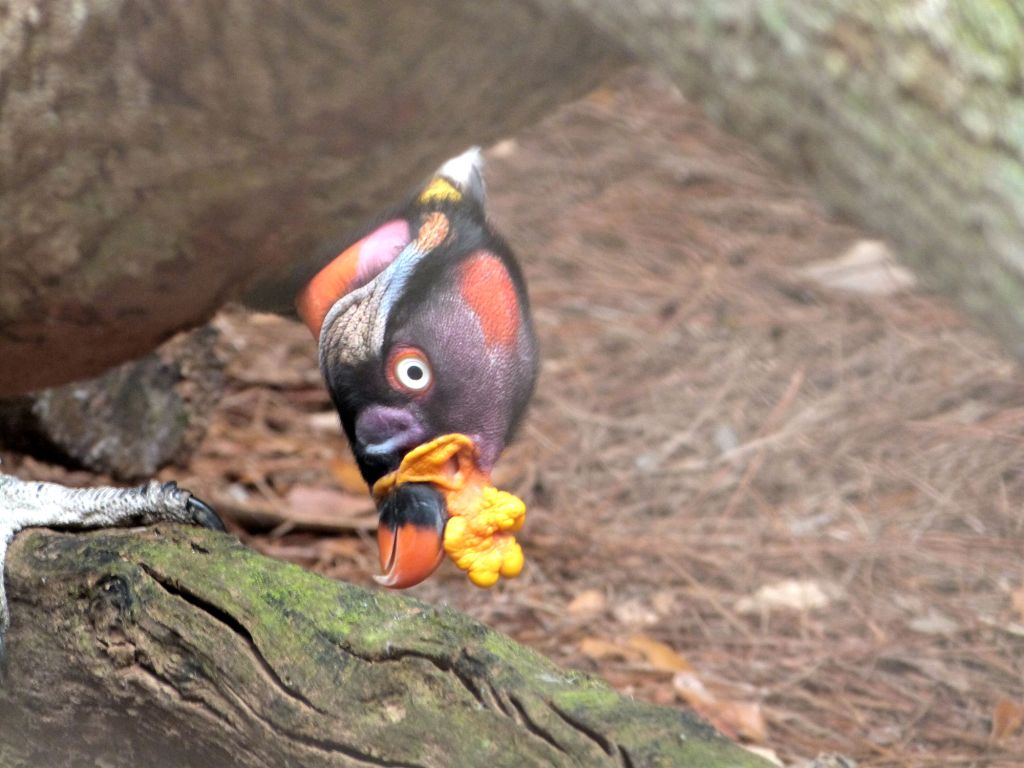
    King Vulture (Sarcoramphus papa) by Lee at Brevard Zoo
    King Vulture (Sarcoramphus papa) by Lee at Brevard Zoo 
    While creating the birds, the Lord has used a fantastic array of colors and designs. I can imagine Him using a fine brush when some of my favorite birds here in America were being dressed for "His pleasure." Zoos are a fantastic place to see birds that you would have to travel to other countries to see. It is more economical to travel to a Zoo nearby.

    The birds at zoos are well cared for and many are being bred to preserve their species. Some birds are so endangered by loss of habitat and other causes, that the only birds left are the ones in the zoos or preserves. We are fortunate to have some very super zoos right here within a day's drive and our country has many others that are first class also. The birds seen here in this article are some of the fantastically painted birds created by the Lord that Dan and I have seen in Zoos.

    Look at the Mandarin Duck at the top. He is related to the Wood Duck up there last week. Another beautiful bird that likes to hide and make it difficult to get a good photo of him. The male is the colorful one and the female is a plain brownish to protect her while on the nest. She is in the background and you can see her painted eyelines.

     Now if you have an ugly vulture and want to pretty it up, look at this design on the head of a King Vulture. 

    King Vulture (Sarcoramphus papa) by Lee at Brevard Zoo
    King Vulture (Sarcoramphus papa) by Lee at Brevard Zoo 
    Here are a few more beauties by their Creator: How about these feathers on the Scarlet Macaw? 
    Scarlet Macaw (Ara macao) Feathers - Brevard Zoo
    Scarlet Macaw (Ara macao) Feathers - Brevard Zoo
    Scarlet Macaw (Ara macao) by Lee Brevard Zoo
    Scarlet Macaw (Ara macao) by Lee Brevard Zoo
    Or the gorgeous Blue-and-yellow Macaw?

    Blue-and-yellow Macaw (Ara ararauna) at Brevard Zoo
    Blue-and-yellow Macaw (Ara ararauna) at Brevard Zoo
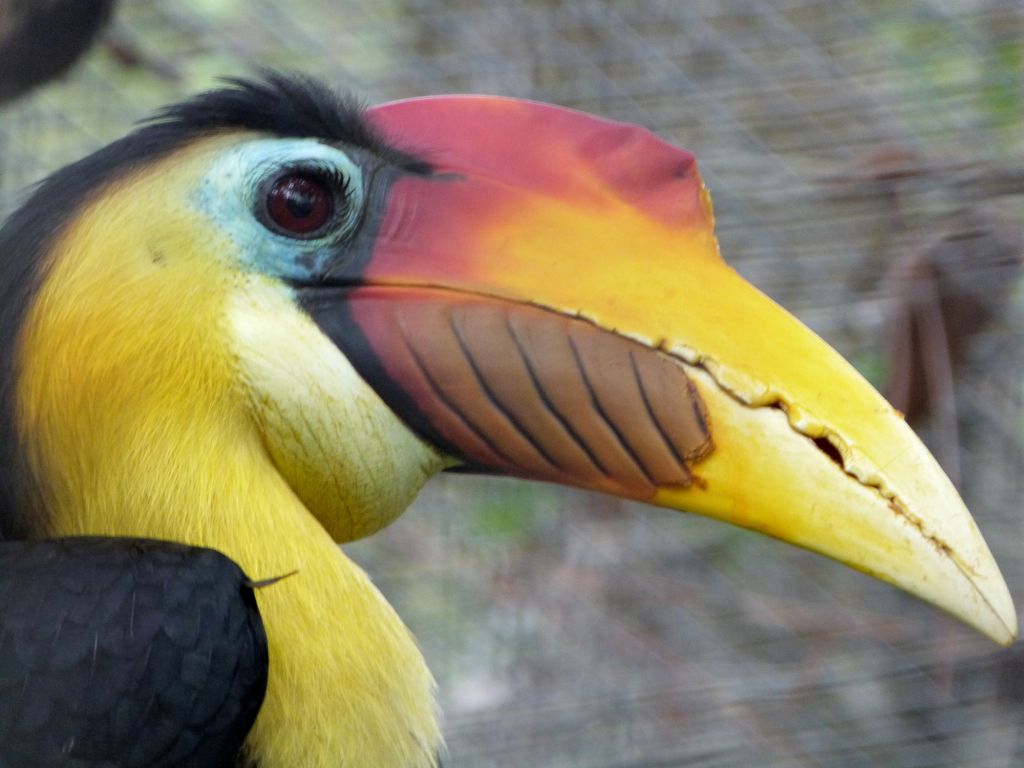
    My favorite "painted" bird at the Brevard Zoo was this one:

    Wrinkled Hornbill (Aceros corrugatus) Brevard Zoo by Lee
    Wrinkled Hornbill (Aceros corrugatus) Brevard Zoo by Lee 
    Wow!!!

     Down in Miami at the Wings of Asia aviary at Zoo Miami we were able to see these beautiful birds:

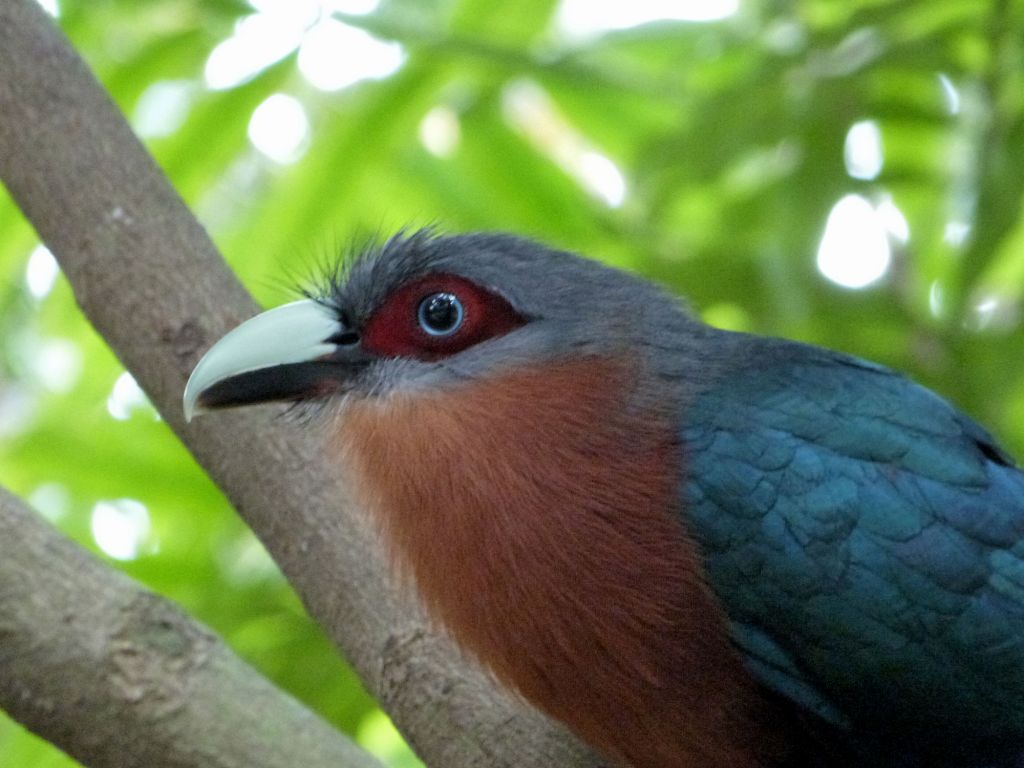
    Chestnut-breasted Cuckoo (Cacomantis castaneiventris) Wings of Asia
    Chestnut-breasted Cuckoo (Cacomantis castaneiventris) Wings of Asia 
    Or this cool bird which I call "Joe Cool." Looks like the Lord painted sunglasses on it.

    (Black and White) Sumatran Laughingthrush (Garrulax bicolor) by Lee
     (Black and White) Sumatran Laughingthrush (Garrulax bicolor) by Lee 
    An Inca Tern seen at the National Aviary in Pittsburgh, PA:
    Inca Tern by Dan at National Aviary
     Inca Tern by Dan at National Aviary
    This Victorian-crowned Pigeon is at most of the zoos we have visited. They look like lace was placed on its head.
    Victoria Crowned Pigeon by Dan at National Aviary
    Victoria Crowned Pigeon by Dan at National Aviary
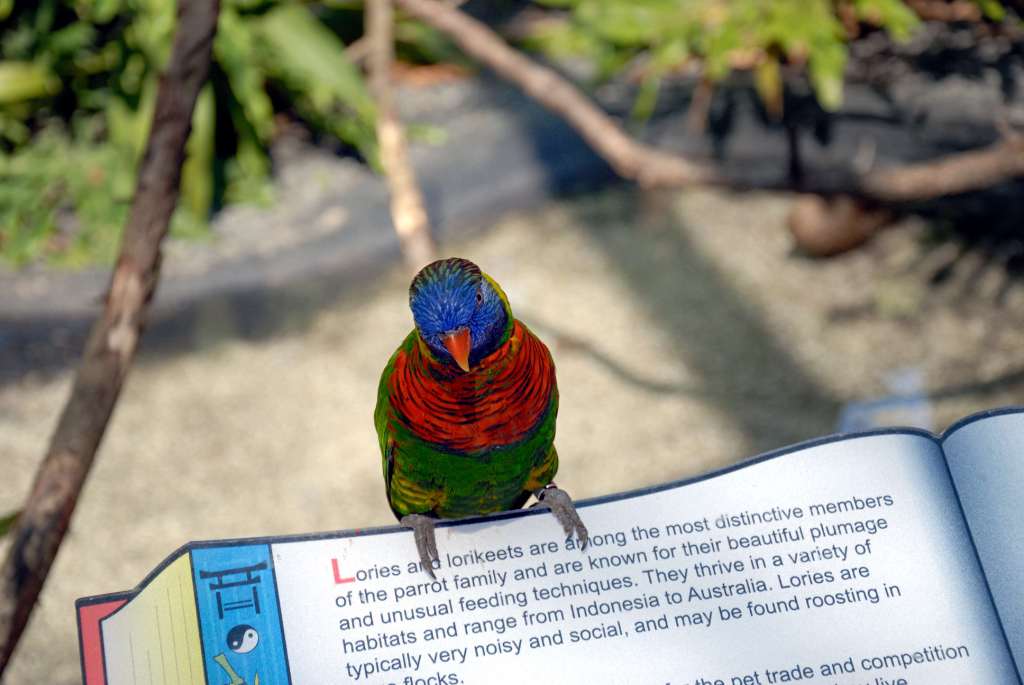
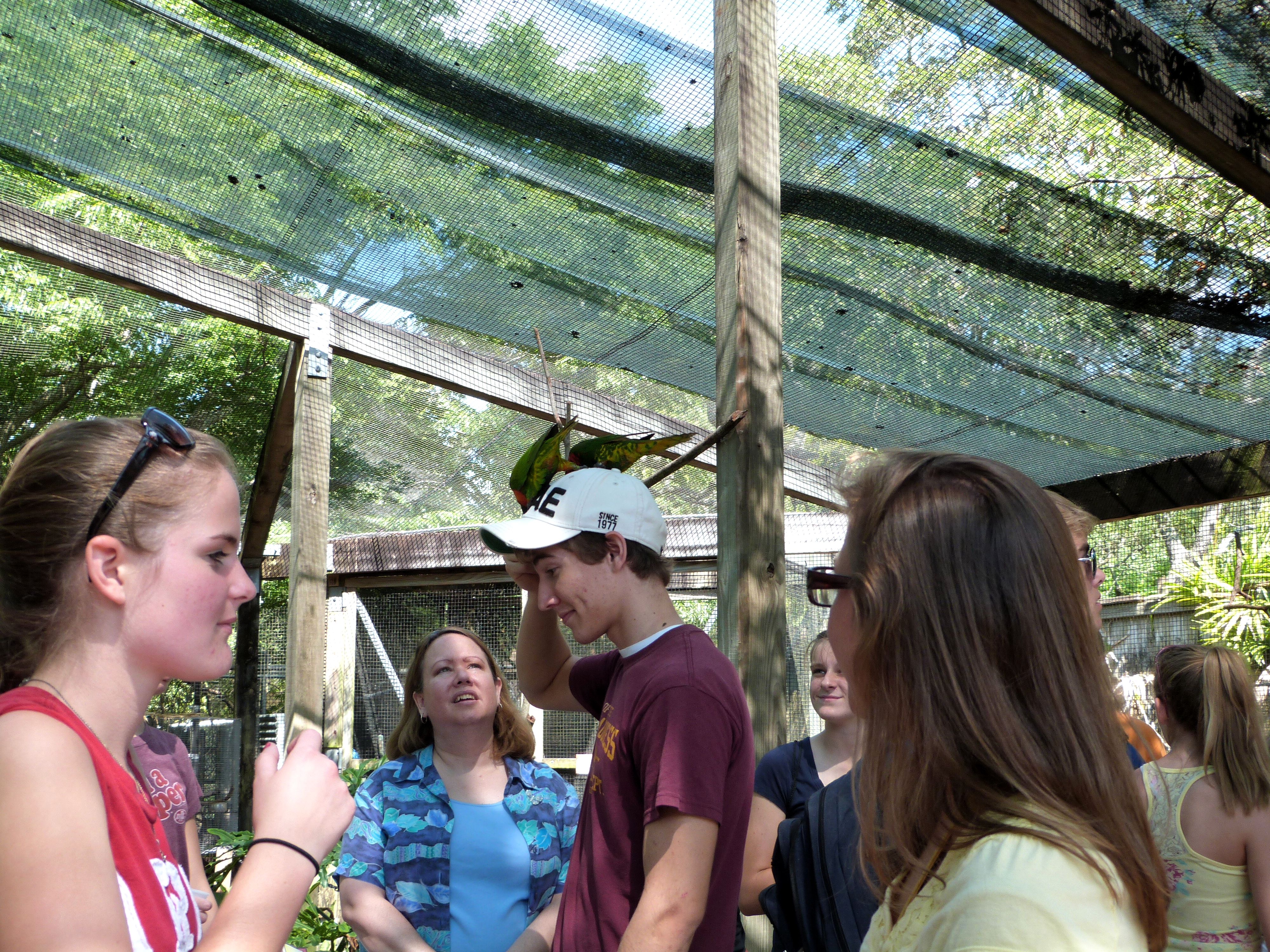
    Back here locally to the Lowry Park Zoo in Tampa, there are many birds to enjoy. We met a group of Homeschoolers over there on Friday and had the pleasure of introducing them to my avian friends there. They enjoyed all of them, but had the most fun feeding the beautiful Lorikeets.

    Rainbow Lorikeets at Lowry Park Zoo
    Rainbow Lorikeets at Lowry Park Zoo
    Homeschoolers at Lowry Park Zoo
    Homeschoolers at Lowry Park Zoo
    Rainbow Lorikeet at Lowry Pk Zoo by Dan
    Rainbow Lorikeet at Lowry Pk Zoo by Dan

    Homeschoolers at Lowry Park Zoo
    Homeschoolers at Lowry Park Zoo
    There are many more that could be shown, but if you"Start Birdwatching Today" with a trip to a zoo or somewhere similiar, you might just be surprised by the beauty and magnificence of the birds. Then thank the Lord for His many blessings to us.
    Oh, the depth of the riches both of the wisdom and knowledge of God! How unsearchable are His judgments and His ways past finding out! (Romans 11:33 NKJV)

    Other Posts in our Start Birding today Series:

     
    Support FBC simply by visiting Westminster Books

    Monday, May 21, 2012

    Start Birding Today: Enjoy The Lord's Paintbrush - U.S.

    Wood Duck by Dan at Lake Hollingsworth
    Wood Duck by Dan at Lake Hollingsworth
    I trust you are enjoying our "Start Birding Today!" series. We have been trying to motivate you to go out and observe the many birds around you. Seeing as our subtitle is "Birdwatching from a Christian Perspective," I want to do a few articles that you won't see in most birding books. We believe that the world and all that its critters were created by the Lord and not evolved.
    For thus says the Lord--Who created the heavens, God Himself, Who formed the earth and made it, Who established it and did not create it to be a worthless waste; He formed it to be inhabited--I am the Lord, and there is no one else. (Isaiah 45:18 AMP)
    O LORD, how manifold are Your works! In wisdom You have made them all. The earth is full of Your possessions— (Psalms 104:24 NKJV)
    Have you not known? Have you not heard? The everlasting God, the LORD, The Creator of the ends of the earth, Neither faints nor is weary. His understanding is unsearchable. (Isaiah 40:28 NKJV)
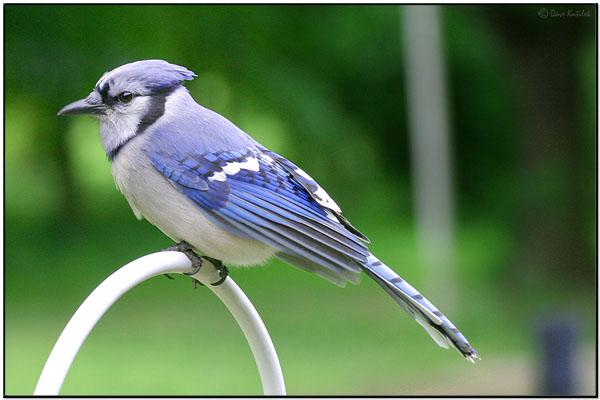
    Blue Jay (Cyanocitta cristata) by Daves BirdingPix
    Blue Jay (Cyanocitta cristata) by Daves BirdingPix
    While creating the birds, the Lord has used a fantastic array of colors and designs. I can imagine Him using a fine brush when some of my favorite birds here in America were being dressed for "His pleasure." Look at this Blue Jay, seen in most parts of our country or his cousins out west. Can't you just imagine a painter or artist putting the colors and marks on him?

    His cousin the Green Jay from down in the valley of Texas. 


    Green Jay (Cyanocorax luxuosus) by S Slayton
    Green Jay (Cyanocorax luxuosus) by S Slayton
    Or, how about a Painted Bunting that looks like He just took a little dab of this and a little dab of that? 

    Painted Bunting (Passerina ciris) ©©Flickr
    Painted Bunting (Passerina ciris) ©©Flickr
     The Northern Flicker

    Northern Flicker (Colaptes auratus) Red-shafted ©WikiC
    Northern Flicker (Colaptes auratus) Red-shafted ©WikiC 
    and its cousin the Acorn Woodpecker.

    Acorn Woodpecker (Melanerpes formicivorus) (3) by Raymond Barlow
    Acorn Woodpecker (Melanerpes formicivorus) by Raymond Barlow 
    Tiny birds that have iridescent colors like our Hummingbirds just glisten when the light shines on them the right way.

    Our eastern Ruby-throated Hummingbird

    Ruby-throated Hummingbird by Ray's Wildlife
    Ruby-throated Hummingbird by Ray's Wildlife
     and the western Magnificent Hummingbird.

    Magnificent Hummingbird (Eugenes fulgens) by Judd Patterson
    Magnificent Hummingbird (Eugenes fulgens) by Judd Patterson 
    Do you see a designer and a painter at work? My favorite one of all is the Wood Duck at the top. Dan took that at Lake Morton in Lakeland. (It really is a live duck, not a painting.)  Those fine lines are just awesome to me. They actually have a cousin that hangs out more on the western side of America. It is the Harlequin Duck.

    Harlequin Duck (Histrionicus histrionicus) ©WikiC
    Harlequin Duck (Histrionicus histrionicus) ©WikiC
    There are many more that could be shown, but if you"Start Birdwatching Today" they may just pass by for you to take a look. Then thank the Lord for His many blessings to us.
    Oh, the depth of the riches both of the wisdom and knowledge of God! How unsearchable are His judgments and His ways past finding out! (Romans 11:33 NKJV)

    Other Posts in our Start Birding today Series:


    This Post Sponsored by:

    Wednesday, May 16, 2012

    Three Observations From John 11 (by Bobby Thompson)


     It is hard to believe, but our blog has well over 600 posts.  These posts stretch all the way back to 2007.  From time to time, we like to re-post something from the past.  This is one of those posts.  It was written by Bobby Thompson and was originally posted in September of 2007.


    John 11 records the familiar story of Jesus’ raising of Lazarus from the dead. Most people know the details of the events in the story, but have you ever stopped to think what we can learn about God through the words and acts of Jesus in this account? Here are three short observations and maybe you can think of more:

    1. God is working in our lives for His glory.

    If you look at verses 1-4 you will find two perspectives on the situation at hand. For Mary and Martha they saw a difficult and desperate situation – their brother was sick unto death. Jesus saw the situation through different eyes. He saw how the Father and the Son could receive glory in it (v.4) so he said, “This illness does not lead to death”. Yes, Lazarus did die, but ultimately Christ gave him life again in this age and in the age to come.

    2. God is at the same time working in our lives for our good.

    In verses five and six we read, “Now Jesus loved Martha and her sister and Lazarus. So, when he heard that Lazarus was ill he stayed two days longer in the place he was.” That is a pretty remarkable statement. What he said is essentially, “Because I love you, I am going to stay here and let Lazarus die.” This seems rather odd and unloving until we read verses 14-15, “Then Jesus told them plainly, ‘Lazarus has died, and for your sake I am glad that I was not there, so that you may believe.' ” You see, Jesus not only had the glory of God in mind, but also the good of his friends. He knew that they needed to trust him, more than Lazarus needed to live – Which leads into the third observation…

    3. God is always working in our lives to produce faith in Him.

    John 11:35 says, “Jesus wept.” Have you ever wondered why Jesus wept at this particular point in the story? I have often thought it had to do with his feelings for Lazarus or his empathy with Mary and Martha. The closer I look, it seems that he was weeping for their lack of faith. Earlier in the chapter Martha did respond in faith saying, “I know that whatever you ask from God, God will give to you.” Later however Mary came to Jesus with other Jews, and they were all distraught and weeping; It is at this point that Jesus also weeps. Surely Jesus had great affection for Lazarus and his sisters and friends, but more that anything he wanted was to see faith in God produced in them, and by application, in us also.

    Extraordinary faith in God brings him great glory and us great satisfaction.

    This Post Sponsored by:

    Monday, May 14, 2012

    Start Birding Today: What Is The Sound?


    Birds are very vocal at times and they give us a great clue as to what bird it is. Eventually as you become better in your birdwatching adventures, it will help to learn some of their sounds and noises.

    As you are observing birds that are singing or calling, you can learn to associate that sound to that bird. That is the beginning and it is almost automatic. When you hear a bird, but do not see it, then you will either recall one you have seen and be able to ID it, or you can start studying the sounds so the next time you can know what the unseen bird is.

    There are several methods that birders use. Audio CDs and computer programs have Bird sounds along with photos of the bird to assist your learning.

    The Internet has places like the WhatBird, All About Birds, Birding by Ear Basics,

    Here is an interesting video about blind people birding by ear. Very interesting.


    [youtube=http://youtu.be/ZIxElCuaNgg]

    Here are some of the birds you may already know. These are local birds here, but also seen around other parts of the country. Also a very nice verse to remember while "birding by sound." I used this verse when taking my General Amateur License test that was all Morse Code. It helped calm my heart even though it refers to the Lord hearing us, but it helped me to hear those dots and dashes. (Only 8 of 115 of us passed the test that day.)

    LORD, thou hast heard the desire of the humble: thou wilt prepare their heart, thou wilt cause thine ear to hear: (Psalms 10:17 KJV)

    All of these sounds are coming from the Xeno-canto.org website.

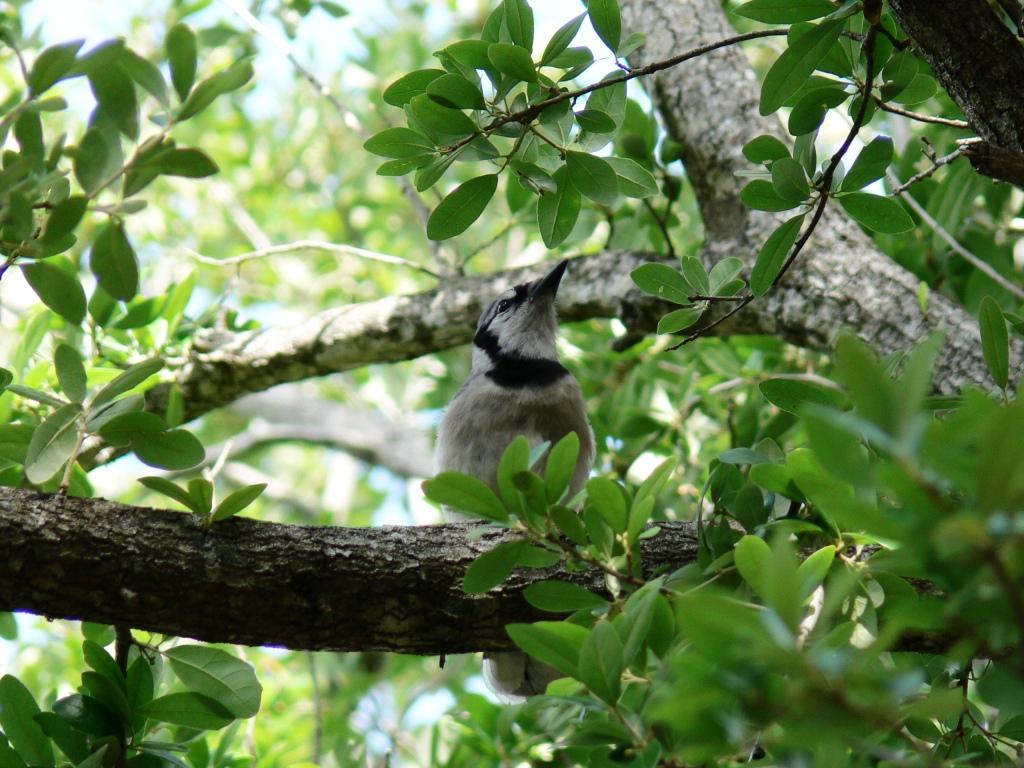
    Blue Jay in tree at Hampton Pines
    Blue Jay in tree at Hampton Pines
    Click for the sound of a Blue Jay


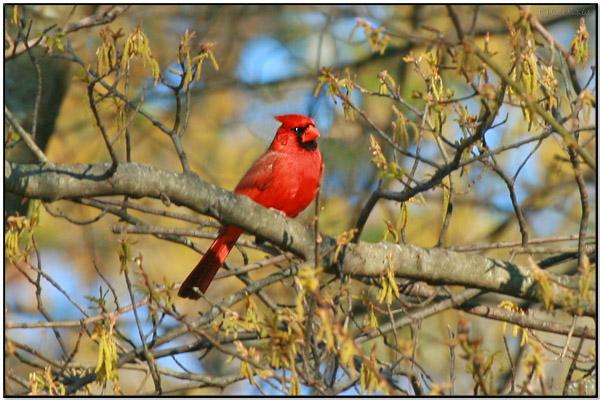
    Northern Cardinal (Cardinalis cardinalis) by Daves BirdingPix 
    Click for the sound of a Northern Cardinal

    Boat-tailed Grackle (Quiscalus major) at Lake Howard, Winter Haven, Florida By Dan'sPix 
    Click for the sound of a Boat-tailed Grackle

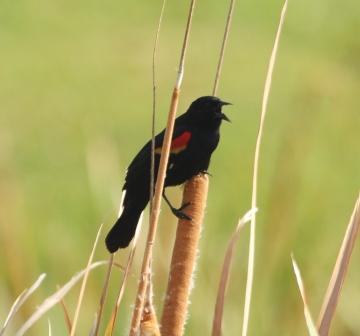
    Red-winged Blackbird at Bok Sanctuary
    Red-winged Blackbird at Bok Sanctuary 
    Click for the sound of a Red-winged Blackbird

    Whip-poor-will (Caprimulgus vociferus) by BirdsInFocus
    Whip-poor-will (Caprimulgus vociferus) by BirdsInFocus 
    Click for the sound of a Eastern Whip-poor-will

    Great Horned Owl - Lowry Pk Zoo by Lee
    Click for the sound of a Great Horned Owl

    How many did you all ready know?

    Some like to put words to their sounds like these from Birding By Ear -- Bird Song Identification

    Listen here to a few bird songs and calls that have good mnemonic phrases:
    Eastern Towhee -- "Drink your tea-ea-ea"
    Whip-poor-will -- The name says it all.
    Black-capped chickadee -- Some music and talk first, then the "Chick-a-dee-dee-dee"
    White throated sparrow -- "Poor Sam Peabody, Peabody, Peabody"
    Black-throated green warbler -- "Zee zee zee zoo zee"
    Barred Owl -- "Who cooks for you, who cooks for you all"

    Links:
    Birding By Ear -- Bird Song Identification
    WhatBird
    All About Birds
    Birding by Ear Basics

    Other Posts in our Start Birding today Series:


    This Post Sponsored by: