Wednesday, December 30, 2009

Defeating the Dark Side - A New Wednesday Night Sermon Series

(from Pastor Osborne)

In the Star Wars movies, Darth Vader represented the dark side of human nature. As believers we try to stay away from the dark side of our lives. We want everyday to be so in love with the Lord and so close to our God. We want to blurt out like Peter, "even if everyone else leaves you, Jesus, I will never leave you." That is a wonderful thought. However, we all know that just a few hours later, Peter fell prey to his dark side and denied Christ three times. Peter's "I'll never leave you" turned into "I never knew the man."

The hymn writer wrote "Prone to wander, Lord I feel it. Prone to leave the God I love." Every christian I have known faces that struggle. The question that has haunted me and possibly you is "How can I as a christian who is saved from sin, turn around and serve sin?"

On January 6th, we will start a new series of messages during the Bible study time exploring the side of our lives that needs the light of Christ to dispel the darkness. Some topics we will be looking at include:
  • The Christian and Sin
  • The Biblical Analysis of Pride
  • When Lust Rears Its Ugly Head
  • What About Abortion?
  • What Do We Do About Sexual Offenders?
  • Spiritual Life Cleansing
  • Curing Death
  • How to Gain Eternal Life
  • Every Life has Sharp Curves
  • God's Sovereignty
  • What Delivers us from Despair?
  • God's Grace
I hope you will join me for this unique series starting this Wednesday night, January 6, 2010. May we learn together how God's light dispels the darkness.

Visit our website to download or listen to all of the messages in Pastor Osborne's Defeating the Dark Side series.

Monday, December 28, 2009

Real Men are Kind - Tip #2

Tip #2

Change a Diaper - I was stunned recently. I was in a conversation with some men whose children are grown and out of the house. One remarked how he had never changed any of his kids' diapers. Now I realize that 30 years ago was a different time, but come on!!! Not one diaper!?!?

Guys, things are different today. Having kids means changing diapers. Refusing to change diapers is totally unkind. Every once and a while, when the aroma hits your nose - Be a man. Be kind to your wife and change the diaper. Better yet, change the diaper with a good attitude. Don't complain.

Just remember that it's not about the diaper. It's about being kind to your wife.

Real men change diapers. Real men are kind. Be a real man.

Monday, December 21, 2009

Real Men are Kind - Intro & Tip #1

Welcome to a new series of blog posts entitled Real Men are Kind.

I believe that if you asked most men "Do you Love your wife?" they would immediately answer "Yes!" However, I believe that if you ask those same men "Are you kind to your wife?" they would answer "well...."

Kindness is not easy. For most of us it does not come naturally. We have to work at it. I think that we (husbands) often assume that we are being kind when in reality our wives would tell a different story.

So, my goal in this series is to offer tips to help you show kindness to your wife. Anybody can be mean and ornery. Be a real man. Be kind.

Tip #1

Wash the Dishes - At my house there are many things that I can't do because I would only make things worse. I can't decorate - because my wife would have to come behind me and fix it. I can't organize my wife's papers or files because she would never find them. I can't fix my daughters' hair - it would only make it more difficult for my wife. But, there is one thing I can't mess up. I can clean the dishes. I know how to wash them. I know which things can go in the dishwasher and which things have to be washed by hand. I know where things go when they are clean. So, there is no excuse for me to not help with the dishes. The problem is that I don't always feel like doing the dishes. But, I've learned that washing the dishes is an act of kindness that communicates to my wife that I love her. It is a small thing to do that makes a powerful statement.

Be a Real Man. Be Kind. Wash the Dishes.

Friday, December 18, 2009

Birds of the Bible - Jerusalem and Bethlehem Area

I thought it would be interesting to find out about what birds Mary and Joseph might have seen on their journey from Nazareth to Bethlehem to register for the census.
And it came to pass in those days that a decree went out from Caesar Augustus that all the world should be registered. This census first took place while Quirinius was governing Syria. So all went to be registered, everyone to his own city. Joseph also went up from Galilee, out of the city of Nazareth, into Judea, to the city of David, which is called Bethlehem, because he was of the house and lineage of David, to be registered with Mary, his betrothed wife, who was with child. (Luke 2:1-5 NKJV)
Laughing Dove (Stigmatopelia senegalensis) by NikhilAfter several hours searching the internet, I still do not have a clear list of the birds in that area. Here, in America, you can find a bird list of about every park or area around. In Jerusalem, 10 kilometers or 6 miles from Bethlehem, I couldn't find any lists. In Bethlehem, which is now in the West Bank, no list were found. Birds do not care about the political boundaries. The quote below from the Jerusalem Bird Observatory was the best clue obtained. The lists for all the birds of Israel (over 500) can be found, but not for this specific area.

Western Barn Owl (Tyto alba) by Daves BirdingPix"Moving to central Israel, the Jerusalem region, though more famous for its religious and historical sites, can be interesting for birdwatchers too, with temperate wooded and rocky slopes to the west and the arid Judean Desert to the east. Typical forest birds, many also common in town parks and gardens, include blue jays, Syrian woodpeckers, several types of warblers and doves, song thrushes, assorted shrikes, blackbirds, robins, hoopoes, sunbirds, bulbuls, kestrels, hobbies, chukars and Scops and barn owls. Lovely areas for hiking and birdwatching include the forested mountainous area just south and west of Jerusalem around villages such as Nes Harim, Ora and Sataf, and forested areas further south near the town of Beit Shemesh and the Beit Guvrin archaeological park.

The Jerusalem Bird Observatory (JBO) is located in the landscaped gardens between the Knesset (Israel`s parliament) and the Supreme Court, though you need to bring ID and be patient with security searches. The JBO holds guided birding walks in English every Monday afternoon and does ringing there too. The Israeli capital is also home to prime nesting sites for the endangered lesser kestrel. The Musrara neighbourhood in particular is home to several nests and the Society for the Protection of Nature in Israel (SPNI) occasionally arranges walking tours of the area." From Fatbirder

In the list above, the birds bolded, are in the bird families mentioned in the Bible. There are 532 birds listed in the Israel Checklist of which 110 are residents and most of the others are winter visitors, having migrated there from elsewhere. Of the residents, there are 4 Doves - Rock Dove (Rock Pigeon) , Eurasian Collared Dove, Laughing Dove, and the Namaqua Dove. The Eurasian Hoopoe and Barn Owls are also residents. The Quail family includes the Chukar and two other residents, the Black Francolin and the Sand Partridge.

It is realized in over 2,000 years, the birds have changed within their "kinds", but these photos, may give an indication of what Mary and Joseph may have seen on their journey and in the place where the Lord Jesus Christ was born and lain in a manger.
So it was, that while they were there, the days were completed for her to be delivered. And she brought forth her firstborn Son, and wrapped Him in swaddling cloths, and laid Him in a manger, because there was no room for them in the inn. (Luke 2:6-7 NKJV)
May the Lord bless you during the Christmas celebrations of the Birth of Our Savior, the Lord Jesus Christ, the Creator of the world.
The Gospel Message.

Photos top to bottom - Laughing Dove by Nikhil, Western Barn Owl by Dave's BirdingPix, Eurasian Hoopoe  by Ian, Chukar Partridge (Alectoris chukar) by Ian

Thursday, December 10, 2009

Birds in Hymns - The Friendly Beasts

So it was, that while they were there, the days were completed for her to be delivered. And she brought forth her firstborn Son, and wrapped Him in swaddling cloths, and laid Him in a manger, because there was no room for them in the inn. (Luke 2:6-7 NKJV)
Words: Un­known au­thor, 12th Cen­tu­ry; trans­lat­ed from French to Engl­ish by an anon­y­mous trans­lat­or.
Music: Or­i­ent­is Par­ti­bus, med­ie­val French mel­o­dy

Click to Hear Hymn

Jesus, our Brother, strong and good,
Was humbly born in a stable rude,
And the friendly beasts around Him stood,
Jesus, our Brother, strong and good.

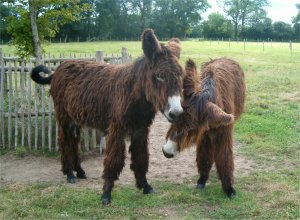
Donkey - Shaky and Brown“I,” said the donkey, shaggy and brown,
“I carried His mother uphill and down,
I carried His mother to Bethlehem town;
I,” said the donkey, shaggy and brown.

“I,” said the cow, all white and red,
“I gave Him my manger for His bed,
I gave Him hay to pillow His head;
I,” said the cow, all white and red.

“I,” said the sheep with curly horn,
“I gave Him my wool for His blanket warm,
He wore my coat on Christmas morn;
I,” said the sheep with curly horn.

Mourning Dove (Zenaida macroura) by Quy Tran“I,” said the dove, from the rafters high,
“I cooed Him to sleep that He should not cry,
We cooed Him to sleep, my mate and I;
I,” said the dove, from the rafters high.

Thus all the beasts, by some good spell,
In the stable dark were glad to tell
Of the gifts they gave Emmanuel,
The gifts they gave Emmanuel.

Most information from The Cyber Hymnal

Thursday, December 3, 2009

Birds in Hymns - In God Will I Trust

n the LORD put I my trust: how say ye to my soul, Flee as a bird to your mountain? (Psalms 1:1 KJV)
Words: Par­a­phrase of Psalm 11; au­thor un­known.

Music: Pro­tect­ion, from A Com­pil­a­tion of Gen­u­ine Church Mu­sic, by Jo­seph Funk (Win­ches­ter, Vir­gin­ia: J. W. Holl­is, 1832)

In God Will I Trust

Click to Hear Hymn

In God will I trust, though my counselors say,
O flee as a bird to your mountain away;
The wicked are strong and the righteous are weak,
Foundations are shaken, yet God will I seek.

The Lord in His temple shall ever abide,
His throne is eternal, whatever betide;
The children of men He beholds from on high,
The wicked to punish, the righteous to try.

The Lord is most righteous, the Lord loves the right,
The evil He hates and will surely requite;
The wicked His anger will drive from their place,
The upright in rapture shall gaze on His face.


Mallards flying off by IanAdam Clarke's Commentary on the Bible says of Psalms 11:1

"In the Lord put I my trust: how say ye - Some of David’s friends seem to have given him this advice when they saw Saul bent on his destruction: “Flee as a bird to your mountain;” you have not a moment to lose; your ruin is determined; escape for your life; get off as swiftly as possible to the hill-country, to some of those inaccessible fortresses best known to yourself; and hide yourself there from the cruelty of Saul. To which advice he answers, “In the Lord put I my trust,” shall I act as if I were conscious of evil, and that my wicked deeds were likely to be discovered? Or shall I act as one who believes he is forsaken of the protection of the Almighty? No: I put my trust in him, and I am sure I shall never be confounded."

From the Life Application Study Bible:

"David was forced to flee for safety several times. Being God's anointed king did not make him immune to injustice and hatred from others. He may have written this psalm when he was being hunted by Saul (1 Samuel 18-31) or during the days of Absalom's rebellion (2 Samuel 15-18). In both instances, David fled, but not as if all was lost. He knew God was in control. While David wisely avoided trouble, he did not fearfully run away from his troubles.

David seems to be speaking to those who are advising him to run from his enemies. David's faith contrasts dramatically with the fear of the advisers who tell him to flee. Faith in God keeps us from losing hope and helps us resist fear. David's advisers were afraid because they saw only frightening circumstances and crumbling foundations. David was comforted and optimistic because he knew God was greater than anything his enemies could bring against him (Psalms 7:10; Psalms 16:1; Psalms 31:2-3)."

Thursday, November 26, 2009

Birds of the Bible - Fatted Fowl

Ten fat oxen, and twenty oxen out of the pastures, and an hundred sheep, beside harts, and roebucks, and fallowdeer, and fatted fowl. (1 Kings 4:23 KJV)

While doing a search with my e-Sword Bible program, I came across I Kings 4:23. It is in the midst of the daily provisions needed by Solomon for one day. I had not noticed the "fatted fowl" before and since today is Thanksgiving, it caught my interest. According to what I wrote yesterday about the Thanksgiving Turkey, the Wild Turkey, Ocellated Turkey, and domesticated turkey are from the New World. If Solomon had lived here, I might think that he was eating "turkey" or some fatted goose, duck, or chicken. However, Solomon lived in Israel. So, what was the "fatted fowl"?

According to Strong's Hebrew and Greek Dictionaries: Fatted = H75 - aw-bas' - A primitive root; to fodder: - fatted, stalled. Fowl = H1257 - bar-boor' -By reduplication from H1250; a fowl (as fattened on grain) - fowl. So the fatted fowl was possibly fed grain as was the fatted calf. Here are some of the other translations for the "fatted calf", fat fowls, geese, poultry, fattened birds, fattened fowl, fatted fowl, and fatted beast of the stalls.

Jamieson, Fausset, and Brown Commentary had this comment. "Solomon’s provision for one day — not for the king’s table only, but for all connected with the court, including, besides the royal establishment, those of his royal consorts, his principal officers, his bodyguards, his foreign visitors, etc. The quantity of fine floor used is estimated at two hundred forty bushels; that of meal or common flour at four hundred eighty. The number of cattle required for consumption, besides poultry and several kinds of game (which were abundant on the mountains) did not exceed in proportion what is needed in other courts of the East."

Red Junglefowl (Gallus gallus) by NikhilDevasarJohn Gill's commentary said, "and fatted fowl; such as we call capons (a); some Jewish writers (b), because of the likeness of sound in the word here used, take them to be Barbary fowls, or such as were brought from that country: there is a sort of birds called βαρβαροι, which were without a voice, that neither heard men, nor knew their voice (c).

So what was the fatted fowl? It is hard to be exact, but, Scriptures mentions the Quail, Chicken, Hen, and Partridge kinds as being "clean" and thereby they could be eaten. These have also been known to be fattened up. The Barbary fowl according to Wikipedia and others is a Barbary Partridge which looks very much like our Chukar here in North America. The partridge family brings us back to the Turkey, which is in that family. One thing we know for certain. God created the fowls (birds) and we are permitted to eat some of them. (Genesis 1:20 and Genesis 9:2,3).
Being enriched in every thing to all bountifulness, which causeth through us thanksgiving to God. (2 Corinthians 9:11 KJV)
We hope you have a very happy Thanksgiving Day and that you spend time thanking God for all His blessings.

Barbary Partridge video by Josep del Hoyo

Photos - Chukar Partridge (Alectoris chukar) by Ian and Red Junglefowl (Gallus gallus) by Nikhi

Wednesday, November 25, 2009

6 Things I'm Thankful For...

Happy Thanksgiving. Here are 6 things that I'm thankful for.
  1. I'm thankful that I've been adopted by God. I wasn't born into His family. I had no right to be in His family. Yet, He reached down and chose me to be His son. I'm so thankful that He did.
  2. I'm thankful for my Family. God has blessed me with a wonderful wife and two beautiful daughters. My children are so fortunate to have such an outstanding mother. I would truly be lost without her. I'm so thankful for my family.
  3. I'm thankful for my Parents. Godly parents are becoming harder and harder to find. I am so thankful to have two of the godliest people I know as my parents. What an honor it is to be their son.
  4. I'm thankful for my Job. 2009 has reminded me that jobs can come and go like the wind. I am so thankful for a job that allows me to provide for my family.
  5. I'm thankful for my Pastor. He sets an example for me in so many ways: his marriage, his family, his personal life, his finances, his compassion, his patience, his character. He is such an example and an encouragement to me and I am so thankful for him.
  6. I'm thankful for my Church. Being a member of Faith Baptist Church is a unique privilege that I have. It unites me with brothers and sisters who genuinely love me and my family. I am so thankful for my church.
What are you thankful for?

Friday, November 20, 2009

Birds of the Bible - Cuckoo II

And the owl, and the night hawk, and the cuckow, and the hawk after his kind,
(Leviticus 11:16 KJV) and (Deuteronomy 14:15)
The verses above are interesting because the cuckow (cuckoo) is taken from the Hebrew word, " שחף or shachaph" (H7828), and is only used in those two verses. Some translate it as "cuckow" (KJV, Webster), "cuckoo" (YLT), "seamew or sea-mew" (ASV, JPS, RV), "sea-hawk" (BBE), and the rest "sea-gull or sea gull" (Darby, ESV, GW, MKJV, NASB, NKJV). From the Jewish Encyclopedia about the Cuckoo, "The A. V. rendering of (shaḥaf) in Lev. xi. 16 and Deut. xiv. 15. In both places it occurs in the list of unclean birds. This identification, however, is only a conjecture, and there is no certain tradition to support it. The Targum transcribes the Hebrew word. The Septuagint gives λάρος ("sea-gull"). The R. V. rendering is "seamew," which is accepted by Gesenius, Bertholet, and Driver in their commentaries, and by Baentsch and Lewyson ("Zoologie des Talmuds," p. 182). The cuckoo, however, is found in Palestine, where it passes the summer. Two varieties are met with—the common and the spotted cuckoo."
Asian Emerald Cuckoo (Chrysococcyx maculatus) by Nikhil

Whether it is in the cuckoo or the gull family, it is not clear. What is clear is that it was not to be eaten. For this article, I am going to concentrate on the Cuculidae Family which includes the Cuckoo, Ani, Roadrunner, Coucal, Coua, Malkoha, Koel, Drongo-Cuckoo, and Hawk-Cuckoo. All of these are in the Cuculiformes Order and all were created by the Lord.

"The Cuckoos are medium to large birds some with a long tail; species range in lenght from 6.6-28 in. (16-70 cm). The bill of all species is basically the same, varying only in size: fairly short, strong or stout, and slightly decurved". (Complete Birds of the World, National Geographical) They are generally medium sized slender birds. The cuckoos feed on insects, insect larvae and a variety of other animals, as well as fruit. Many species are brood parasites, laying their eggs in the nests of other species, but the majority of species raise their own young.

"One of the most important distinguishing features of the family are the feet, which are zygodactyl, meaning that the two inner toes pointed forward and the two outer backward. There are two basic body forms, arboreal species (like the Common Cuckoo) which are slender and have short tarsi, and terrestrial species (like the roadrunners) which are more heavy set and have long tarsi. Almost all species have long tails which are used for steering in terrestrial species and as a rudder during flight in the arboreal species. The wing shape also varies with lifestyle, with the more migratory species like the Black-billed Cuckoo possessing long narrow wings capable of strong direct flight, and the more terrestrial and sedentary cuckoos like the coucals and malkohas having shorter rounded wings and a more laboured gliding flight."

Below are photos of some of the birds in the Cuculidae Family in IOC 2009 order.


See Also:
Birds of the Bible - Cuckoo
Cuckoo

Photos: Yellow-billed Cuckoo, Common Cuckoo, Asian Emerald Cuckoo, Zygodactyl arrangement of toes

Wednesday, November 18, 2009

Worship Matters


I'm currently reading through a book entitled Worship Matters by Bob Kauflin. He blogs at Worship Matters. Bob is the director of worship development for Sovereign Grace.

I recently finished a section where Kauflin gave 6 ways that worshiping God on Sunday should transform the way we live the rest of the week (p. 143-150):
  1. Worshiping God should make us Humble.
  2. Worshiping God should make us Secure.
  3. Worshiping God should make us Grateful.
  4. Worshiping God should make us Holy.
  5. Worshiping God should make us Loving.
  6. Worshiping God should make us Mission-Minded.
Maybe as we leave church on Sunday mornings we should be asking ourselves:
  1. Am I more Humble?
  2. Am I more Secure?
  3. Am I more Grateful?
  4. Am I more Holy?
  5. Am I more Loving?
  6. Am I more Mission-Minded?
What are you thinking about when you leave church on Sunday mornings?

Tuesday, November 17, 2009

Your Word


O Lord,

Your Word is full of promises,

flowers of sweet fragrance,

fruit of refreshing flavor, when culled by faith.


May I be made rich in its riches,

be strong in its power,

be happy in its joy,

abide in its sweetness,

feast on its preciousness,

draw vigor from its manna.
Lord, increase my faith.


- The Valley of Vision, adapted

Friday, November 13, 2009

Birds of the Bible - Singing Birds

By them the birds of the heavens have their home; They sing among the branches. (Psalms 104:12 NKJV)

Savannah Sparrow by Ray
Savannah Sparrow
Many birds do their singing to either claim their territory, their partner, or sing because of their new young babies. Many just sing because God put a song in their heart.

According to R. A. Torrey's New Topical Textbook the above verse, birds "Have each their peculiar note or song." Whereas Nave's Topical Bible titles the verse as "Songs of, at the break of day." Referring to a bird singing both refer to Psalms 104:12, Ecclesiastes 12:4 and Song of Solomon 2:12. Not only has God created the different birds, but has given them various voices even amongst their own kind. Warblers, of which there are many kinds, have distinct voices. I have to admit that I enjoy some bird songs much more than others, as you do also.

From the commentaries about Psalm 104:12, here are some of their thoughts:
Albert Barnes' Notes - "Which sing among the branches - Margin, as in Hebrew, “give a voice.” Their voice is heard - their sweet music - in the foliage of the trees which grow on the margin of the streams and by the fountains. There is scarcely to be found a more beautiful poetic image than this."
Geneva Bible Translation Notes - "There is no part of the world so barren where most evident signs of God's blessing do not appear."
John Gill's Exposition - "By them shall the fowls of the heaven have their habitation,.... Another use of the springs, fountains, and rivers of water; by the sides and on the shores of these, some birds delight to be, and on trees that grow here do they build their nests; and here, having wetted their throats, they sit, and chirp, and sing: to doves, by rivers of water, is the allusion in Son_5:12."
"Which sing among the branches; of trees that grow by the sides of fountains and rivers; see Eze_17:23. To such birds may saints be compared; being, like them, weak, defenceless, and timorous; liable to be taken in snares, and sometimes wonderfully delivered; as well as given to wanderings and strayings: and to fowls of the heaven, being heaven born souls, and partakers of the heavenly calling. These have their habitation by the fountain of Jacob, by the river of divine love, beside the still waters of the sanctuary; where they sing the songs of Zion, the songs of electing, redeeming, and calling grace."
Matthew Henry - " The birds. Some birds, by instinct, make their nests in the bushes near rivers (Psa_104:12): By the springs that run among the hills some of the fowls of heaven have their habitation, which sing among the branches. They sing, according to their capacity, to the honour of their Creator and benefactor, and their singing may shame our silence. Our heavenly Father feeds them (Mat_6:26), and therefore they are easy and cheerful, and take no thought for the morrow. The birds being made to fly above the earth (as we find, Gen_1:20), they make their nests on high, in the tops of trees (Psa_104:17); it should seem as if nature had an eye to this in planting the cedars of Lebanon, that they might be receptacles for the birds. Those that fly heavenward shall not want resting-places.
Oh, give thanks to the LORD! Call upon His name; Make known His deeds among the peoples! Sing to Him, sing psalms to Him; Talk of all His wondrous works! (1 Chronicles 16:8-9 NKJV)
To see the videos, CLICK HERE

Last but not least, we have a Song Sparrow singing by Tstormer on YouTube

Monday, November 9, 2009

The Battle for the Heart's Daily Worship


May this prayer from Scotty Smith challenge and encourage you as it has me.
*****
Heavenly Father, how I long for the Day when I will no longer be tempt-able, deceive-able, or even capable of worshipping any other “god” but you. I so look forward to an eternity of giving you the adoration, affection, attention and allegiance of which you alone are worthy. No one cares like you. No one understands like you. No one redeems like you. No one loves like you. No one restores like you. There is no God but you.
In Jesus, you have already given me a new heart and have placed your Spirit in me. In Jesus, you have already turned my heart of stone into a heart of flesh (
Ezekiel 36:25-27). In Jesus, you have already given me a heart to know and love you (Jeremiah 24:7). In Jesus you have already written your law upon my heart (Jeremiah 31:33). In Jesus, you have already given me a perfectly forgiven heart.
YET, it is not a fully perfected heart. The battle for my heart’s daily worship continues, and will continue until the Day Jesus returns to finish making all things new. Thus, the warning to keep myself from idols has never had more meaning, Father. Help me discern which “idols of the heart” (
Ezekiel 14:4) I am most susceptible to trusting in, rather than you. When I don’t think you are “enough,” where do I take the worship you deserve—where do I go for life, deliverance and salvation?
Sometimes the collaboration and conspiracy of the duplicity within me… the world around me… and the devil, invisible to me, is overwhelming… I need the gospel every minute of every hour.
I praise you for the assurance that I am already one of your “beloved children.” You cannot love me more than you already do, and you will never love me less, for you love all of your children just as much as you love your beloved Son, Jesus. Surely the gospel, this gospel, will win the day, my heart and the entire cosmos. So very Amen, I pray, in Jesus’ name.

Friday, November 6, 2009

Birds of the Bible - Wayside Sower Birds

By the Wayside - Brandt's Mountain Finch (Leucosticte brandti)
Brandt's Mountain Finch (Leucosticte brandti) by Nikhil

Have your ever listened to someone talking, but you really didn't hear them? Maybe your mind was on something else. Have you ever listened to someone, you were hearing them, but you just didn't get what they were saying? It just didn't make sense to you. Well, that is where our Bird of the Bible this week gets its food.

Among rocks - Piping Plover (Charadrius melodus)
Among rocks - Piping Plover
I can see you now trying to find these "Wayside Sower Birds" in your latest, up to date, birding handbook. No, these birds are mentioned in the Bible, in the Parable of the Sower. These birds are not named specifically, so it could be any kind of bird that likes to eat along the wayside of a planted field. Let's look at what is being said about them.
Then He spoke many things to them in parables, saying: "Behold, a sower went out to sow. And as he sowed, some seed fell by the wayside; and the birds came and devoured them. (Matthew 13:3-4 NKJV)
Listen! Behold, a sower went out to sow. And it happened, as he sowed, that some seed fell by the wayside; and the birds of the air came and devoured it. (Mark 4:3-4 NKJV)
A sower went out to sow his seed. And as he sowed, some fell by the wayside; and it was trampled down, and the birds of the air devoured it. (Luke 8:5 NKJV)
Among thorns - Citrine Wagtail (Motacilla citreola) by Nikhil
 Citrine Wagtail (Motacilla citreola) by Nikhil
The parable goes on and tells of the seed landing on rocks, in thorn bushes and also on good ground. The Lord later explained it to His disciples as:
Therefore hear the parable of the sower: (19) When anyone hears the word of the kingdom, and does not understand it, then the wicked one comes and snatches away what was sown in his heart. This is he who received seed by the wayside. (20) But he who received the seed on stony places, this is he who hears the word and immediately receives it with joy; (21) yet he has no root in himself, but endures only for a while. For when tribulation or persecution arises because of the word, immediately he stumbles. (22) Now he who received seed among the thorns is he who hears the word, and the cares of this world and the deceitfulness of riches choke the word, and he becomes unfruitful. (23) But he who received seed on the good ground is he who hears the word and understands it, who indeed bears fruit and produces: some a hundredfold, some sixty, some thirty. (Matthew 13:18-23 NKJV)
Good ground - American Yellow Warbler
(Dendroica aestiva) by J Fenton

Good ground - American Yellow Warbler (Dendroica aestiva) by J FentonMay we all receive the seed (Word of God) on good ground and not be deaf to the truth of God, letting what you hear fall by the wayside.

Gospel Message

Sunday, November 1, 2009

Perfect Are Thy Ways

How perfect are Thy ways, Oh God!
How perfect are Thy ways!
Thy skies were cloudless in the blue above,
And my heart sang out its praise!
Sweet it was in green pastures to lie
And drink of the waters cool nearby,
To bask in Thy love and mercy and grace,
To know in Thy heart I was given a place.
Those were the picnic days of my life,
So thankful was I to be mother and wife.

And my lightsome heart sang out its praise,
"How perfect, Oh God, are all Thy ways!"

How perfect are Thy ways, Oh God?
How perfect are Thy ways?
When skies are darkened in the storm around,
Will my trembling heart still tell its praise?
Precious it is to remember Thy Word,
To drink deep of Thy goodness, Oh my God!
To be wrapped in Thy comfort, upheld by Thy arms,
I know Thou art folding me safe in Thy palms.
These are the days that cut like a knife.
Numbing my heart and dark'ning my life.

Still my sobbing heart whispers its praise,
"How perfect, Oh God, are all Thy ways!"

(written by my grandmother, Anne B. Simpson, in 1987)

Friday, October 30, 2009

Birds of the Bible - More Value

Eurasian Tree Sparrow

Eurasian Tree Sparrow (Passer montanus) by NikhilWe have mentioned the sparrow many times in the blog and about how God takes care of them, as in the following articles:

Birds of the Bible - God's Care for Birds - Sparrow II - Sparrow I and Eye of the Beholder - House Sparrows

This time, I would like point out the part about being of "more value." In Matthew 10:29-33, the two sparrows are mentioned as being sold for a farthing, a very small amount. According to A. Barnes’ Notes, “The argument is, that if He takes care of birds of the least value, if He regards so small a thing as the hair of the head, and numbers it, He will certainly protect and provide for you. You need not, therefore, fear what man can do to you.”
Are not two sparrows sold for a farthing? and one of them shall not fall on the ground without your Father. But the very hairs of your head are all numbered. Fear ye not therefore, ye are of more value than many sparrows. Whosoever therefore shall confess me before men, him will I confess also before my Father which is in heaven. But whosoever shall deny me before men, him will I also deny before my Father which is in heaven.(Matthew 10:29-33 KJV)
Northern Raven (Corvus corax)

Northern Raven (Corvus corax) by RayAlso: "Indeed, the very hairs of your head are all numbered. Do not fear; you are more valuable than many sparrows." (Luke 12:7 NASB); "Consider the ravens, for they neither sow nor reap, which have neither storehouse nor barn; and God feeds them. Of how much more value are you than the birds?" (Luke 12:24 NKJV) and He said to them, "What man is there among you who has a sheep, and if it falls into a pit on the Sabbath, will he not take hold of it and lift it out? "How much more valuable then is a man than a sheep! So then, it is lawful to do good on the Sabbath." (Matthew 12:11-12 NASB)

We see then that "man" has more value than sparrows, ravens, birds, and sheep just from these few verses. Yet, each of them are greatly valued by their creator. Where else are things of value mentioned in Scripture?

David had the opportunity to kill King Saul, but he valued the life of the king more.
May the LORD repay every man for his righteousness and his faithfulness; for the LORD delivered you into my hand today, but I would not stretch out my hand against the LORD's anointed. And indeed, as your life was valued much this day in my eyes, so let my life be valued much in the eyes of the LORD, and let Him deliver me out of all tribulation." (1 Samuel 26:23-24 NKJV)
Wisdom and understanding have great value and Job mentions it in Job 28.
But where can wisdom be found? And where is the place of understanding? "Man does not know its value, Nor is it found in the land of the living. (Job 28:12-13 NASB)

Where then does wisdom come from? And where is the place of understanding? "Thus it is hidden from the eyes of all living And concealed from the birds of the sky. (Job 28:20-21 NASB)
Zechariah in his prophecy of the future, tells about the price of Christ the Lord as 30 shekels (pieces) of silver.
Then the LORD said to me, "Throw it to the potter, that magnificent price at which I was valued by them." So I took the thirty shekels of silver and threw them to the potter in the house of the LORD. (Zechariah 11:13 NASB)
We are of great value to the Lord, so much so, that He gave His Life for our salvation. If you know the Lord as Savior, then, that "knowing Christ Jesus," has tremendous value.
More than that, I count all things to be loss in view of the surpassing value of knowing Christ Jesus my Lord, for whom I have suffered the loss of all things, and count them but rubbish so that I may gain Christ, (Philippians 3:8 NASB)
We trust you do know the Lord and realize how much He loves you and cares for you. Much more than the critters, whom he cares for tremendously.

See also Gospel Message

Monday, October 26, 2009

Listen to Dr. Charles Petitt

Dr. Charles Petitt, President of Piedmont Baptist College, was with us this past Sunday evening. He brought a challenging message from the book Ecclesiastes. In his message he made the following statement.
"I'm hoping that you will leave here a little afraid of something you may have never been afraid of before. Most of us are fearful of failure. I'm hoping you will be extremely afraid of becoming a smashing success at something that doesn't matter."
To listen to or download his message, visit our website.

Sunday, October 25, 2009

Born into Death but Adopted for Life

This afternoon I finally had the opportunity to sit down and finish Russell Moore's excellent book, Adopted for Life: The Priority of Adoption for Christian Families & Churches.

It was a book that I thoroughly enjoyed reading. I recommend it to everyone. It will change the way you think about adoption. Throughout the book Dr. Moore connected adoption with the gospel. Adoption is all about the gospel. Notice how he closes his book:

"The reality, though, is that in most ways parenting is parenting, and growing up is growing up. It's always hard. Some unique challenges go along with adoption - challenges related to finding a sense of belonging, to discipline and discipleship, to answering questions about origins. Count these as all joy. They point all of us - not just kids who were adopted - to the gospel. The gospel welcomes us and receives us as loved children. The gospel disciplines us and prepares us for eternity as heirs. The gospel speaks truth to us and shows us our misery in Adam and our glory in Christ. The gospel shows us that we were born into death and then shows us, by free grace, that we're adopted for life." (p. 214)
Seriously, I strongly recommend that you read this book. You are welcome to borrow my copy of the book if you like. Just ask.

Other Posts from the Adopted for Life series:
  1. Our Birth Father Has Fangs
  2. Develop an Orphan-Protecting Culture
  3. All of Us Are Called to Remember the Fatherless
  4. Adoption and Communion
  5. Born into Death but Adopted for Life

Friday, October 23, 2009

Birds in Hymns - Go Out, My Heart, and Seek Delight

Words: Paul Gerhardt (1607-1676)
Sing to Him, sing psalms to Him; Talk of all His wondrous works! Glory in His holy name; Let the hearts of those rejoice who seek the LORD! (Psalms 105:2-3 NKJV)
An alternative version
Click to Hear Hymn

Go out, my heart, and seek delight
Wedge-tailed Eagle (Aquila audax) ©Wikipedia
in golden sunshine, summer bright;
rejoice in God's gifts daily.
See all of nature's bright display;
it clothes itself in fine array
for you and me so gaily
for you and me so gaily.

The trees with foliage green are blest,
the earth her dusty face has dressed
in herbage young and tender.
The desert rose and wattle fair
are clothed in raiment far more rare
Oriental Skylark (Alauda gulgula) by Nikhil Devasarthan Solomon in splendour
than Solomon in splendour.

The wedge-tailed eagle in the sky
surveys the world with questing eye,
in lofty circles winging.
The roaring lark with trilling song
sets mountain gorge and billabong
and all the bushland ringing
and all the bushland ringing.

The strutting emu tends his chicks,
Strutting Emu (Dromaius novaehollandiae) by Ian Strutingthe bower-bird gathers twigs and sticks
to arch his glittering treasure.
The flute-call of the butcher-bird
from towering gum tree may be heard
to voice his morning pleasure
to voice his morning pleasure.

From rock-o'ershaded, rippling pool
the waters trickle, soft and cool,
among the ferns and creepers.
While dragon-flies dart here and there,
cicadas' droning fills the air
and stirs all insect-sleepers
and stirs all insect-sleepers.

The swarming, busy, tireless bees
in zig-zag flight on summer breeze
seek honey-dew so tender,
as scented shrubs and sugared flowers
lift up their petalled heads for hours
their sweetness to surrender
their sweetness to surrender.

Great Bowerbird (Chlamydera nuchalis) by IanThe desert quandong, orange, plum,
the passion-fruit to ripeness come;
they urge our glad thanksgiving
to him who all these gifts bestows,
and from whom such abandance flows
to gratify our living
to gratify our living.

I cannot, mighty God, be still,
for all your mighty actions fill
my being with elation.
I too must sing when all things sing,
let praises to the Highest ring
which voice my adoration
which voice my adoration.

What a delightful and fantastic hymn. Paul Gerhardt has several more that will be posted later. The last verse is how I also feel about God's mighty creation and His Love for the critters and especially us.

I cannot, mighty God, be still,
for all your mighty actions fill
my being with elation.
I too must sing when all things sing,
let praises to the Highest ring
which voice my adoration

Photos - Wedge-tailed Eagle ©Wikipedia, Oriental Skylark by Nikhil, Strutting Emu by Ian, Great Bowerbird by Ian

Pied Butcherbird singing and preening


more about "A bird preening and singing softly | ...", posted with vodpod

Friday, October 16, 2009

Birds of the Bible - Storks II

Wood Storks in Top of Tree by LeeWood Storks in Top of Tree by Lee

Yesterday, Dan and I went out to the Circle B Bar Reserve for some birdwatchng. I think I would have to call it, "Stork Day." From our photos, I have counted well over 100 Wood Storks and that doesn't count the ones we didn't photograph. It is time to find out some more about the stork.

From the first Birds of the Bible - Stork article,we found out that the stork is on the unclean list of birds that were not to be eaten by the Israelites. (Leviticus 11:19 and Deuteronomy 14:18). Jeremiah 8:7, tells of "her appointed times" (migration) and Zechariah 5:9 mentions the "wings of a stork."

Psalms is going to provide our thoughts for today.
The trees of the LORD are full of sap; the cedars of Lebanon, which he hath planted; Where the birds make their nests: as for the stork, the fir trees are her house. (Psalms 104:16-17)
 The Whole TreeThe Whole Tree

As you can tell from the photos, the storks like to hang out in the trees. The trees were loaded with them. We were out there recently (September 18th) and I did not see any on that visit. Jeremiah was correct, "Yea, the stork in the heaven knoweth her appointed times;" Migration has been underway and these are either resting while on their trip or they are going to be here for the winter.

"Storks (family Ciconiidae) make their nests of sticks, reeds and grass, in tall trees. When the chicks hatch, their thin, featherless skin is extremely vulnerable to the direct rays of the sun. The parent bird has two responses to the high temperature problem — if water is nearby, the stork fills its large beak, returns to the nest, and douses the tiny chicks with cooling water. If this is not sufficient, the parent then performs a most remarkable feat — it stands over the young and spreads its large wings over the entire nest, thus shading the chicks from the sun’s rays! Often it will do this for hours at a time." from "Birdbrains?" at Answers in Genesis

Storks Shadowing Baby in Lakeland by Dan

Storks Shadowing Baby in Lakeland by DanWhen the Lord created the Stork, the knowledge to protect their babies was put in them. Our God and Savior has promised to meet our needs. If He cares about the birds, how much more does he care about us?

"Storks are large, long-legged, long-necked wading birds with long stout bills, belonging to the family Ciconiidae. They occur in most of the warmer regions of the world and tend to live in drier habitats than the related herons, spoonbills and ibises; they also lack the powder down that those groups use to clean off fish slime. Storks have no syrinx and are mute, giving no bird call; bill-clattering is an important mode of stork communication at the nest. Many species are migratory. Most storks eat frogs, fish, insects, earthworms, and small birds or mammals. There are 19 living species of storks in six genera.

Storks tend to use soaring, gliding flight, which conserves energy. Soaring requires thermal air currents. Ottomar Ansch??tz's famous 1884 album of photographs of storks inspired the design of Otto Lilienthal's experimental gliders of the late 19th century. Storks are heavy with wide wingspans, and the Marabou Stork, with a wingspan of 3.2 m (10.5 feet), shares the distinction of "longest wingspan of any land bird" with the Andean Condor.

Their nests are often very large and may be used for many years. Some have been known to grow to over 2 m (6 feet) in diameter and about 3 m (10 feet) in depth. Storks were once thought to be monogamous, but this is only true to a limited extent. They may change mates after migrations, and migrate without them. They tend to be attached to nests as much as partners.

Storks' size, serial monogamy, and faithfulness to an established nesting site contribute to their prominence in mythology and culture." (From Wikipedia with editing)


Friday, October 9, 2009

An Update and a Thank You

Many have asked and so I thought this would be a good way to provide an update. On Tuesday, my wife left the hospital after a five night stay. She is pregnant with our third child and has suffered from Hyperemesis Gravidarum (HG) with each of her pregnancies. So far, this pregnancy has been the hardest. We are currently about 11 weeks along in this pregnancy.


Hyperemesis Gravidarum
The basic gist of HG is severe nausea & vomiting. With our first two children the sickness lasted up to and during their births. As soon as they were born, the nausea was gone. The constant sickness naturally leads to dehydration which is what ultimately caused the hospital stay. This time our doctor ordered a PICC line. He then prescribed TPN & Zofran through the PICC line. The TPN is a 12-hour feeding that provides the necessary fluids and nutrients. Zofran is a anti-nausea medication that seems to provide some relief. Fortunately we are able to continue these treatments at home with the help of home healthcare nurses. They are teaching Nicki how to do these treatments and we are almost independent of the nurses.

HG is a strange disease. As recently as 15-20 years ago the widespread opinion was that HG was a mental or psychological illness. The common response by doctors and nurses was "just get over it." Sadly, this only made things worse for women suffering from HG. Nicki and I have read many stories of women who felt hopeless throughout their pregnancy because they could find no one in the medical profession who would take it seriously. Fortunately, things have changed. Most people now recognize HG as a serious physical illness. (for more information about HG visit the Hyperemsis Education & Research Foundation website.)

We are so grateful for the care that we have received. Our doctor has been wonderful. He has patiently listened to our concerns and has been proactive in his treatment. The nurses that took care of Nicki at The Regency were fabulous. They were kind and provided excellent care.


Thank You
Most of all, we would like to say thank you to all of you, our church family. It is hard to communicate how encouraging you all have been to us. It has been very humbling to have so many people offer to help us. We appreciate all of the meals, phone calls, visits, cards, and babysitting that you have provided. Most importantly, your prayer on our behalf has strengthened and encouraged us. Thank you for your continued prayer support as we travel through the upcoming weeks and months.

Thursday, October 8, 2009

When I Consider! - Turkey Vulture

Turkey Vulture Tree at Saddle Creek by Lee
We get to see lots of Turkey Vultures in this area. I have seen trees just loaded with them. They are ugly to look at, but are very useful.

The following is the October 6th's "Evidence from Biology" article from A Closer Look at the Evidence, by Richard and Tina Kleis:

"The Turkey Vulture has incredible farsighted vision capable of seeing dead or dying objects several miles beyond what the human eye can detect. Yet it is designed with dull, weak, talons and a thin beak, forcing it to eek out an existence eating rotting flesh or decaying vegetables. Since the vulture eats the remains of animals that have died of disease, it has a digestive tract designed to destroy deadly bacteria (including anthrax!). The Turkey Vulture also has the ability to sanitize itself and its surroundings using a special disinfectant found in its own excrement. The same chemicals which kill the deadly bacteria in its stomach continue to kill the germs outside its body!

Turkey Vulture by Ian Montgomery

Because the vulture's head is usually covered in blood, pieces of rotten flesh, and bacteria, it is especially vulnerable to disease. Therefore, this particular bird was created without feathers from the neck up. As the turkey vulture stands in the sun, the ultraviolet radiation kills any remaining bacteria.

By removing the carcasses of decaying animals, the turkey vulture serves an important purpose of limiting the spread of disease and preventing potential epidemics among both man and beast. One  wonders how the turkey vulture could have evolved all of the specialized characteristics. The creation solution is that they were created with the original vulture-type bird. The survival characteristics needed for our fallen world were either given after the Fall or developed from originally created abilities."

Character Sketches, Vol. III, p. 121-124
The LORD is righteous in all his ways, and holy in all his works. (Psalms 145:17 KJV)

Lee's Extras:
We have mentioned the Vulture many times on the blog and especially in the places below. After all, they are one of the unclean birds that the Jewish people were not allowed to eat. After reading the above article, you can understand why they were off the "menu."
There is a path which no fowl knoweth, and which the vulture's eye hath not seen: (Job 28:7 KJV)
Birds of the Bible - Vulture
Vulture
Vulture Photos
Vulture Videos
Accipitridae – Kites, Hawks & Eagles
More When I Consider! articles

Tuesday, October 6, 2009

Adoption and Communion

Here are some more excerpts from Russell Moore's book, Adopted for Life: The Priority of Adoption for Christian Families & Churches.

Dr. Moore points out that to foster an adoption culture, a church needs to create "a vision of the church as a household." (p. 175) His point is that when we go to church we should see brothers and sisters. We should see spiritual fathers and mothers. In a sense, these are all 'adopted' family members. A church that views itself in this way will naturally have an inclination towards furthering adoption.

In developing these thoughts Dr. Moore shares some interesting ideas about how the church should observe the ordinance of communion.

"Our concept of the church as household necessarily entails a recovery of the meaning of the Lord's Table in many of our churches. The Supper that Jesus gave us is itself a living sign of adoption. Table fellowship, after all, is a familial activity. This is why Jesus was so revolutionary when he announced, "Many will come from east and west and recline at table with Abraham, Isaac, and Jacob in the kingdom of heaven" (Matt. 8:11). Why do our Lord's Supper services so often look like the clinical, communal rinse-and-spit of fluoride at an elementary school than like a loving family gathered around a feast table?

Often I'll preach in churches about the Lord's Supper and will call on congregations to go back to using a common loaf and a common cup, with the bread being torn, not daintily picked up in pre-fabricated bits, and with each person drinking the wine and passing the cup along. I don't mind folks disagreeing with me on this. I'm just stunned by the reason they most often give for dismissing this ancient Christian practice: germs. The common cup is, well, gross to many Christians because they don't like the idea of drinking after strangers. That's just the point, though. You're not drinking after strangers. You're drinking after your own flesh and blood, your family." (p. 178)

Other Posts from the Adopted for Life series:
  1. Our Birth Father Has Fangs
  2. Develop an Orphan-Protecting Culture
  3. All of Us Are Called to Remember the Fatherless
  4. Adoption and Communion
  5. Born into Death but Adopted for Life

Friday, October 2, 2009

Birds of the Bible - Migration 2009

Radar 9-30-09 image at 12:30 AM .
Radar 9-30-09 image at 12:30 AM Eastern Daylight savings time.
I know that I have written about the migration of the birds before, but this is really interesting. They have been posting radar images of the Florida peninsula on BRDBRAIN, a bird-listing service. Here are the images for September 28th and 30th. The dark spots are the birds in migration being picked up on radar. It is amazing. I have been reading the updates for about a week and the birds are ON THE MOVE!
Even the stork in the sky Knows her seasons; And the turtledove and the swift and the thrush Observe the time of their migration; But My people do not know The ordinance of the LORD. (Jeremiah 8:7 NASB)

9-28-2009 Bird Radar
9-28-2009 Bird RadarWhen the Lord created the birds, he put within them the instinct to migrate. They go for various reasons, but that desire is there and off they go. Some do not make it across the open waters, but most do. As you can see by the radar, they know to fly around the bad weather and go where it is clear. I know here in Polk county, Florida, that the Bald Eagles have been arriving back. I have seen a Bald Eagle on 7 of the last 9 days. I was in different places in the county when they were spotted. Prior to that, I had not spotted any eagles since they left on their northern migration other than the few resident ones.
Does the hawk fly by your wisdom, And spread its wings toward the south? (Job 39:26 NKJV)
"Stretch her wings toward the south? - Most of the falcon tribe pass their spring and summer in cold climates; and wing their way toward warmer regions on the approach of winter. This is what is here meant by stretching her wings toward the south. Is it through thy teaching that this or any other bird of passage knows the precise time for taking flight, and the direction in which she is to go in order to come to a warmer climate? There is much of the wisdom and providence of God to be seen in the migration of birds of passage. This has been remarked before. There is a beautiful passage in Jeremiah, Jer. 8:7, on the same subject:" From the Adam Clarke's Commentary.

A few links to check out are:

http://badbirdz2.wordpress.com/
http://badbirdz2.wordpress.com/2009/09/30/more-migration-over-florida-2/
http://badbirdz2.wordpress.com/2009/09/30/more-migrants-on-their-way/
http://badbirdz2.wordpress.com/2009/09/29/major-migrant-movement-last-night/

See Also:
Birds of the Bible - Migration
Bird Migration Mistakes
Interesting - Migration and Mechanics of Flight
Interesting Things – Amazing Bird Migration
Birds of the Bible – Hawk Migration
Interesting Thing - Lesson from the Stork

Wednesday, September 30, 2009

All of Us are Called to Remember the Fatherless

Here are some more excerpts from Russell Moore's book, Adopted for Life: The Priority of Adoption for Christian Families & Churches.
"Perhaps what our churches need most of all in our defense of the faith against Darwinian despair is not more resources on how the fossil record fits with the book of Genesis and not more arguments on how molecular structures show evidence of design. Perhaps the most practical way your congregation can show Darwinism to be wrong is to showcase families for whom love is more than gene protection." (p. 80)

"Joseph's faith was the same kind of faith that saves us. Very few, if any, of us will have a dream directing us to adopt a child. None of us will be directed to do what Joseph did - to teach Jesus Christ how to saw through wood or to recite Deuteronomy in Hebrew. But all of us are called to be compassionate. All of us are called to remember the poor. All of us are called to remember the fatherless and the widows. That will look different in our different lives, with the different situations and resources God has given us. But for all of us there'll be a judgment to test the genuineness of our faith. And for some of us, there'll be some orphan faces there. (p. 82-83)"

Other Posts from the Adopted for Life series:
  1. Our Birth Father Has Fangs
  2. Develop an Orphan-Protecting Culture
  3. All of Us Are Called to Remember the Fatherless
  4. Adoption and Communion
  5. Born into Death but Adopted for Life

Friday, September 25, 2009

Birds of the Bible - Eagle Renewal

Bless the LORD, O my soul, And forget not all His benefits: Who forgives all your iniquities, Who heals all your diseases, Who redeems your life from destruction, Who crowns you with lovingkindness and tender mercies, Who satisfies your mouth with good things, So that your youth is renewed like the eagle's. (Psalms 103:2-5 NKJV)
Bald Eagle (Haliaeetus leucocephalus)  by AestheticPhotos

The Eagle is an interesting bird and I have written about them before. In the King James Version of the Bible, an eagle is mentioned in 34 verses. So, there will be future articles about the eagle also.

The interest of this article is the renewing of the eagle. In Psalms 103:5 (quoted above), your youth is renewed like the eagle's. What exactly does that mean? Also, in Isaiah 40:31, strength is renewed and "shall mount up with wings as eagles."
But they that wait upon the LORD shall renew their strength; they shall mount up with wings as eagles; they shall run, and not be weary; and they shall walk, and not faint. (Isaiah 40:31 KJV)
Many articles can be found on the internet about an eagle going off and plucking its feathers and not being able to fly for about five months. The image has even been added that the beak and claws are knocked off and then grow back during that time, giving them another 10 or so more years to their life. I have been trying to find proof of that, and am not finding it. Most Eagle authorities state that that would not happen, because the bird would die during that time with no flight feathers or beak or claws.


Bald Eagle (Haliaeetus leucocephalus)Grandfather Eagle by PastorBBCIf those facts are true, then what is meant by God's Word about the eagle? I believe God's Word is true, so there has to be an explanation of it. From the Southwestern Bald Eagle Management I found an interesting chart that shows the different stages of plumage (feathers) as an eagle ages. They said, "In their five year development to adulthood, bald eagles go through one of the most varied plumage changes of any North American bird. During its first four weeks of life, an eaglet's fluffy white down changes to a gray wooly down. At about five weeks, brown and black feathers begin to grow. It becomes fully feathered at 10 weeks of age. In its first year, the mostly dark-colored juvenile can often be mistaken as a golden eagle. However, the bald eagle progressively changes until it reaches adult plumage at five years. Notice in the pictures how its dark eye lightens throughout its first four years of life until it becomes yellow. Also, see how its beak changes form gray-black to a vibrant yellow.


ald Eagle (Haliaeetus leucocephalus)  by AestheticPhotosIt is believed that the darker, more mottled plumage of a young eagle serves as camouflage, while the white head and tail announce that it is of breeding age."

That to me sounds a lot like, "So that your youth is renewed like the eagle's." As the eagle goes through the different stages of its life, the new feathers are graciously provided by a Creator that sees to the needs of His creation by having designed those features to renew as it matures.

The Lord provides for renewal for His children as they mature. The following verses tell of a renewed right spirit, mind, spirit of your mind, and knowledge:
Create in me a clean heart, O God; and renew a right spirit within me. (Psalms 51:10 KJV)
And be not conformed to this world: but be ye transformed by the renewing of your mind, that ye may prove what is that good, and acceptable, and perfect, will of God. (Romans 12:2 KJV)
And be renewed in the spirit of your mind; (Ephesians 4:23 KJV)
And have put on the new man, which is renewed in knowledge after the image of him that created him: (Colossians 3:10 KJV)

Tuesday, September 22, 2009

Develop an Orphan-Protecting Adoption Culture

Here are some more excerpts from Russell Moore's book, Adopted for Life: The Priority of Adoption for Christian Families & Churches.

"An orphan-protecting adoption culture is countercultural - and always has been. Some of the earliest records we have of the Christian churches speak of how Christians, remarkably, protected children in the face of a culture of death pervasive in the Roman Empire. The followers of Jesus, though, did not kill their offspring, even when it would have made economic or social sense to do so. This is still distinctively Christian in a world that increasingly sees children as, at best, a commodity to be controlled and, at worst, a nuisance to be contained. Think of how revolutionary it is for Christians to adopt a young boy with a cleft palate from a region of India where most people see him as "defective." Think of how counterintuitive it is for Christians to adopt a Chinese girl - when many there see her as a disappointment. Think of how odd it must seem to American secularists to see Christians adopting a baby whose body trembles with an addiction to the cocaine her mother sent through her bloodstream before birth. Think of the kind of credibility such action lends to the proclamation of our gospel."

"An adoption culture in our churches advances the cause of life, even beyond the individual lives of the children adopted. Imagine if Christian churches were known as the places where unwanted babies become beloved children. If this were the case across the board around the world, sure, there would still be abortions, there would still be abusive homes. But wouldn't we see more women willing to give their children life if they'd seen with their own eyes what an adoption culture looks like? And wouldn't these mothers and fathers, who may themselves feel unwanted, be a bit more ready to hear out talk about a kingdom where all are welcomed?" (p. 79)
May God help Faith Baptist Church be truly countercultural by developing an orphan-protecting adoption culture.

Other Posts from the Adopted for Life series:
  1. Our Birth Father Has Fangs
  2. Develop an Orphan-Protecting Culture
  3. All of Us Are Called to Remember the Fatherless
  4. Adoption and Communion
  5. Born into Death but Adopted for Life