Friday, December 21, 2012

Birds of the Bible - At the Manger

(originally posted on December 24, 2009)

Eurasian Collared Dove (Streptopelia decaocto) by Reinier
And it came to pass in those days that a decree went out from Caesar Augustus that all the world should be registered. This census first took place while Quirinius was governing Syria. So all went to be registered, everyone to his own city. Joseph also went up from Galilee, out of the city of Nazareth, into Judea, to the city of David, which is called Bethlehem, because he was of the house and lineage of David, to be registered with Mary, his betrothed wife, who was with child. So it was, that while they were there, the days were completed for her to be delivered. And she brought forth her firstborn Son, and wrapped Him in swaddling cloths, and laid Him in a manger, because there was no room for them in the inn. (Luke 2:1-7 NKJV)
Most Christians know the passage in Luke 2 about the birth of our Savior, the Lord Jesus Christ. Many others have heard that passage read each Christmas. The birth of Jesus, who was born to die. "Although our first picture of Jesus is as a baby in a manger, it must not be our last. The Christ child in the manger is the subject of a beautiful Christmas scene, but we must not leave him there. This tiny, helpless baby lived an amazing life, died for us, ascended to heaven, and will return to earth as King of kings. Christ will rule the world and judge all people according to their decisions about him. Do you still picture Jesus as a baby in a manger—or is he your Lord? Make sure you don't underestimate Jesus. Let him grow up in your life." (Life Application Study Bible)

Joseph and Mary were not so poor that they could not afford a room at the end, but "there was no room for them in the inn." Because of the registrations going on, each had to show up in their own city. According to the Jewish mode of registration the people would be enrolled by tribe, families or clans, and households. "But David occasionally went and returned from Saul to feed his father's sheep at Bethlehem." (1 Samuel 17:15 NKJV).

Micah prophesied in Micah 5:2:
But thou, Bethlehem Ephratah, though thou be little among the thousands of Judah, yet out of thee shall he come forth unto me that is to be ruler in Israel; whose goings forth have been from of old, from everlasting.

Spanish Sparrow (Passer hispaniolensis) by Nikhil Devasar"This mention of the manger is the basis for the traditional belief that Jesus was born in a stable. Stables were often caves with feeding troughs (mangers) carved into the rock walls. Despite popular Christmas card pictures, the surroundings were dark and dirty. This was not the atmosphere the Jews expected as the birthplace of the Messiah-King. They thought their promised Messiah would be born in royal surroundings. We should not limit God by our expectations. He is at work wherever he is needed in our sin-darkened and dirty world." (Life Application Study Bible)

All of the above was to set the location for the manger and why in my imagination, I believe birds would have been around the manger. There are no verses in the Bible to show there were birds there, nor are there any to show that lambs, cows, or horse were there either, as depicted in our Christmas scenes. So, here is what birds I think may have been there at Jesus' birth.

Doves - "You who dwell in Moab, Leave the cities and dwell in the rock, And be like the dove which makes her nest In the sides of the cave's mouth." (Jeremiah 48:28 NKJV)

Turtledoves - The flowers appear on the earth; The time of singing has come, And the voice of the turtledove Is heard in our land." (Song of Solomon 2:12 NKJV)

Chickens and Roosters by MajiSparrows and Swallows- "How lovely is Your tabernacle, O LORD of hosts! My soul longs, yes, even faints For the courts of the LORD; My heart and my flesh cry out for the living God. Even the sparrow has found a home, And the swallow a nest for herself, Where she may lay her young— Even Your altars, O LORD of hosts, My King and my God." (Psalms 84:1-3 NKJV) If they wanted to be at the altars or house of God, then surely, they wanted to be near their Creator.

Chickens and Roosters - "O Jerusalem, Jerusalem, the one who kills the prophets and stones those who are sent to her! How often I wanted to gather your children together, as a hen gathers her chicks under her wings, but you were not willing! (Matthew 23:37 NKJV) and Jesus said to him, "Assuredly, I say to you that this night, before the rooster crows, you will deny Me three times." (Matthew 26:34 NKJV) Cave or Stable, there had to be Chickens, Hens, and Roosters.

Ravens - Who provides food for the raven, When its young ones cry to God, And wander about for lack of food? (Job 38:41 NKJV) They wanted to be near the One who has been feeding them.
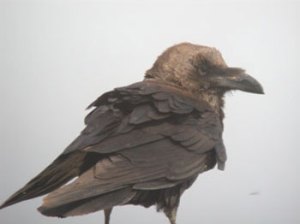
Brown-necked Raven of IsraelI would think, in my "sanctified imagination," that since the Lord created everything, birds included, that they might have been eager to see their Creator. Many humans failed to recognize Him while He was on earth, but I think the critters knew who He was. For example, the un-ridden donkey the Lord rode on. There is no report of it trying to buck or misbehave. It knew!

There are more kinds of birds that might have been there, but I will leave those to your imagination. Have a Merry Christmas as you consider the true meaning of the Lord's birth.


Produced by Sean Fielder and Pastor Jerry Smith
Photos-Eurasian Collared Dove (Streptopelia decaocto) by Reinier, Red Turtle Dove by Nikhil, Spanish Sparrow (Passer hispaniolensis) by Nikhil Devasar, Chickens and Roosters by Maji, Brown-necked Raven, Israel

Wednesday, December 19, 2012

The Cup of Christmas (by Matthew DelValle)

(originally published December 22, 2010)
39 And he came out and went, as was his custom, to the Mount of Olives, and the disciples followed him. 40 And when he came to the place, he said to them, “Pray that you may not enter into temptation.” 41 And he withdrew from them about a stone’s throw, and knelt down and prayed, 42 saying, “Father, if you are willing, remove this cup from me. Nevertheless, not my will, but yours, be done.” 43 And there appeared to him an angel from heaven, strengthening him. 44 And being in an agony he prayed more earnestly; and his sweat became like great drops of blood falling down to the ground. 45 And when he rose from prayer, he came to the disciples and found them sleeping for sorrow, 46 and he said to them, “Why are you sleeping? Rise and pray that you may not enter into temptation.”  (Luke 22:39-46)

During the Christmas season we are reminded of the truth of the Incarnation. The Incarnation is that God the Son—Jesus Christ—took on human flesh. He became one of us. He was born of a woman (Gal. 4:4). He lived under the authority and instruction of His parents (Luke 2:41-52). He had brothers and sisters (Luke 8:19-21). He ate when He was hungry (Luke 7:36). He drank when He was thirsty (John 4:7). He slept when He was tired (Luke 8:23). He cried when He was sad (John 11:35). He was like us in every respect (Heb. 2:17), yet without sin (Heb. 4:15). Christmas reminds us of all these truths.

In this passage from Luke 22 we catch another glimpse at the humanity of Jesus: He sweated. We have all sweated before. But have you sweat so hard drops of blood fell from your face? There is a condition known as hematidrosis where extreme anguish or physical strain causes the blood vessels to burst, mixing blood with sweat. Jesus was undergoing such anguish. Matthew’s account records Jesus saying, “My soul is very  sorrowful, even to death” (Matt. 26:38). Jesus was experiencing the most extreme level of anguish. Why? It was because of His Father’s cup that He knew He must drink (John 18:11).

The Cup
I want to camp out on this “cup” for a moment. In the Old Testament the cup was a metaphor for God’s wrathful judgment upon sin. In Psalm 75:8 Asaph wrote, “For in the hand of the LORD there is a cup with foaming wine, well mixed, and he pours out from it, and all the wicked of the earth shall drain it down to the dregs.” The prophet Isaiah echoes this language, “Wake yourself, wake yourself, stand up, O Jerusalem, you who have drunk from the hand of the LORD the cup of his wrath, who have drunk to the dregs the bowl, the
cup of staggering” (Isa. 51:17). In both of these Old Testament passages it is the wicked who are to drink the cup of God’s wrath. They are the ones who deserve judgment, and therefore they are the ones who drain the cup down to the dregs.

Yet here in Luke’s Gospel we read something startling: Jesus is asking the Father if He is willing to remove a cup from Him. God the Father had prepared a cup of wrath for God the Son to drink to the full. It was as if God the Father was saying, “In the hand of the LORD there is a cup with foaming wine, well mixed, and I pour out from it, and my only begotten Son shall drain it down to the dregs.”

Jesus knew He was to drink the cup of His Father’s wrath. He knew what awaited Him at His crucifixion. It wasn’t death at the hands of lawless men that put Jesus into agony. It wasn’t even the horrific death of crucifixion. Jesus had taught His disciples, “I tell you, my friends, do not fear those who kill the body, and after that have nothing more that they can do. But I will warn you whom to fear: fear him who, after he has killed, has authority to cast into hell” (Luke 12:4-5). No, what Jesus agonized over in the garden of Gethsemane was not murder by sinful men. What Jesus agonized over was drinking His own Father’s cup. That’s why He ended His prayer by saying, “Nevertheless, not my will, but yours, be done” (Luke 22:42). “It was the will of the LORD to crush him” (Isa. 53:10).

When Jesus cried out from the cross, “My God, my God, why have you forsaken me?”, that wasn’t hyperbole (Matt. 27:46). Jesus wasn’t just saying how He felt. He didn’t merely feel forsaken. He was forsaken. He was bearing the full weight of the wrath of God against all law-breaking, glory-trading, God-dishonoring sin upon Himself. Every bitter thought, every evil deed—all the sins of everyone who would believe in Him Jesus took upon Himself. If ever there was a person truly forsaken—in the deepest sense of the word—it was Jesus. He drank the cup down to the dregs.

Christ Our Curse
Galatians 3:13 says, “Christ redeemed us from the curse of the law by becoming a curse for us—for it is written, ‘Cursed is everyone who hangs on a tree.’” The reason Jesus was forsaken by His Father is because He was cursed by His Father. That is literally what happened at Golgotha. The Father couldn’t even bear to look at His Son, who had become a mass of sin. The very sight of it disgusted Him because all He saw was filth. That is what is meant when we read, “He became sin who knew no sin” (2 Cor. 5:21). Christ became sin.

Think about this: The eternity of punishment that the wicked will experience will not compare to the wrath that was inflicted upon our Lord. It will not be equal. They will only experience the due punishment for one person’s sins—their own. No more, no less. Christ took the punishment of wrath not for one person but for billions of people. That is punishment upon punishment, wrath upon wrath, multiplied billions of times over. And what normally takes an eternity to unleash was concentrated into the most intense three hours that can be conceived. 6-week summer classes are harder than 16-week semester classes; try cramming an eternity of punishment into 3 hours. The cross was a crash course in experiencing the holy wrath of Almighty God.

I think that’s why Jesus prayed so hard His sweat became blood. It was His last opportunity to commune with His Father before He would be totally and utterly forsaken. In a matter of hours, the Father would turn His back on His Son. He would not listen to Him. He would curse Him. That’s why Luke records in verse 44 that Jesus was in agony. What could be more agonizing? He was about to experience the wrath of His Father.

Saved From God’s Wrath
So what are you saved from? If someone asks you, “Are you saved?” what do they mean? Saved from what? Friends, if we have repented of our sins and believed in our hearts that Jesus Christ is Lord, we have been saved from God Himself. We aren’t saved from hell. Hell wasn’t mad at us. We’re saved from God, and His righteous wrath against our rebellious, cosmic treason. In my place—in my place!—condemned He stood.

I love these words from John Stott about Christ’s death on the cross: “[The cross] is an appeasement of the wrath of God by the love of God through the gift of God. The initiative is not taken by us, nor even by Christ, but by God himself in sheer unmerited love. His wrath is averted not by any external gift, but by his own self-giving to die the death of sinners. This is the means he has himself contrived by which to turn his own wrath away.” To which I say, “Hallelujah!”

We are saved from God, by God, for God. Now God is no longer angry with us but only and forevermore our merciful Father. That, my friends, is amazing grace. Thank you, Jesus, for drinking the cup for me.

Man of Sorrows! what a name
For the Son of God, who came
Ruined sinners to reclaim.
Hallelujah! What a Savior!

Bearing shame and scoffing rude,
In my place condemned He stood;
Sealed my pardon with His blood.
Hallelujah! What a Savior!

Guilty, vile, and helpless we;
Spotless Lamb of God was He;
“Full atonement!” can it be?
Hallelujah! What a Savior!

Lifted up was He to die;
“It is finished!” was His cry;
Now in Heav’n exalted high.
Hallelujah! What a Savior!

When He comes, our glorious King,
All His ransomed home to bring,
Then anew His song we’ll sing:
Hallelujah! What a Savior!


Other posts by Matthew DelValle:

Friday, December 14, 2012

God's Perfect Timing (by Lou Gentry)

(originally posted on December 17, 2010)


In a recent sermon, Pastor Osborne alluded to God's perfect timing of Jesus' birth. As one example of this perfect timing, consider the fact that when Jesus was born one language was used for communication throughout the civilized world. This phenomenon was a result of the conquests of Alexander the Great, who conquered the world linguistically as well as physically. The world was unified by the koine Greek language, and the apostles wrote the New Testament and preached the gospel in this language.

Other examples of God's perfect timing of the birth of Jesus include the fact that the entire world had come under the one government of Rome--a single citizenship for all. The Romans had also constructed roads throughout their vast empire and protected them from vandals and thieves. This enabled commerce and travel to flourish. These three factors allowed Paul and the early Christians to travel the length and breadth of the empire in relative safety to share the gospel from Palestine to Spain.

So with a unifying language, a single citizenship, and roads connecting every part of the empire, the physical world was prepared for the coming of Jesus. These factors also allowed Caesar Augustus to order a census of the entire Roman world, thereby bringing Mary and Joseph to Bethlehem where, as prophesied, the virgin would give birth to the Messiah in the city of David.

There are many of us today who are waiting for God to work in our life; and, as we wait, we should remember God's perfect timing in the sending of His Son. Let us pause during this Christmas season and thank our Heavenly Father for His wisdom and His ability to perfectly order the events of our lives, including the most important event--Christ's coming.

Other Articles by Lou Gentry:

    Monday, December 10, 2012

    Sermon Archives: The Rage of the Maniacal Mad Monarch

    (originally posted on December 13, 2010)


    Some of you may remember a series of Christmas messages that Pastor Osborne preached in 2006 entitled "The Voices of Christmas."  Each message centered around one of the characters in the Christmas story and featured a monologue from that character.  One of the messages was entitled "The Rage of the Maniacal Mad Monarch" and featured David Tucker as King Herod.  Listen to it on our website.


    Related Posts: