Showing posts with label Birds of the Bible. Show all posts

Friday, December 21, 2012

Birds of the Bible - At the Manger

(originally posted on December 24, 2009)
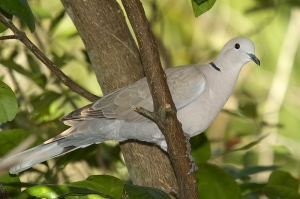
Eurasian Collared Dove (Streptopelia decaocto) by Reinier
And it came to pass in those days that a decree went out from Caesar Augustus that all the world should be registered. This census first took place while Quirinius was governing Syria. So all went to be registered, everyone to his own city. Joseph also went up from Galilee, out of the city of Nazareth, into Judea, to the city of David, which is called Bethlehem, because he was of the house and lineage of David, to be registered with Mary, his betrothed wife, who was with child. So it was, that while they were there, the days were completed for her to be delivered. And she brought forth her firstborn Son, and wrapped Him in swaddling cloths, and laid Him in a manger, because there was no room for them in the inn. (Luke 2:1-7 NKJV)
Most Christians know the passage in Luke 2 about the birth of our Savior, the Lord Jesus Christ. Many others have heard that passage read each Christmas. The birth of Jesus, who was born to die. "Although our first picture of Jesus is as a baby in a manger, it must not be our last. The Christ child in the manger is the subject of a beautiful Christmas scene, but we must not leave him there. This tiny, helpless baby lived an amazing life, died for us, ascended to heaven, and will return to earth as King of kings. Christ will rule the world and judge all people according to their decisions about him. Do you still picture Jesus as a baby in a manger—or is he your Lord? Make sure you don't underestimate Jesus. Let him grow up in your life." (Life Application Study Bible)

Joseph and Mary were not so poor that they could not afford a room at the end, but "there was no room for them in the inn." Because of the registrations going on, each had to show up in their own city. According to the Jewish mode of registration the people would be enrolled by tribe, families or clans, and households. "But David occasionally went and returned from Saul to feed his father's sheep at Bethlehem." (1 Samuel 17:15 NKJV).

Micah prophesied in Micah 5:2:
But thou, Bethlehem Ephratah, though thou be little among the thousands of Judah, yet out of thee shall he come forth unto me that is to be ruler in Israel; whose goings forth have been from of old, from everlasting.
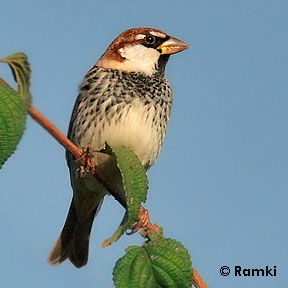
Spanish Sparrow (Passer hispaniolensis) by Nikhil Devasar"This mention of the manger is the basis for the traditional belief that Jesus was born in a stable. Stables were often caves with feeding troughs (mangers) carved into the rock walls. Despite popular Christmas card pictures, the surroundings were dark and dirty. This was not the atmosphere the Jews expected as the birthplace of the Messiah-King. They thought their promised Messiah would be born in royal surroundings. We should not limit God by our expectations. He is at work wherever he is needed in our sin-darkened and dirty world." (Life Application Study Bible)

All of the above was to set the location for the manger and why in my imagination, I believe birds would have been around the manger. There are no verses in the Bible to show there were birds there, nor are there any to show that lambs, cows, or horse were there either, as depicted in our Christmas scenes. So, here is what birds I think may have been there at Jesus' birth.

Doves - "You who dwell in Moab, Leave the cities and dwell in the rock, And be like the dove which makes her nest In the sides of the cave's mouth." (Jeremiah 48:28 NKJV)

Turtledoves - The flowers appear on the earth; The time of singing has come, And the voice of the turtledove Is heard in our land." (Song of Solomon 2:12 NKJV)
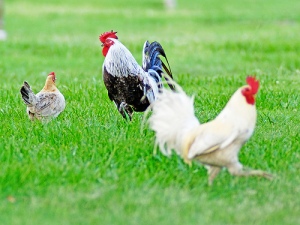
Chickens and Roosters by MajiSparrows and Swallows- "How lovely is Your tabernacle, O LORD of hosts! My soul longs, yes, even faints For the courts of the LORD; My heart and my flesh cry out for the living God. Even the sparrow has found a home, And the swallow a nest for herself, Where she may lay her young— Even Your altars, O LORD of hosts, My King and my God." (Psalms 84:1-3 NKJV) If they wanted to be at the altars or house of God, then surely, they wanted to be near their Creator.

Chickens and Roosters - "O Jerusalem, Jerusalem, the one who kills the prophets and stones those who are sent to her! How often I wanted to gather your children together, as a hen gathers her chicks under her wings, but you were not willing! (Matthew 23:37 NKJV) and Jesus said to him, "Assuredly, I say to you that this night, before the rooster crows, you will deny Me three times." (Matthew 26:34 NKJV) Cave or Stable, there had to be Chickens, Hens, and Roosters.

Ravens - Who provides food for the raven, When its young ones cry to God, And wander about for lack of food? (Job 38:41 NKJV) They wanted to be near the One who has been feeding them.
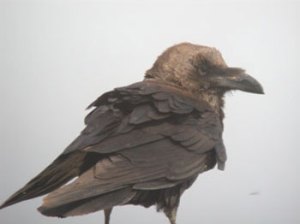
Brown-necked Raven of IsraelI would think, in my "sanctified imagination," that since the Lord created everything, birds included, that they might have been eager to see their Creator. Many humans failed to recognize Him while He was on earth, but I think the critters knew who He was. For example, the un-ridden donkey the Lord rode on. There is no report of it trying to buck or misbehave. It knew!

There are more kinds of birds that might have been there, but I will leave those to your imagination. Have a Merry Christmas as you consider the true meaning of the Lord's birth.


Produced by Sean Fielder and Pastor Jerry Smith
Photos-Eurasian Collared Dove (Streptopelia decaocto) by Reinier, Red Turtle Dove by Nikhil, Spanish Sparrow (Passer hispaniolensis) by Nikhil Devasar, Chickens and Roosters by Maji, Brown-necked Raven, Israel

Friday, December 3, 2010

Birds of the Bible - God's Provision for His Creatures (by Lee Dusing)

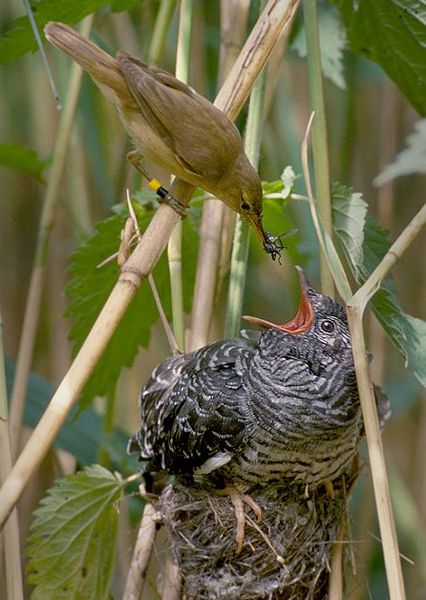
Common Cuckoo (Cuculus canorus) being raised by a Reed Warbler©WikiC
The LORD is good to all, And His tender mercies are over all His works. (Psalms 145:9 NKJV)
The following thoughts and verses are from R. A.Torrey's Topical Textbook under the category of The Providence of God.

Preserving His creatures:

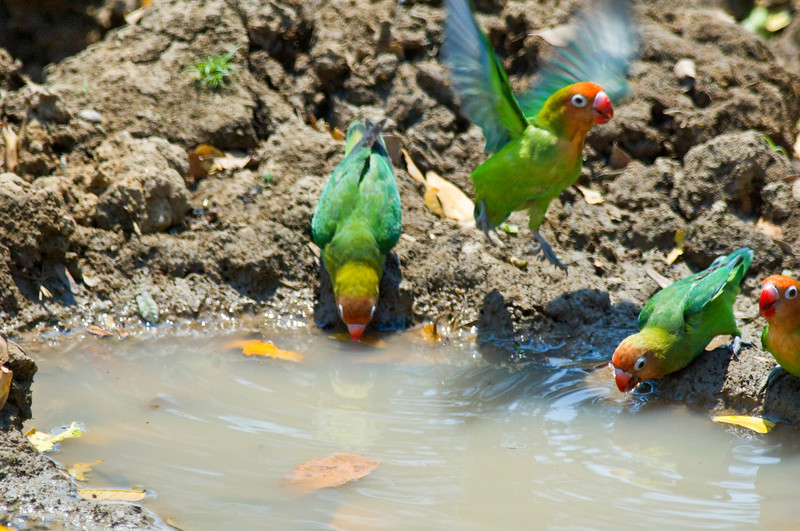
Lilian's Lovebird (Agapornis lilianae) by Africaddict
You alone are the LORD; You have made heaven, The heaven of heavens, with all their host, The earth and everything on it, The seas and all that is in them, And You preserve them all. The host of heaven worships You. (Nehemiah 9:6 NKJV)
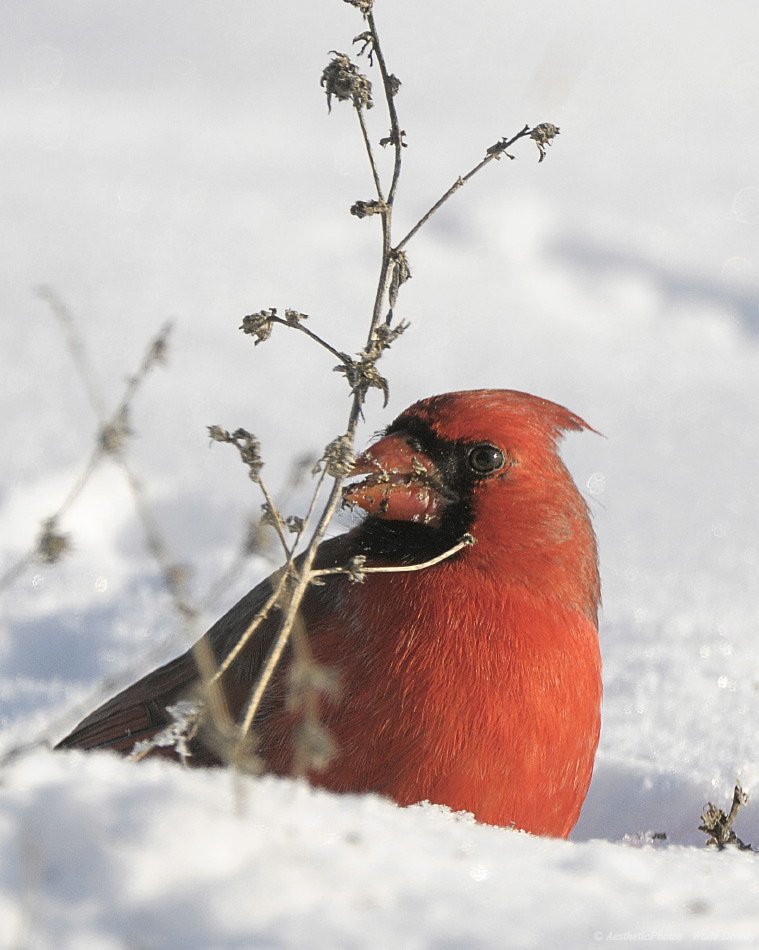
Northern Cardinal by Aestheticphotos
Your righteousness is like the great mountains; Your judgments are a great deep; O LORD, You preserve man and beast. (Psalms 36:6 NKJV)
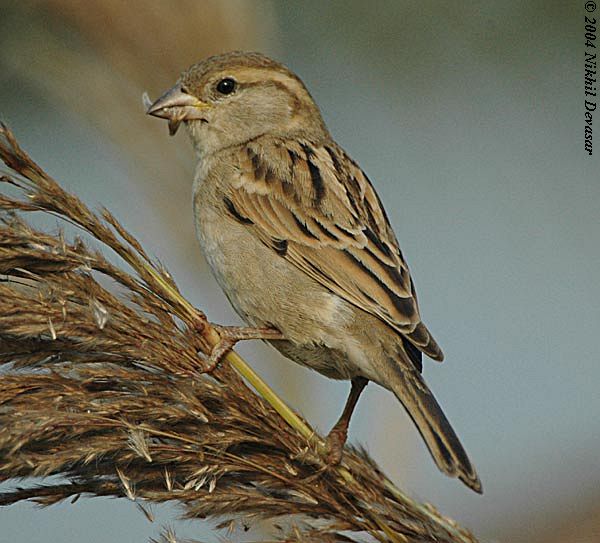
House Sparrow (Passer domesticus) by Nikhil Devasar
House Sparrow (Passer domesticus) by Nikhil Devasa
Are not two sparrows sold for a copper coin? And not one of them falls to the ground apart from your Father's will. (Matthew 10:29 NKJV)
Providing for His creatures:

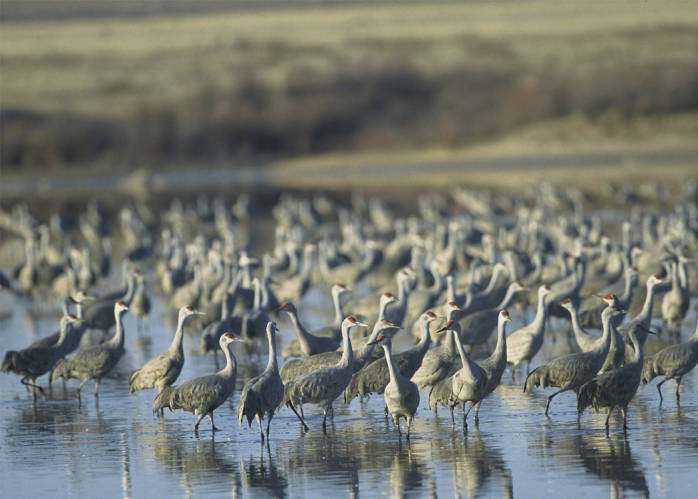
Sandhill Crane (Grus canadensis) flock ©USFWS
These all wait for You, That You may give them their food in due season. What You give them they gather in; You open Your hand, they are filled with good. (Psalms 104:27-28 NKJV)
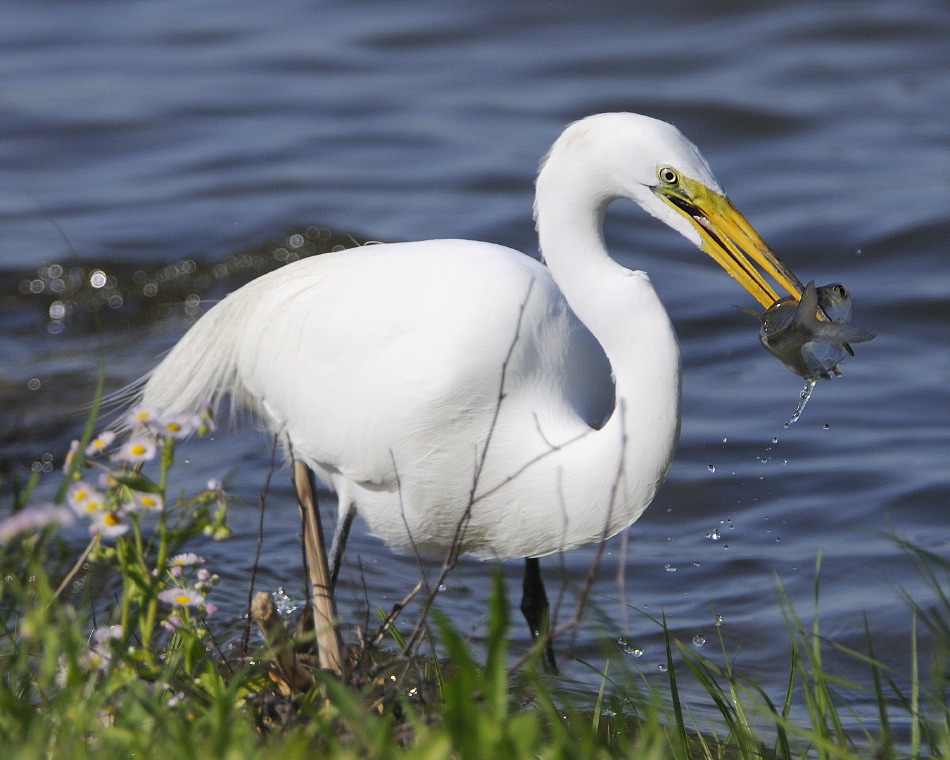
Western Great Egret (Ardea alba) With Fish by AestheticPhotos
Who giveth food to all flesh: for his mercy endureth for ever. (Psalms 136:25 KJV)

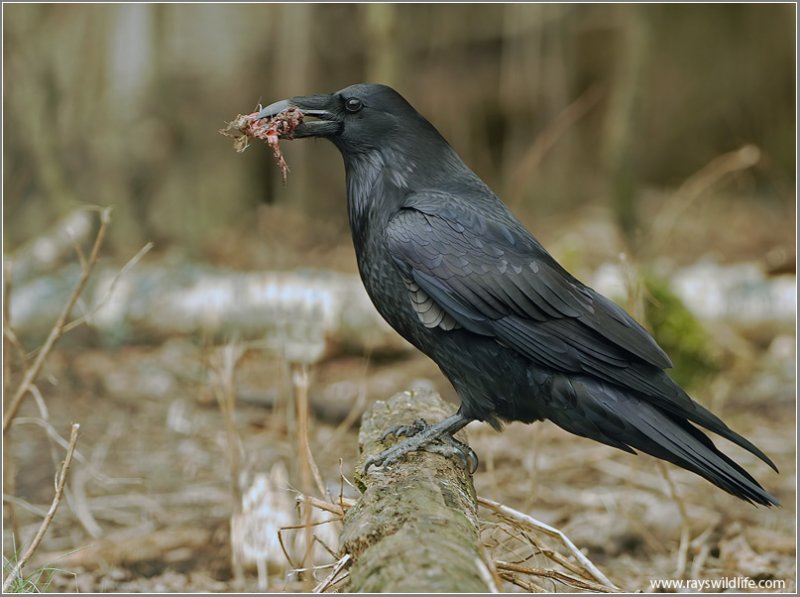
Northern Raven (Corvus corax) by Ray
Northern Raven (Corvus corax) by Ra
He giveth to the beast his food, and to the young ravens which cry. (Psalms 147:9 KJV)
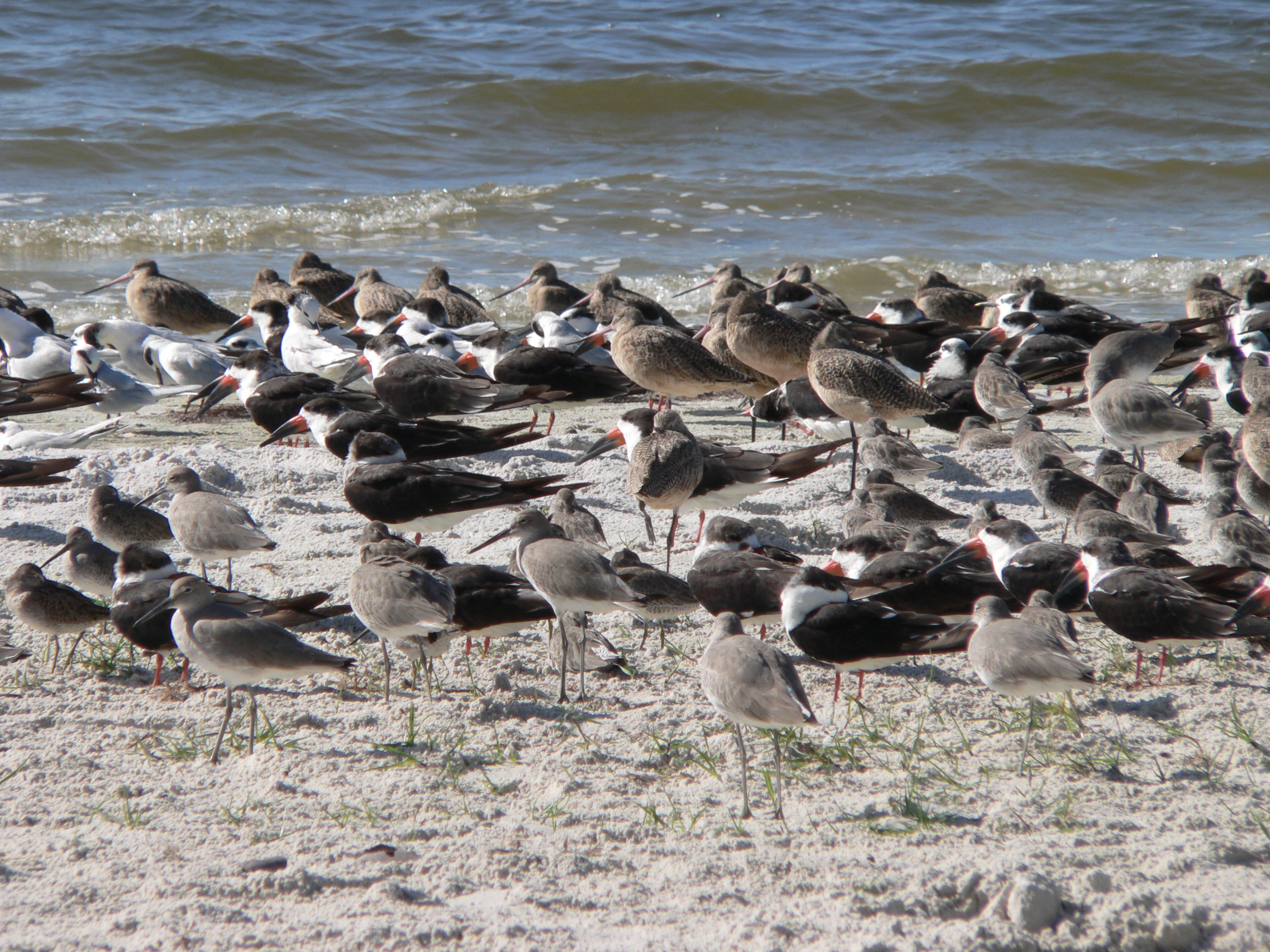
Seashore at MacDill AFB by Lee

Look at the birds of the air, for they neither sow nor reap nor gather into barns; yet your heavenly Father feeds them. Are you not of more value than they? (Matthew 6:26 NKJV)
Lee's addition:

Yellow-throated Vireo (Vireo flavifrons) ©WikiC
But seek first the kingdom of God and His righteousness, and all these things shall be added to you. Therefore do not worry about tomorrow, for tomorrow will worry about its own things. Sufficient for the day is its own trouble. (Matthew 6:33-34 NKJV)
Related Posts:

Monday, November 22, 2010

Birds of the Bible - Thanksgiving (by Lee Dusing)

When Stephen asked us to write about 10 (+ or -) things we are thankful for, I am sure he knew that I would write about the birds. How can we be thankful for the birds?

White-winged Scoter (Melanitta deglandi) by Ray
White-winged Scoter by Ray
So God created the great sea creatures and every living creature that moves, with which the waters swarm, according to their kinds, and every winged bird according to its kind. And God saw that it was good. (Genesis 1:21 ESV)
I am thankful for a Creator God, the Lord, who made not only the birds, but all of us as well. "Know ye that the LORD he is God: it is he that hath made us, and not we ourselves; we are his people, and the sheep of his pasture."  (Psa 100:3)
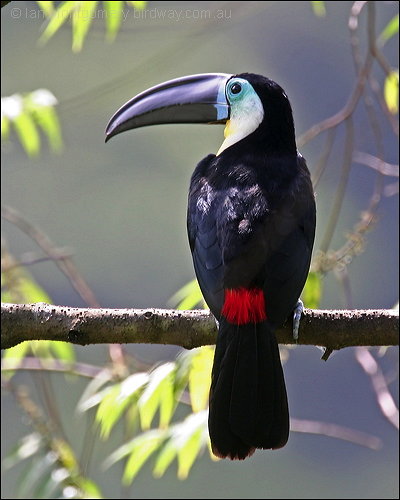
Channel-billed Toucan (Ramphastos vitellinus) by Ian
Channel-billed Toucan by Ian
Now out of the ground the LORD God had formed every beast of the field and every bird of the heavens and brought them to the man to see what he would call them. And whatever the man called every living creature, that was its name. (Genesis 2:19 ESV)
I am thankful that the LORD God gave Adam the privilege and the knowledge to name the birds. We were created with intellect and didn't have to progress up through evolution to finally get "smart enough" to name the birds. Adam wasn't even a week old.
The fear of you and the dread of you shall be upon every beast of the earth and upon every bird of the heavens, upon everything that creeps on the ground and all the fish of the sea. Into your hand they are delivered. Every moving thing that lives shall be food for you. And as I gave you the green plants, I give you everything. (Genesis 9:2-3 ESV)
Wild Turkey (Meleagris gallopavo) by Daves BirdingPix
Wild Turkey by Daves BirdingPix
I am thankful for the food the Lord has allowed us to eat. Many of us will be eating Turkey this Thanksgiving Day. (Even if it is sometimes sad to think about.)
I know all the birds of the hills, and all that moves in the field is mine. (Psalms 50:11 ESV)
I am thankful that just as God knows all the birds, He knows us. "Because he hath set his love upon me, therefore will I deliver him: I will set him on high, because he hath known my name." (Psalms 91:14 KJV)
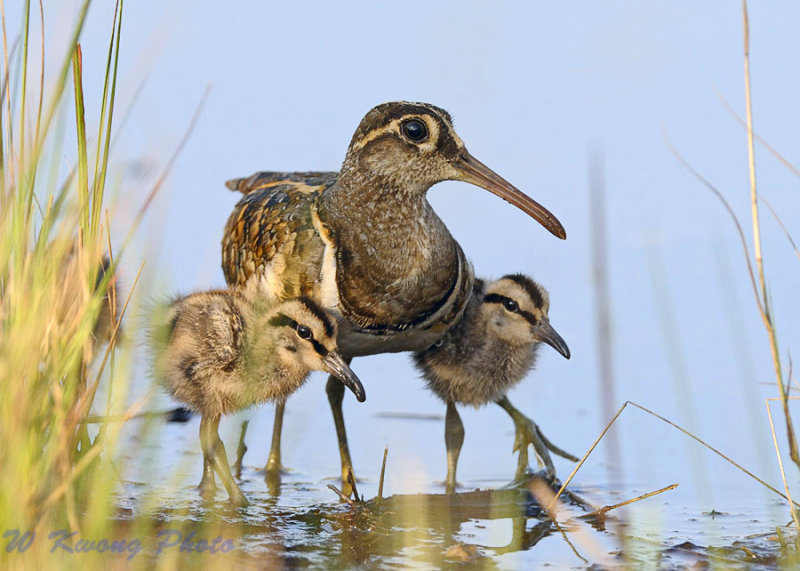
Greater Painted Snipe (Rostratula benghalensis) by W Kwong
Greater Painted Snipe by W Kwong
Therefore I tell you, do not be anxious about your life, what you will eat or what you will drink, nor about your body, what you will put on. Is not life more than food, and the body more than clothing? Look at the birds of the air: they neither sow nor reap nor gather into barns, and yet your heavenly Father feeds them. Are you not of more value than they? And which of you by being anxious can add a single hour to his span of life? And why are you anxious about clothing? Consider the lilies of the field, how they grow: they neither toil nor spin, (Matthew 6:25-28 ESV)
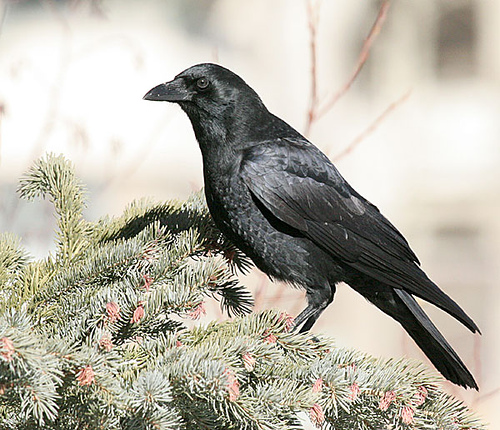
Chihuahuan Raven (Corvus cryptoleucus)Raven (Corvus corax) by Kent Nickell
Chihuahuan Raven by Kent Nickell
For life is more than food, and the body more than clothing. Consider the ravens: they neither sow nor reap, they have neither storehouse nor barn, and yet God feeds them. Of how much more value are you than the birds! And which of you by being anxious can add a single hour to his span of life? If then you are not able to do as small a thing as that, why are you anxious about the rest? (Luke 12:23-26 ESV)
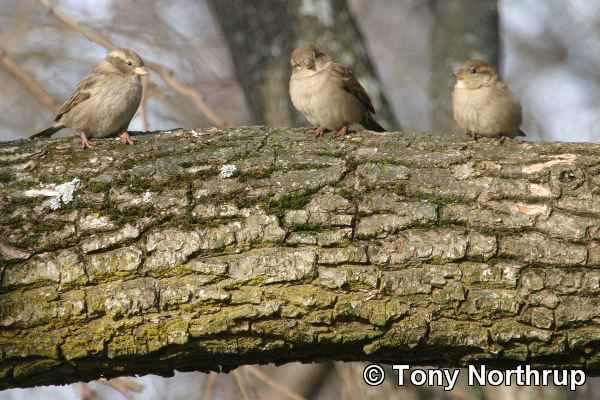
Three Sparrows
Are not two sparrows sold for a penny? And not one of them will fall to the ground apart from your Father. But even the hairs of your head are all numbered. Fear not, therefore; you are of more value than many sparrows.  (Matthew 10:29-31 ESV)
I am thankful for these three parallel verses that remind us that God cares about not only every need of the birds, but also for ours. We are more valuable than them and He provides everything for them and knows all about them. Why do we need to be anxious?
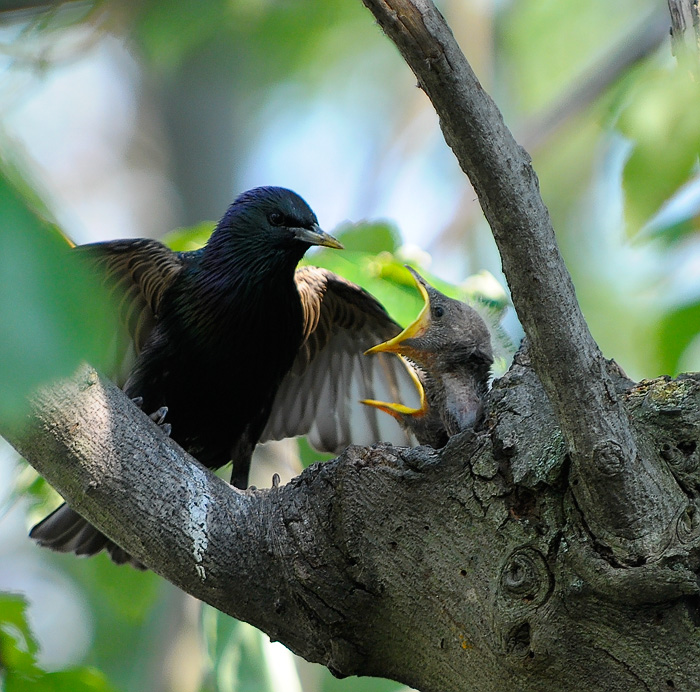
Common Starling (Sturnus vulgaris) at Nest by Anthony747
Common Starling at Nest by Anthony
And Jesus said to him, "Foxes have holes, and birds of the air have nests, but the Son of Man has nowhere to lay his head." (Matthew 8:20 ESV)
I am very thankful that the Lord Jesus Christ, became my Savior.
Who, being in the form of God, thought it not robbery to be equal with God: But made himself of no reputation, and took upon him the form of a servant, and was made in the likeness of men: And being found in fashion as a man, he humbled himself, and became obedient unto death, even the death of the cross. (Philippians 2:6-8 KJV)
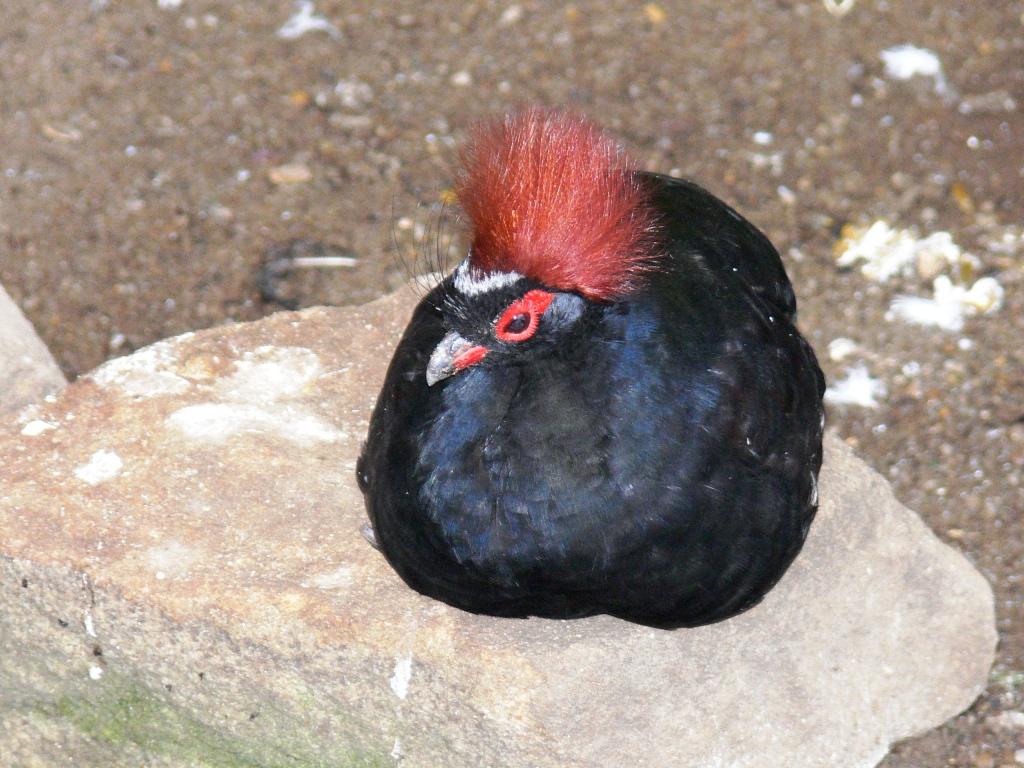
Crested Partridge (Rollulus rouloul) at NA by Lee

The heart is deceitful above all things, and desperately wicked: who can know it? I the LORD search the heart, I try the reins, even to give every man according to his ways, and according to the fruit of his doings. As the partridge sitteth on eggs, and hatcheth them not; so he that getteth riches, and not by right, shall leave them in the midst of his days, and at his end shall be a fool. (Jeremiah 17:9-11 KJV)
I am thankful for the partridge that reminds me not to seek earthly riches unjustly.

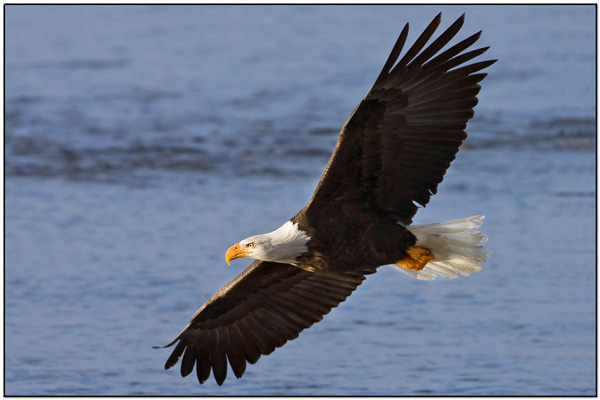
Bald Eagle flying by Dave's BirdingPix

Have you not known? Have you not heard? The LORD is the everlasting God, the Creator of the ends of the earth. He does not faint or grow weary; his understanding is unsearchable. He gives power to the faint, and to him who has no might he increases strength. Even youths shall faint and be weary, and young men shall fall exhausted; but they who wait for the LORD shall renew their strength; they shall mount up with wings like eagles; they shall run and not be weary; they shall walk and not faint. (Isaiah 40:28-31 ESV)

I am thankful for the wings of the Eagle to remind me of all the promises in this passage. Our God is the everlasting God, doesn't faint or grow weary, omniscient, omnipotent, omnipresent and the Creator. Awesome!
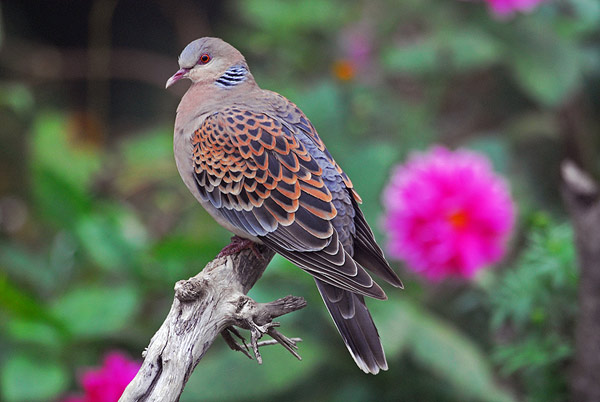
Oriental Turtle Dove (Streptopelia orientalis) by Nikhil
Oriental Turtle Dove by Nikhil

But if he cannot afford two turtledoves or two pigeons, then he shall bring as his offering for the sin that he has committed a tenth of an ephah of fine flour for a sin offering. He shall put no oil on it and shall put no frankincense on it, for it is a sin offering. (Leviticus 5:11 ESV)

I am thankful for doves and pigeons because they remind me that in the Old Testament they were innocently sacrificed for a person's sin. That was looking forward to the death of Christ on the cross. I am thankful for my salvation in Jesus Christ.
We know that Christ, being raised from the dead, will never die again; death no longer has dominion over him. For the death he died he died to sin, once for all, but the life he lives he lives to God. (Romans 6:9-10 ESV)

My little children, these things write I unto you, that ye sin not. And if any man sin, we have an advocate with the Father, Jesus Christ the righteous: And he is the propitiation for our sins: and not for ours only, but also for the sins of the whole world. (1 John 2:1-2 KJV)

Beloved, let us love one another: for love is of God; and every one that loveth is born of God, and knoweth God. He that loveth not knoweth not God; for God is love. In this was manifested the love of God toward us, because that God sent his only begotten Son into the world, that we might live through him. Herein is love, not that we loved God, but that he loved us, and sent his Son to be the propitiation for our sins. Beloved, if God so loved us, we ought also to love one another.  (1 John 4:7-11 KJV)

Wednesday, October 27, 2010

Birds of the Bible - Spain

Eurasian Hoopoe (Upupa epops) by Ian

I have enjoyed getting to know the Tim and Pam Darling, our missionaries, while they have been in transition from the field of Venezuela to Spain. We have all been praying for them to get their Resident Visas so they can get on over to Spain to start their new ministry. They now have the Visas in hand, which is a great answer to prayer. They are busy getting packed up and will go to Spain around the 10th of November.

Spanish Sparrow (Passer hispaniolensis) by Nikhil Devasar
Spanish Sparrow (Passer hispaniolensis) by Nikhil
This blog is in honor of their friendship and to help them get to know the birds they may encounter in Spain. Thanks, Tim and Pam, for your friendship and our prayers will follow you as you travel and reach those in Spain for our Lord Jesus Christ.

Of course the Sparrows will be over there. The House Sparrow, Spanish Sparrow, Eurasian Tree Sparrow, Rock Sparrow and the White-throated Sparrows will help you to remember
Even the sparrow finds a home, and the swallow a nest for herself, where she may lay her young, at your altars, O LORD of hosts, my King and my God. Blessed are those who dwell in your house, ever singing your praise! Selah (Psalms 84:3-4 ESV)
Along with them you will get to meet the Eurasian Hoopoe. A favorite of mine. There will be Swifts - Common, White-rumped, Little, Pallid and Plain Swifts. Also the Swallows - Red-rumped and the Barn.
Yea, the stork in the heaven knoweth her appointed times; and the turtle(dove) and the crane and the swallow observe the time of their coming; but my people know not the judgment of the LORD. (Jeremiah 8:7 KJV)
Lots of Doves and Pigeons to be on the lookout for - Rock Dove (pigeon), Eurasian Collared-Dove, Oriental Turtle-Dove, Laughing Dove, European Turtle-Dove, Bolle's Pigeon, Laurel Pigeon and a Stock Pigeon. Only found the Common Crane listed there.

There are 9 kinds of Owls, 6 Falcons, 3 Kites, 3 Bitterns, 2 Cormorants, 4 Herons, 3 Storks, 3 Hawks, 2 Lapwings, the Osprey, 3 Partridges, 2 Quails and the Bobwhite, and 4 Swans.

There is the Common Raven and you know what the Word says about the Ravens.
Consider the ravens: for they neither sow nor reap; which neither have storehouse nor barn; and God feedeth them: how much more are ye better than the fowls? (Luke 12:24 KJV)
Tawny Eagle by Africaddict
Saved the Eagles for last, not because they are bad, but because of the promises that use them as examples. In Spain they have the Adalbert's, Golden, Greater Spotted, Imperial, Lesser Spotted, Tawny, Short-toed Snake-Eagle, White-tailed Eagle, Bonelli's Eagle and the Booted Eagles.
Wilt thou set thine eyes upon that which is not? for riches certainly make themselves wings; they fly away as an eagle toward heaven. (Proverbs 23:5 KJV)
The Darling's are definitely not going to Spain to obtain earthly gains, but to gain heavenly rewards.
But they that wait upon the LORD shall renew their strength; they shall mount up with wings as eagles; they shall run, and not be weary; and they shall walk, and not faint. (Isaiah 40:31 KJV)
Tim and Pam, our collective prayers will go with you.


Wednesday, October 13, 2010

Learning From The Birds - Overwhelmed

A Shiny Cowbird (Molothrus bonariensis) chick being fed by a Rufous-collared Sparrow (Zonotrichia Capensis)
A Shiny Cowbird chick being fed by a Rufous-collared Sparrow ©Wikipedia
But now ask the beasts, and they will teach you; And the birds of the air, and they will tell you; (Job 12:7 NKJV)
Brood parasites are organisms that use the strategy of brood parasitism, found among birds, fish or insects, involving the manipulation and use of host individuals either of the same or different species to raise the young of the brood-parasite. This relieves the parasitic parent from the investment of rearing young or building nests, enabling them to spend more time foraging, producing offspring etc. Additionally, the risk of egg loss to raiders such as raccoons is mitigated, by having distributed the eggs amongst a number of different nests. As this behavior is damaging to the host, it will often result conflict between parasite and host.

Interspecific brood-parasites include the Old World Cuckoos in Eurasia and Australia, Cowbirds and Black-headed Ducks in the Americas, and Indigobirds, Whydahs, and the Honeyguides in Africa.

Common Cuckoo being raised by a Reed Warbler©WikiC
Among specialist avian brood parasites, mimetic eggs are a nearly universal adaptation. There is even some evidence that the generalist Brown-headed Cowbird may have developed an egg coloration mimicking a number of their hosts.

Most avian brood parasites will remove a host egg when they lay one of their own in a nest. Depending upon the species, this can happen either in the same visit to the host nest or in a separate visit before or after the parasitism. This both prevents the host species from realizing their nest has been parasitized and reduces competition for the parasitic nestling once it hatches.

Most avian brood parasites have very short egg incubation periods and rapid nestling growth. This gives the parasitic nestling a head start on growth over its nestmates, allowing it to outcompete them. In cases where the host nestlings are significantly smaller than the parasite nestling, the host nestlings will often starve to death. Some brood parasites will eliminate all their nestmates shortly after hatching, either by ejecting them from the nest or killing them with sharp mandible hooks which fall off after a few days.

Whoa! This is NOT NICE! What is so amazing is that if not detected in time, many times the birds do find the intruding egg and toss it out, but most times, the unsuspecting parents raise this young bird as if it were it's own.

What can we, as observers of this behavior, learn from the birds? I want to consider the host birds who have quite a challenge to face. They either fix the problem or they could be very "overwhelmed" with situation at hand.

My first thoughts were from a physical need. When faced with a health problem, we pray and visit the doctors and try to remedy the situation. Sometimes the ailment is not cured and we may be faced with an "overwhelming" need. Do we accept whatever the outcome and:
Not that I speak in regard to need, for I have learned in whatever state I am, to be content: (Philippians 4:11 NKJV)
Another lesson that could by learned by observing this "overwhelming" task might be in sharing the load. Often in churches, the ones who are willing to serve the Lord become very involved because of others not volunteering or helping. They keep taking on more responsibilities, not complaining, but in time they could become "overwhelmed." We should find a way to:
Bear one another's burdens, and so fulfill the law of Christ. (Galatians 6:2 NKJV)

Though one may be overpowered by another, two can withstand him. And a threefold cord is not quickly broken. (Ecclesiastes 4:12 NKJV)

Bald Eagle Flying by Dave's BirdingPix
The host birds accept the situation and do the best they can to raise the young bird. How do they do that? One worm at a time! When we become "overwhelmed," that is just what we need do. No! Not by catching worms, but by taking one step at a time and harkening to the following promises:

But ye, brethren, be not weary in well doing. (2 Thessalonians 3:13 KJV)

And let us not be weary in well doing: for in due season we shall reap, if we faint not. (Galatians 6:9 KJV)

I can do all things through Christ which strengtheneth me.
(Philippians 4:13 KJV)

But they that wait upon the LORD shall renew their strength; they shall mount up with wings as eagles; they shall run, and not be weary; and they shall walk, and not faint. (Isaiah 40:31 KJV)

(Some information from Wikipedia)

Wednesday, September 29, 2010

Birds of the Bible - At the National Aviary


Wattled Curassow (Crax globulosa) by Lee at National Aviary
Wattled Curassow (Crax globulosa) at National Aviary


Birds of the Bible - at the National Aviary in Pittsburgh, PA seems like a logical topic. As you may be aware, Dan and I, visited the Aviary in August. What a fantastic place to see birds from all around the world. With over 800 birds, there had to be some of the birds mentioned in the Bible.

The Bible says that all birds were created by the Lord, so technically, they all qualify. For this blog, I will confine it to named types of birds. Birds mentioned below are in the same family of the named bird, at least according to the IOC list of Families and Orders.
I know all the birds of the hills, and all that moves in the field is mine. (Psalms 50:11 ESV)

And these are they which ye shall have in abomination among the fowls; they shall not be eaten, they are an abomination: the eagle, and the ossifrage, and the ospray, And the vulture, and the kite after his kind; Every raven after his kind; And the owl, and the night hawk, and the cuckow, and the hawk after his kind, And the little owl, and the cormorant, and the great owl, And the swan, and the pelican, and the gier eagle, And the stork, the heron after her kind, and the lapwing, ... (Leviticus 11:13-19 KJV)
Birds of the Bible (In parenthesis are the birds found at the Aviary)
Their birds change from time to time and what we saw will change. We saw many more birds, but these are only the Birds mentioned by name (kind) in Scripture.


*

Wednesday, September 15, 2010

Using Whatever Talent the Lord Gives Us (by Lee Dusing)

As many of you know, around Faith Baptist, I am known as the "Bird Lady." Also many have read the "Birds of the Bible" articles of the past. How did this come about?

When I was 16 years old (1960) I accepted the Lord as my Savior and thus began my journey with the Lord. The Lord allowed me to attend Bob Jones University through the War Orphans Fund (my father died as a result of the war and my mother died when I was 13). Not being from an educational family (D+ average in high school), I struggled academically, but the desire to finish was strong. I finished my degree 16 years after I started with a Bible major. I had tried many majors, but never found what I wanted.

While we were on vacation this summer, we attended a friend's church and they were questioning things that became a turning point in our lives. There were various testimonies given and then I remembered one that changed me. In 1979, Dan and I purchased our first computer, a Radio Shack Model I. I spent hours teaching myself all about it and learning to program. That computer and the many since gave me a direction and a niche for me to fill. I always told the Lord that I just didn't have any talents to offer Him. Long story short, I became a computer teacher and ended up even getting a Masters degree in Computer Education.

Sunbittern at Lowry Park Zoo by Dan
In the late 80's I became a birdwatcher. A naturalist at our local park became my mentor. I had always loved the out of doors and enjoyed watching God's creation, but could not put many names on what I saw. Birds are just so beautiful and show the Lord's creative hand so much. I am just amazed and love watching them. Another niche!

Now there were three important parts to my life; the Lord, computers and birds. (Of course Dan is there also) My desire and prayers were that the Lord would let me blend those three things into some sort of ministry for Him. It began by doing five-minute presentations to a junior Sunday School class each week. When we moved up here to Faith, I couldn't find an outlet to do my bird presentations until the Lord, through Stephen, let me start doing the "Birds of the Bible" on the blog here.

I started my own blog to learn how to do the articles here. Now, the Lord is blessing my blog by letting the "Birds of the Bible" and many other Christian birdwatching articles be read by people all over the world. And, now, I am the "Bird Lady" and I thank the Lord for His Love and Grace to let me be called by that name.

Call unto me, and I will answer thee, and shew thee great and mighty things, which thou knowest not. (Jeremiah 33:3 KJV)
My prayer and challenge for the readers is that you also will let the Lord use what ever talent or gift you have for Him. Maybe you love bugs, flowers, music, or whatever. Maybe you are an encourager, good cook, child sitter, nursery worker, like to visit the sick, etc. We all have something that the Lord has given us. Let the Lord use what you have for Him so that we can help reach others with the Gospel and God's Love.

Friday, July 2, 2010

Birds of the Bible - Final Blog at Faith

(Updated 10-25-10 - Stephen reworked the Fountain and this did not become the final blog. I like the new format.)
Look at the birds of the air: they neither sow nor reap nor gather into barns, and yet your heavenly Father feeds them. Are you not of more value than they? (Matthew 6:26 ESV)
Bald Eagle
All good things must come to an end and the blog here at Faith will be closing down soon. I appreciate the privilege that I have had to write about the Birds of the Bible. Thanks you, Stephen, for giving me the opportunity do this on Fridays. It is hard to believe that 109 Birds of the Bible articles have been written, along with some other articles. Stephen knew of my desire to serve the Lord with birds and the Bible.

I have learned many great truths from God's Word and about the birds as the articles were prepared. Hope you have enjoyed the articles and that you have become more familiar with the birds around you and those mentioned in the Bible. I also hope it has challenged you to study your Bible more.

Hoopoe
Will the articles about the Birds of the Bible stop? No, they will still show up weekly on my blog, Lee's Birdwatching Adventures Plus, plus the other articles published there. Because of Faith's blog, the Lord has allowed my blog to develop and into more than I could have ever thought. It is being read by people all over the world and some of the material has been used by a camp in the Philippines, home-schoolers, a VBS program, and in other ways.

Thank all of you for taking the time to read those articles and the encouragement received by you. All the articles here about the Birds of the Bible are still on my blog, plus the Birds in Hymns, Birds of the World, and some great guest writers. Stop by for a visit.

Friday, June 25, 2010

Birds of the Bible - The Purifying Birds

Below is an interesting passage of Scripture.
Eurasian-collared Dove in Israel
The LORD spoke to Moses, saying, "This shall be the law of the leprous person for the day of his cleansing. He shall be brought to the priest, and the priest shall go out of the camp, and the priest shall look. Then, if the case of leprous disease is healed in the leprous person, the priest shall command them to take for him who is to be cleansed two live clean birds and cedarwood and scarlet yarn and hyssop. And the priest shall command them to kill one of the birds in an earthenware vessel over fresh water. He shall take the live bird with the cedarwood and the scarlet yarn and the hyssop, and dip them and the live bird in the blood of the bird that was killed over the fresh water. And he shall sprinkle it seven times on him who is to be cleansed of the leprous disease. Then he shall pronounce him clean and shall let the living bird go into the open field. (Leviticus 14:1-7 ESV)
It seems that when a person was declared clean from their leprosy, that a purification needed to be performed. The same was true for the house. They gathered two birds and then the priest would kill one bird, but the second was set free after he took "the cedarwood and the hyssop and the scarlet yarn, along with the live bird, and dip them in the blood of the bird that was killed and in the fresh water and sprinkle the house seven times." The live bird was then taken out side the city and turned loose.

When you first read that passage, you wonder what it is all about. The live bird being turned loose with blood on it? Some of the commentators have helped explain the significance of this. Here are some of their thoughts:

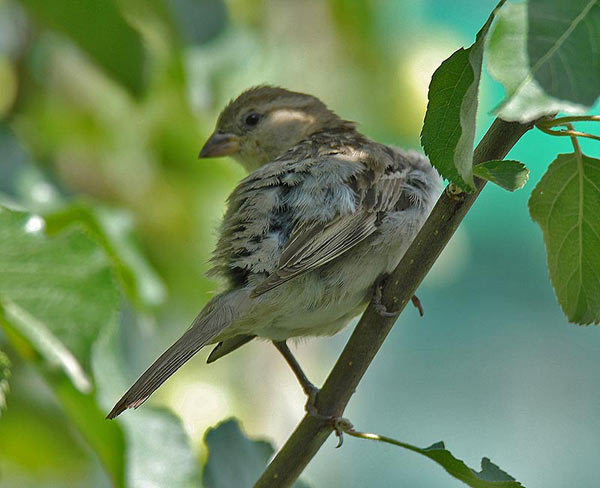
House Sparrow (Passer domesticus) Female by Nikhil
House Sparrow (Passer domesticus) by Nikhil
Matthew Henry - Lev 14:1-9 - The priests could not cleanse the lepers; but when the Lord removed the plague, various rules were to be observed in admitting them again to the ordinances of God, and the society of his people. They represent many duties and exercises of truly repenting sinners, and the duties of ministers respecting them. If we apply this to the spiritual leprosy of sin, it intimates that when we withdraw from those who walk disorderly, we must not count them as enemies, but admonish them as brethren. And also that when God by his grace has brought to repentance, they ought with tenderness and joy, and sincere affection, to be received again. Care should always be taken that sinners may not be encouraged, nor penitents discouraged. If it were found that the leprosy was healed, the priest must declare it with the particular solemnities here described. The two birds, one killed, and the other dipped in the blood of the bird that was killed, and then let loose, may signify Christ shedding his blood for sinners, and rising and ascending into heaven. The priest having pronounced the leper clean from the disease, he must make himself clean from all remains of it. Thus those who have comfort of the remission of their sins, must with care and caution cleanse themselves from sins; for every one that has this hope in him, will be concerned to purify himself.

Gill - "and shall let the living bird loose into the open field; as a token of the freedom of the leper, and that he was at liberty to go where he pleased: the Misnic doctors say, when he came to let go the living bird, he did not turn its face neither to the sea, nor to the city, nor to the wilderness, as it is said, "but he shall let go the living bird out of the city into the open field", as in Lev. 14:53;... this may be a figure of the resurrection of Christ from the dead, and of his justification upon it, as the head and representative of his people, and of their free and full discharge from guilt, condemnation, and death, through him, and of his and their being received up into heaven, and whither their hearts should be directed, in affection and thankfulness for their great deliverance and salvation; see 1Timothy 3:16. "

Hill Pigeon (Columba rupestris) by Nikhil Devasar
Hill Pigeon (Columba rupestris) by Nikhil
Clarke - "Shall let the living bird loose - The Jews teach that wild birds were employed on this occasion, no tame or domestic animal was used. Mr. Ainsworth piously conjectures that the living and dead birds were intended to represent the death and resurrection of Christ, by which an atonement was made to purify the soul from its spiritual leprosy. The bird let loose bears a near analogy to the scapegoat. See Leviticus 16."

They all seem to see the cleansing as not only for the current situation, by also, representing the future sacrifice of Christ for our sins and the cleansing (forgiveness of sin) that comes from His shed blood. I praise the Lord that He has given His life for us and that we no longer have to go through sacrifices like they did prior to Christ. I am sure the animals and birds also feel blessed.
Consequently, he is able to save to the uttermost those who draw near to God through him, since he always lives to make intercession for them. For it was indeed fitting that we should have such a high priest, holy, innocent, unstained, separated from sinners, and exalted above the heavens. He has no need, like those high priests, to offer sacrifices daily, first for his own sins and then for those of the people, since he did this once for all when he offered up himself. For the law appoints men in their weakness as high priests, but the word of the oath, which came later than the law, appoints a Son who has been made perfect forever. (Hebrews 7:25-28 ESV)
The Gospel Message and Wordless Birds

See More Birds of the Bible

Friday, June 18, 2010

Birds of the Bible - Ravens II

Northern Raven (Corvus corax) by Ray
The first Birds of the Bible - Raven article covered many aspects of the Raven. It was written in February of 2008 when I first started writing about the Birds of the Bible. There is always more to learn about birds or the Lord for that matter. We never "arrive" in our learning.

Some verses about the Raven that are interesting have to do with the Lord or God providing for them.
Who provideth for the raven his food? when his young ones cry unto God, they wander for lack of meat. (Job 38:41 KJV)

He giveth to the beast his food, and to the young ravens which cry. (Psalms 147:9 KJV)

Consider the ravens: for they neither sow nor reap; which neither have storehouse nor barn; and God feedeth them: how much more are ye better than the fowls? (Luke 12:24 KJV)
With all the providing by the LORD God for the Raven, He (LORD God) then uses the Ravens to feed Elijah during a drought. Elijah was told to go to the brook Cherith and there he would be fed. Notice that the ravens came twice a day and brought "bread and flesh."
Get thee hence, and turn thee eastward, and hide thyself by the brook Cherith, that is before Jordan. And it shall be, that thou shalt drink of the brook; and I have commanded the ravens to feed thee there. So he went and did according unto the word of the LORD: for he went and dwelt by the brook Cherith, that is before Jordan. And the ravens brought him bread and flesh in the morning, and bread and flesh in the evening; and he drank of the brook. (1 Kings 17:3-6 KJV)
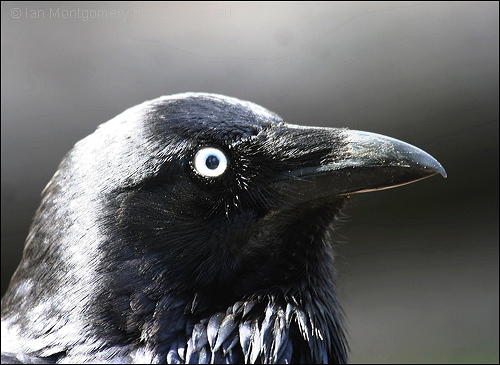
Australian Raven (Corvus coronoides) by Ian
Here are some interesting remarks from commentators about this:
Wesley - 1Ki 17:4,6 "God is said to command both brute creatures, and senseless things; when he causeth them to do the things which he intends to effect by them. The ravens - Which he chuseth for this work; to shew his care and power in providing for the prophet by those creatures, which are noted for their greediness, that by this strange experiment he might be taught to trust God in those many and great difficulties to which he was to be exposed. God could have sent angels to minister to him. But he chose winged messengers of another kind to shew he can serve his own purposes as effectually, by the meanest creatures as by the mightiest. Ravens neglect their own young, and do not feed them: yet when God pleaseth, they shall feed his prophet."
"And flesh - Not raw, but boiled by the ministry of some angel or man, and left in some place 'till the ravens came for it: in all which, there is nothing incredible, considering the power and providence of God."

K&D - "Through this miracle, which unbelievers reject, because they do not acknowledge a living God, by whom, as the Creator and Lord of all creatures, even the voracious ravens are made subservient to His plans of salvation, Elijah was not only cut off from (interaction) with men, who might have betrayed his place of abode to the king, but was mightily strengthened himself, through the confidence inspired in the almighty assistance of his God, for his approaching contests with the worshippers of idols, and for the privations and sufferings which awaited him in the fulfilment of his vocation."
Common Raven (Corvus corax) by Kent Nickell
Common Raven (Corvus corax) by Kent Nickel

Matthew Henry - "Elijah was commanded to hide himself. If Providence calls us to solitude and retirement, it becomes us to go: when we cannot be useful, we must be patient; and when we cannot work for God, we must sit still quietly for him. The ravens were appointed to bring him meat, and did so. Let those who have but from hand to mouth, learn to live upon Providence, and trust it for the bread of the day, in the day. God could have sent angels to minister to him; but he chose to show that he can serve his own purposes by the meanest creatures, as effectually as by the mightiest. Elijah seems to have continued thus above a year. The natural supply of water, which came by common providence, failed; but the miraculous supply of food, made sure to him by promise, failed not. If the heavens fail, the earth fails of course; such are all our creature-comforts: we lose them when we most need them, like brooks in summer. But there is a river which makes glad the city of God, that never runs dry, a well of water that springs up to eternal life. Lord, give us that living water!"

Gill - "...it seems better to interpret them of ravens, as we do, these creatures delighting to be in solitary places, in valleys, and by brooks; nor need it be any objection that they were unclean creatures by the law, since Elijah did not feed upon them, but was fed by them; and supposing any uncleanness by touch, the ceremonial law might be dispensed with in an extraordinary case, as it sometimes was; though it is very remarkable that such creatures should be employed in this way, which are birds of prey, seize on anything they can, live on carrion, and neglect their own young, and yet feed a prophet of the Lord; which shows the power and providence of God in it."

Elijah and the ravens help illustrate the following verse:
But seek ye first the kingdom of God, and his righteousness; and all these things shall be added unto you. (Matthew 6:33 KJV)

Friday, June 11, 2010

Birds of the Bible - Cranes II

Sandhill Crane (Grus canadensis) with 2 juveniles by Lee
Sandhill Crane (Grus canadensis) at Lake Ashton by Lee
Last evening we were with our friends at Lake Ashton in Winter Haven, FL and they gave us a tour of the wildlife there. This time of the year there are numerous Sandhill Crane families around. We saw several young Sandhills as we were being shown around. We took some photos and also got video of two adult Sandhill Cranes giving a duet. Thought that sounded like a good topic for this weeks Birds of the Bible.

The crane is mentioned twice in the Bible and one has to do its migration.
Yea, the stork in the heaven knoweth her appointed times; and the turtle and the crane and the swallow observe the time of their coming; but my people know not the judgment of the LORD. (Jeremiah 8:7 KJV)
The second mention of the Crane has to do with its voice.
Like a crane or a swallow, so did I chatter: I did mourn as a dove: mine eyes fail with looking upward: O LORD, I am oppressed; undertake for me. (Isaiah 38:14 KJV)
As you will see and hear by the video I took of the two cranes doing their duet, you can hear a bit of "chatter."


We are lucky here in Central Florida to see the Sandhill Cranes quite frequently and occasionally a Whooping Crane.

Sarus Crane (Grus antigone) by Nikhil Devasar
Sarus Crane (Grus antigone) by Nikhil Devasa
Around the world there are 15 crane species in the Gruidae Family of the order Gruiformes. The cranes are the Grey Crowned, Black Crowned, Demoiselle, Blue, Wattled, Siberian, Sandhill, Sarus, Brolga, White-naped, Common, Hooded, Whooping, Black-necked, and Red-crowned.

Cranes are large, long-legged and long-necked birds Unlike the similar-looking but unrelated herons, cranes fly with necks outstretched, not pulled back. Cranes live on all continents except Antarctica and South America.

They are opportunistic feeders that change their diet according to the season and their own nutrient requirements. They eat a range of items from suitably sized small rodents, fish, amphibians, and insects, to grain, berries, and plants.

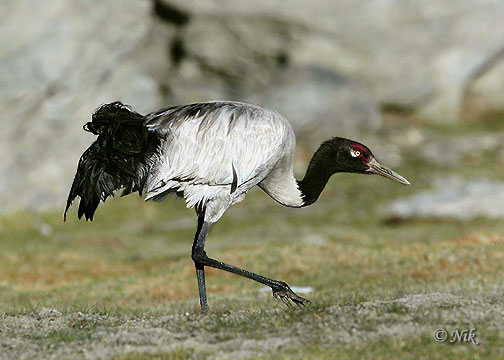
Black-necked Crane (Grus nigricollis) by Nikhil Devasar
Most have elaborate and noisy courting displays or "dances". While folklore often states that cranes mate for life, recent scientific research indicates that these birds do change mates over the course of their lifetimes (Hayes 2005), which may last several decades. Cranes construct platform nests in shallow water, and typically lay two eggs at a time. Both parents help to rear the young, which remain with them until the next breeding season.

Some species and populations of cranes migrate over long distances; others do not migrate at all. Cranes are gregarious, forming large flocks where their numbers are sufficient.

See:
Birds of the Bible - Cranes I
Wordless Birds

Thursday, June 3, 2010

Birds of the Bible - Bird Names II

White-tailed Hawk (Buteo albicaudatus)
In the first Names of Birds, I covered the English names of birds. This time the scientific names are going to be looked at, especially the second one. (The first part of the scientific name is the bird's genus or group) "Birds normally have a scientific name and a common name. The scientific name is usually Latin-bases and is agreed upon by biologists across the world. The common name will vary by region, culture, and language." (birding.com) No matter what the bird is called in different countries or by different ornithology groups, the scientific name refers to one specific bird. Birds do migrate many miles and spend time in many countries. This naming system helps keep from having the same bird counted numerous times in lists.

As I have worked with the list of the Birds of the World, I have observed similarities in the naming of the birds. For instance, "alba" is the second part of all of these birds--Western Great Egret, White Cockatoo, Sanderling, White Tern, White Wagtail, African Spoonbill, Phoenix Petrel, Western Barn Owl. Could you figure out what color they all are?
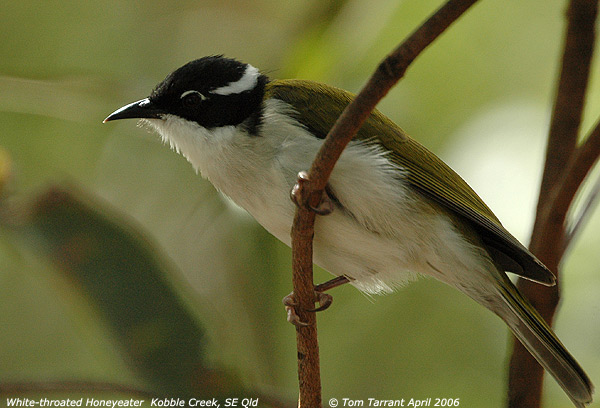
White-throated Honeyeater (Melithreptus albogularis) by Tom Tarrant
White-throated Honeyeater (Melithreptus albogularis)
How about "albicauda"--White-tailed Shrike-Tyrant, White-tailed Blue Flycatcher, White-tailed Lark, White-tailed Hawk? Or "albogularis"--White-throated Jacamar, Rufous-banded Honeyeater, White-throated Pewee, White-throated Canary, White-throated Laughingthrush, White-throated Screech Owl, White-throated Honeyeater, White-throated Francolin, White-throated Caracara, White-throated Treerunner, White-spotted Fantail, White-throated Seedeater, White-throated Kingbird, White-chested White-eye? That last group was not all "white-throated," in name, but they have white throats.

We know that Adam named the birds and other critters as the Scripture tells us:
Out of the ground the LORD God formed every beast of the field and every bird of the air, and brought them to Adam to see what he would call them. And whatever Adam called each living creature, that was its name. So Adam gave names to all cattle, to the birds of the air, and to every beast of the field. But for Adam there was not found a helper comparable to him. (Genesis 2:19-20 NKJV)
Blue-throated Bee-eater (Merops viridis) by Ray

Did Adam use scientific names? I doubt it. Adam didn't have to go though all this. Today the ornithologist (those who study birds) use this method of naming along with a common name in whatever language they speak.

Thought you might find it interesting to see some of the species' second scientific names:
Colors:
albus/alba, white; cf albino, ater/atra, matt black, brachy-, short (Greek), brunne-, brown, caeruleus, blue, canus, grey, chloro-, green or yellow (Greek), cinerea-, grey or ash-coloured; cf cinders, crocus, cyan, blue, erythro-, red (Greek), flava, yellow, fuscus/fusca, dusky, guttatus, speckled or spotted, haema-, blood-red (Greek); cf haemoglobin, leuco-, white (Greek), lineatus, lined or striped, livia, blue-grey, longi-, long, luteus/lutea, yellow, major, greater, mega-, great (Greek), melas, black (Greek); cf melanistic, minor, lesser, niger/nigra, glossy black; cf negro, punctatus, spotted; cf punctuation, pusilla, tiny, rosea, rosy, ruber, red, rufus/rufa, red, striatus/striata, striped, versicolor, many-collored, varied, viridis, green, albogularis - White-throated
Countries:
abyssinicus, africana, americana, angolensis, antarctica,
Characteristics:
cauda, tail, -cephalus, head (Greek), -ceps, capped, headed, cilla, tail, collis, neck, cristatus, crested, dactyl, finger or toe (Greek), frons, front, i.e. forehead, -gularis, throat, -ops, eye, -opsis, face, ptera, wing (Greek), -rhynchos, bill (Greek), -rostris, bill, torquatus, collared

Names are important and have meaning. Christ was named long before He was born. It was foretold.
Now all this was done, that it might be fulfilled which was spoken of the Lord by the prophet, saying, Behold, a virgin shall be with child, and shall bring forth a son, and they shall call his name Emmanuel, which being interpreted is, God with us. (Matthew 1:22-23 KJV)
After this manner therefore pray ye: Our Father which art in heaven, Hallowed be thy name.  (Matthew 6:9 KJV)
And in his name shall the Gentiles trust. (Matthew 12:21 KJV)
And Jesus came and spake unto them, saying, All power is given unto me in heaven and in earth. Go ye therefore, and teach all nations, baptizing them in the name of the Father, and of the Son, and of the Holy Ghost: Teaching them to observe all things whatsoever I have commanded you: and, lo, I am with you alway, even unto the end of the world. Amen.
(Matthew 28:18-20 KJV)
(Some information from Scientific bird names explained and How Do Birds Get Their Names?)
Also see: Story behind the common names of birds