Wednesday, October 1, 2008

Titus 2:11-14 (by Peter Brock)


I love the truths in these verses. They begin with grace. They then move to Christ's past work in salvation, how we are to magnify Christ with our lives today, and then they point us toward our future hope.


11For the grace of God has appeared, bringing salvation for all people,

12training us to renounce ungodliness and worldly passions, and to live self-controlled, upright, and godly lives in the present age,

13 waiting for our blessed hope, the appearing of the glory of our great God and Savior Jesus Christ,

14 who gave himself for us to redeem us from all lawlessness and to purify for himself a people for his own possession who are zealous for good works.

Friday, September 19, 2008

Birds of the Bible - Vulture (by Lee Dusing)

But these you shall not eat: the eagle, the vulture, the buzzard, (Deu 14:12 NKJV)
And the vulture, and the kite after his kind; (Lev 11:14 KJV)

Job 28 tells of the wealth of earth that is hidden and must be mined; Gold, silver, brass, iron, precious stones such as sapphires, and gold dust. It is buried where the eyes of the birds mentioned have never seen them.
There is a path which no fowl knoweth, and which the vulture's eye hath not seen: (Job 28:7 KJV)
Black Vulture from Wikipedia

So, let's find out some about the vulture. Vultures are good-sized birds that eat carrion (dead things). They help keep our country side clean of things that have died or been attacked by other birds or mammals. I think they are ugly looking, but what makes them look that way is the lack of feathers around the face. This helps them eat without messing up their feathers and having them soaked with blood and other dead stuff. The Lord made them the way they are and given them the task mentioned. I imagine the Lord does not consider them ugly.
In the New World we have the Andean Condor, Black Vulture, California Condor(the larges in North America-47" with a 10' wingspan), Greater Yellow Headed Vulture, King Vulture, Lesser Yellow Headed Vulture, and the Turkey Vulture. In the Old World Vulture family we get the African White-backed, Asian White-backed, Bearded, Cape Giffon, Cinereous, Egyptian, Eurasian Griffon, Himalayan Griffon, Hooded, Lappet Faced, Long Billed, Palm Nut, Red-headed, Ruppells Griffon, and White Headed Vultures. A good reference to these Vultures is at these websites:
The Vultures of the World
Vulture Wikipedia
Nature Photographers Online Magazine - Vultures

Wednesday, September 17, 2008

Regeneration - Take Full Possession and Reign Supreme (Valley of Vision)

Valley of Vision: A collection of Puritan Prayers & Devotions

Below is another prayer from The Valley of Vision entitled Regeneration. Don't let the length intimidate you. Great theology with convicting application.


O God of the highest heaven,occupy the throne of my heart,
take full possession and reign supreme,
lay low every rebel lust,let no vile passion resist thy holy war;
manifest thy mighty power,and make me thine forever.

Thou art worthy to be praised with my every breath,
loved with my every faculty of soul,
served with my every act of life.
Thou hast loved me, espoused me, received me, purchased, washed, favored, clothed, adorned me,when I was a worthless, vile soiled, polluted.

I was dead in iniquities,having no eyes to see thee,
no ears to hear thee,
no taste to relish thy joys,
no intelligence to know thee;

But thy Spirit has quickened me,
has brought me into a new world as a new creature,
has given me spiritual perception,
has opened to me thy Word as light, guide, solace, joy.

Thy presence is to me a treasure of unending peace;
No provocation can part me from thy sympathy,
for thou hast drawn me with cords of love,and dost forgive me daily, hourly.
O help me then to walk worthy of thy love,of my hopes, and my vocation.

Keep me, for I cannot keep myself;
Protect me that no evil befall me;
Let me lay aside every sin admired of many;
Help me to walk by thy side,
lean on thy arm,
hold converse with thee,
That I may be salt of the earth and a blessing to all.

Tuesday, September 16, 2008

Preach the Gospel today! (by Stephen Simpson)

I Corinthians 9:16b "For necessity is laid upon me. Woe to me if I do not preach the gospel."

In meditating on this verse recently, I thought of some consequences of failing to preach the Gospel.

When I fail to preach the Gospel...
  1. I fail to give the Gospel a voice. The Gospel will not be heard.
  2. I fail to denounce sin. Preaching the Gospel brings conviction.
  3. I violate my own conscience.
  4. I minimize the work of Christ in my own life.
  5. I am overwhelmed with shame and guilt.
  6. I end up preaching a different Gospel. Often it is the Gospel of Apathy, the Gospel that says "I don't care."
Here's a practical challenge. Say this to yourself today, "Woe to me if I do not preach the Gospel today."

Think about it.

Friday, September 12, 2008

Birds of the Bible - Hawk Migration (by Lee Dusing)

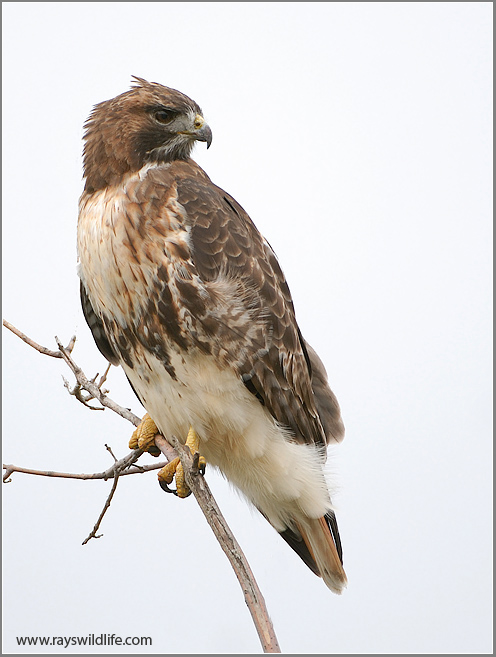
Red-tailed Hawk by Raymond Barlow
Doth the hawk fly by thy wisdom, and stretch her wings toward the South? (Job 39:26 KJV)

Through God's wisdom (omniscience), the Hawks He created have a built-in instinct to fly south for the winter and how to accomplish that feat. There is much studied and observed about this phenomenon. People watch them as they fly over by the hundreds and thousands. Wings on the Wind has a very good article about how they ride the thermals or catch updrafts to carry them along on their journey. Right now, between August and December is the Fall migration time.

The verse quoted at the top is found in a set of questions started in Job 38:
Then the LORD answered Job out of the whirlwind, and said, Who is this that darkeneth counsel by words without knowledge? Gird up now thy loins like a man; for I will demand of thee, and answer thou me. (Job 38:1-3 KJV)
Some other interesting translations of Job 39:26 are:
"Is it through your knowledge that the hawk takes his flight, stretching out his wings to the south?" (BBE)
"Did you teach hawks to fly south for the winter?" (CEV)
"Is it by your understanding that the hawk soars and spreads his wings toward the south?" (ESV)
"Does your understanding make a bird of prey fly and spread its wings toward the south?" (GW)
"Was it through your know how that the hawk learned to fly, soaring effortlessly on thermal updrafts?" (MSG)
"Is it by your understanding that the hawk soars, Stretching his wings toward the south?" (NASB)

When we think we have "all the answers" to life's questions and are feeling like we do not need God our Creator or a relationship with Him; read Job 38-42. "Thou art worthy, O Lord, to receive glory and honor and power: for thou hast created all things, and for thy pleasure they are and were created." (Rev 4:11 KJV)
The Creator's Gift of Intelligence

Red-tailed Hawk by Ray's WildlifeInformation about Hawk Migration:

Places to View:Blue Ridge Parkway
Hawkwatch Sites
Watching Migrating Hawks
Militia Hill Hawk Watch

Friday, September 5, 2008

Birds of the Bible - Nighthawk II (by Lee Dusing)

Last week after I published Nighthawk I, I started looking for more photos and videos to supplement the article. I kept running into other usages of the word "nighthawk." So, here is more on the topic.

In the two references: Lev 11:16, Deu 14:15 See Nighthawk the word nighthawk is from "H8464 - תּחמס
tachmâs (takh-mawce') is from H2554; a species of unclean bird (from its violence), perhaps an owl: - night hawk."

Tachmas cannot be identified with any certainty. Here is how it is interpreted:

night-hawk - ASV, BBE, JPS, YLT


nighthawk - ESV, GW, MSG, Webster
night hawk - KJV, RV
nighthauke - KJV 1611
nyght Crowe - Bishops
night crowe - Geneva
female ostrich and the male ostrich - Darby
short-eared owl - HCSB, NKJV
great owl - LITV, MKJV
screech owl - WEB, NRSV, NIV

Needless to say, this "has caused great controversies among commentators. Some scholars of the Hebrew language have thought that the male ostrich was signified by tachmas, the word bath-haya'anah being supposed by them to signify the female ostrich. It is hardly probable, however, that the sacred writer should have mentioned separately the sexes of the same species, and we must therefore look for some other interpretation.
Going to the opposite extreme of size, some scholars have translated tachmas as Swallow. This again is not a very probable rendering, as the swallow would be too small a bird to be specially named in the prohibitory list. 'I'he balance of probability seems, to lie between two interpretations - namely, that which considers the word tachmas to signify the Night-hawk, and that which translates it as Owl. For both of these interpretations much is to be said, and it cannot be denied that of the two the latter is perhaps preferable. If so, the White or Barn Owl is probably the particular species to which reference is made.
However, many commentators think that the Night-hawk or Nightjar is the bird which is signified by the word tachmas, and as owls seem to have been signified by alternative words, the rendering of the Authorized Version seems an acceptable translation. Moreover, the Jewish Bible follows the same translation, and renders tachmas as Night-hawk, but affixes the mark of doubt. " (From The Nightjar or Night Hawk in the Bible on Wonder of Birds website)

I said all of that to say, I don't know for any certainty which bird it is. Therefore, I am adding pictures of the other birds mentioned beside the ones I posted last week. Only the Lord know for certain which birds were indicated. I'll leave it at that.
Great Horned Owl by Phil Kwong Galleries

Friday, August 29, 2008

Birds of the Bible - Nighthawk (by Lee Dusing)

Common Nighthawk

The Night Hawk is part of the Chordeilinae family which are nightjars. Here in North America, the Lesser, Common, and Antillean Nighthawks, are joined by the Common Pauraque, Common Poorwill, Chuck-Will's Widow, and the Whip-Poor-Will to round out the family. They have long wings, short legs, and very small bills. All of these are late evening, early morning, and night hunters of insects. God created them with coloration that helps them blend in with the tree or leaves around them and most perch horizontal to the limbs instead of across them like most birds. This also helps hide them in the daytime. Even though they have the name "Hawk", they do not resemble what most would think of hawks. The term is more of the fact of 'hawking or catching" insects while in flight. Most fly low over the ground in search the moths and large flying insects. They range from 7 to 13 inches long with wingspans from 11 to 24 inches.

All Nighthawks listed in the New World are the Band-tailed Nighthawk, Plain-tailed Nighthawk, Nacunda Nighthawk, Rufous-bellied Nighthawk, Short-tailed Nighthawk, Antillean Nighthawk, Lesser Nighthawk, Common Nighthawk, Least Nighthawk, Sand-colored Nighthawk

UPDATE: AUG 30, 2008: Upon further investigation, the night hawk mentioned in the verses is most likely a type of owl that feeds at night. I will make a new article soon. Enjoy this anyway. (Lee)

They are again in our list of birds that are "unclean." Both verses are identical in the KJV.
And the owl, and the night hawk, and the cuckoo, and the hawk after his kind, (Lev 11:16)
And the owl, and the night hawk, and the cuckoo, and the hawk after his kind, (Deu 14:15)
See Nighthawks for more information.

Wednesday, August 20, 2008

Empty Things (by Stephen Simpson)

In 1 Samuel 12 the prophet Samuel is addressing the nation of Israel. Towards the end of the chapter he warns them to not turn aside from the following the Lord. In verse 21 Samuel says, "And do not turn aside after empty things that cannot profit or deliver, for they are empty." (ESV) This verse was such a rebuke to me as I read it because there are so many 'empty things' that I turn aside after, empty things that have no lasting value.

For example, I will gladly stay up late watching the most meaningless Olympic events. Yet, I never stay up late for some extra Bible study time or for extra time in prayer. When you stop and think about it, who really cares who won the semifinal of the men's 200m race? Talk about something that does not "profit or deliver!"

So, examine your life. Are there some 'empty things' that are demanding your time and energy? Let's all work diligently at identifying those things in our life which are empty and replace them with things that are full of value and worth.

Friday, August 15, 2008

Birds of the Bible - Hoopoe (by Lee Dusing)

By permission of William KwongThe Hoopoe is mentioned in the list of "unclean" things not to eat in Leviticus and Deuteronomy. I am sort of revisiting my Birds of the Bible - Lapwing which uses the same references. Depending on which copy of Scripture one uses it is translated Lapwing in some and Hoopoe in others. The Hoopoe is an interesting and pretty bird, so I will describe it in today's blog.
the stork, the heron after its kind, the hoopoe, and the bat. (Lev 11:19 NKJV)
the stork, the heron after its kind, and the hoopoe and the bat. (Deu 14:18 NKJV)
  •  Eurasian Hoopoe By William KwongThe Hoopoe is in the same order as Bee-eaters, Rollers, and
    Kingfishers.

  • They are found in Asia, Europe, and North Africa, Sub-Saharan Africa and Madagascar.
  • They migrate to the tropics in the winter.
  • In 2008, the Long-Billed Hoopoe became the national bird of Israel. See Article in Jerusalem Post.
  • Their diet consists of mostly worms and insects, which they find while spending most of their time on the ground.
  • "The nest is in a hole in a tree or wall. Like those of its relatives, the kingfishers, the nest tends to contain copious amounts of faeces and smell very foul as a protection against predators[2]."(Wikipedia)
  • "The song is a trisyllabic "oop-oop-oop", which gives rise to its English and scientific names."(Wikipedia)
 Eurasian Hoopoe By William KwongLinks to check out:
William Kwong's Gallery (Photos used with his Permission)
Hoopoe - Photos & Videos

Wednesday, August 13, 2008

Friday, August 8, 2008

Birds of the Bible - Falcons (by Lee Dusing)

Today we introduce another bird family that has been worderfully created by God. The Falcon is in the Family "Falconidae" which are birds of prey. Worldwide there are over 60 species in the family. Falcons, Caracara, Forest-Falcons, Kestrels, Falconets, Pygmy-Falcons, and Hobbies make up the family. For an interesting list of the birds and videos of them, see Internet Bird Collection. These are the birds seen in North America according to Thayer’s Birding software:
  • Aplomado Falcon (15-16.5” with 40-48” wingspan) Mexico to Central and South America, TX
  • Gyrfalcon (20-25” with 50-64” wingspan – largest of the falcons) - Arctic tundra-winter seen in upper Midwest, Dakotas, Montana, Idaho and Washington – Flies close to the ground.
  • Peregrine Falcon (16-20” with 36-44” wingspan – large falcon)
  • Prairie Falcon (15.5-19.5” with 35-43” wingspan)
  • Merlin (12” with 25” wingspan)
  • Collared Forest-Falcon (21-25” with 30-37” wingspan) (Accidental-South Texas)
  • American Kestrel (10.5” with 23” wingspan - Smallest falcon)
  • Eurasian Kestrel (13.5”with 29” wingspan Hovers) – Mass, NJ, N Brunswick and Aleutian Islands of Alaska
  • Prairie Falcon by DanCrested Caracara (23” with 50” wingspan) - TX and FL, Prairie region of central FL, open arid and semiarid scrublands, grassland w/ few trees, ranchland
  • Eurasian Hobby (11-13” with 28-33” wingspan) - Europe and Asia, Africa (winters) very rare in North America Captures prey in the air.
A good article about the Falconidae Family is at the Handbook of the Birds of the World website. The Wikipedia had these comments:
"Falcons and caracaras are carnivores, feeding on birds, small mammals, reptiles, insects and carrion.",
"They have strongly hooked bills, sharply curved talons and excellent eyesight. The plumage is usually composed of browns, whites, chestnut, black and grey, often with barring of patterning. "
"They differ from other Falconiformes (Hawks, Eagles, Falcons, etc.) in killing with their beaks instead of their feet. They have a "tooth" on the side of their beak for the purpose."
The Falcon is another bird on the “unclean” list.
And these you shall regard as an abomination among the birds; they shall not be eaten, they are an abomination: the eagle, the vulture, the buzzard, the kite, and the falcon after its kind (Leviticus 11:13-14 NKJV)
the red kite, the falcon, and the kite after their kinds; (Deuteronomy 14:13 NKJV)
You shall fall upon the mountains of Israel, you and all your troops and the peoples who are with you; I will give you to birds of prey of every sort and to the beasts of the field to be devoured. (Ezekiel 39:4 NKJV)
Photos top to bottom: American Kestrel by AestheticPhotos, Praire Falcon by Dan, Peregrine Falcon by Jim Fenton

Click for the Falcons Photos and Videos pages.

Friday, August 1, 2008

Birds of the Bible - Quail (by Lee Dusing)

Our Bird of the Bible this week is not on the "unclean" list for a change. In fact, this bird can be eaten and is raised just for that purpose in many parts of the world. Searching the internet, you can find all kinds of recipes for quail. What has that got to do with our Quail?
The children of Israel were in the wilderness, doing their constant grumbling, and they asked for "more to eat". They were not satisfied with what God was providing. They wanted "more." So:
And the LORD spoke to Moses, saying, "I have heard the complaints of the children of Israel. Speak to them, saying, 'At twilight you shall eat meat, and in the morning you shall be filled with bread. And you shall know that I am the LORD your God.' " So it was that quails came up at evening and covered the camp, and in the morning the dew lay all around the camp. And when the layer of dew lifted, there, on the surface of the wilderness, was a small round substance, as fine as frost on the ground.(Exodus 16:11-14 NKJV)


Now a wind went out from the LORD, and it brought quail from the sea and left them fluttering near the camp, about a day's journey on this side and about a day's journey on the other side, all around the camp, and about two cubits above the surface of the ground. And the people stayed up all that day, all night, and all the next day, and gathered the quail (he who gathered least gathered ten homers); and they spread them out for themselves all around the camp. But while the meat was still between their teeth, before it was chewed, the wrath of the LORD was aroused against the people, and the LORD struck the people with a very great plague. So he called the name of that place Kibroth Hattaavah, because there they buried the people who had yielded to craving.(Numbers 11:31-34 NKJV)


The people asked, and He brought quail, And satisfied them with the bread of heaven.(Psalms 105:40 NKJV)
The commentaries on these Scriptures varied somewhat. Some suggested that these were not "quails" but "locusts". Most concede that they were "quails". Then, they debated about the "about two cubits above the surface of the ground." Were they piled two cubits high or were they flying around at that level? If they were piled deep, they would suffocate and die, making them uneatable according to their law. So, with these questions in mind, here is how the Quail behave:
"Rapid direct flight, series of several stiff wing beats followed by a short glide", "Escapes danger by running. Direct flight with rapid deep wing beats". "Small, chunky, short-tailed, round-winged, ground-dwelling bird", "Secretive. Squats and sits motionless when alarmed", and "keeping hidden in crops, and reluctant to fly, preferring to creep away instead. Even when flushed, it keeps low and soon drops back into cover." Sounds like they would be easy to catch.

"There are 130 species of quails worldwide. They are small, short-tailed game birds of the family Phasianidae (order Galliformes), resembling partridges but generally smaller and less robust. The 36 species of New World quail more nearly resemble Old World partridges", from From borealforest.org, "California Quail."
We have the California, Scaled, Mountain, Gambel's(The bird's average length is 11 inches (30 cm) with a wingspan of 14-16 inches (35-40 cm), Montezuma Quails and the Northern Bobwhite here in North America. Several have a head plume and many are quite colorful.


Photos in order top to bottom are: Chinese Painted Quail, Gambel's Quail, Northern Bobwhite, and Scaled Quail. (From Wikipedia.org)