Friday, September 3, 2010

Book Review - The Trellis and the Vine

According to Colin Marshall and Tony Payne, all churches have Trellis work and Vine work.  The struggle that every church (and I would also include para-church ministries) faces is prioritizing and balancing the two different kinds of work.  

Trellis work involves administrative work - paying the bills, writing letters, planning out schedules, running events and programs.  It is often work that must be done.  But, it often becomes overwhelming and burdensome.  On the other hand, "The basic work of any Christian ministry is to preach the gospel of Jesus Christ in the power of God's Spirit, and to see people converted, changed and grow to maturity in that gospel."  (p. 8)  This is the Vine work.

In their book, the authors encourage church leaders to focus more on Vine work and less on Trellis work.  Tending the vine must be the priority. 

Ministry Mind-Shifts
The authors begin chapter 2 with the following statement, "Over the course of this book, we are going to suggest that most Christian churches today need to undertake a radical re-evaluation of what Christian ministry really is."  (p. 17)  They then proceed to list 11 mind-shifts that churches need to make:
  1. From running programs to building people
  2. From running events to training people
  3. From using people to growing people
  4. From filling gaps to training new workers
  5. From solving problems to helping people make progress
  6. From clinging to ordained ministry to developing team leadership
  7. From focusing on church polity to forging ministry partnerships
  8. From relying on training institutions to establishing local training
  9. From focusing on immediate pressures to aiming for long-term expansion
  10. From engaging in management to engaging in minstry
  11. From seeking church growth to desiring gospel growth
The book challenges church leaders to be 'talent scouts.' (p. 139)  We should be looking for the next generation of christian leaders.  They are the ones that should be our summer interns.  We should be giving them ample ministry opportunities such as preaching, leading the choir & congregational music, directing VBS, teaching Sunday School & Junior Church, etc.  Here at FBC, we should be actively looking for the next Jerry Smith, Dorothy Malcolm, or Mary Pence.  We should be coming alongside our young people to disciple them and encourage them to pursue christian ministry.  In fact, the authors would argue that investing time and energy into one or two individuals is more important than starting a new program or ministry. 

The authors also accurately realize that "recruiting people for ministry, training them as apprentices, and sending them off to Bible college will result in a steady departure of your best and most gifted church members."  (p. 149)

I thoroughly enjoyed reading this book and highly recommend it.  I was amazed at how quickly and easily I was able to read the book.  It is not overly scholarly, but is an accessible read.  I have already promoted to others and given away several copies.  It has challenged my thinking regarding my ministry here at FBC.  I challenge you to get a copy and read it today.  The book is available through Westminster Bookstore or Amazon.

Friday, July 2, 2010

Birds of the Bible - Final Blog at Faith

(Updated 10-25-10 - Stephen reworked the Fountain and this did not become the final blog. I like the new format.)
Look at the birds of the air: they neither sow nor reap nor gather into barns, and yet your heavenly Father feeds them. Are you not of more value than they? (Matthew 6:26 ESV)
Bald Eagle
All good things must come to an end and the blog here at Faith will be closing down soon. I appreciate the privilege that I have had to write about the Birds of the Bible. Thanks you, Stephen, for giving me the opportunity do this on Fridays. It is hard to believe that 109 Birds of the Bible articles have been written, along with some other articles. Stephen knew of my desire to serve the Lord with birds and the Bible.

I have learned many great truths from God's Word and about the birds as the articles were prepared. Hope you have enjoyed the articles and that you have become more familiar with the birds around you and those mentioned in the Bible. I also hope it has challenged you to study your Bible more.

Hoopoe
Will the articles about the Birds of the Bible stop? No, they will still show up weekly on my blog, Lee's Birdwatching Adventures Plus, plus the other articles published there. Because of Faith's blog, the Lord has allowed my blog to develop and into more than I could have ever thought. It is being read by people all over the world and some of the material has been used by a camp in the Philippines, home-schoolers, a VBS program, and in other ways.

Thank all of you for taking the time to read those articles and the encouragement received by you. All the articles here about the Birds of the Bible are still on my blog, plus the Birds in Hymns, Birds of the World, and some great guest writers. Stop by for a visit.

Friday, June 25, 2010

Birds of the Bible - The Purifying Birds

Below is an interesting passage of Scripture.
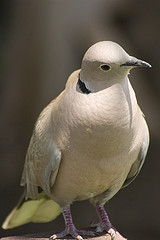
Eurasian-collared Dove in Israel
The LORD spoke to Moses, saying, "This shall be the law of the leprous person for the day of his cleansing. He shall be brought to the priest, and the priest shall go out of the camp, and the priest shall look. Then, if the case of leprous disease is healed in the leprous person, the priest shall command them to take for him who is to be cleansed two live clean birds and cedarwood and scarlet yarn and hyssop. And the priest shall command them to kill one of the birds in an earthenware vessel over fresh water. He shall take the live bird with the cedarwood and the scarlet yarn and the hyssop, and dip them and the live bird in the blood of the bird that was killed over the fresh water. And he shall sprinkle it seven times on him who is to be cleansed of the leprous disease. Then he shall pronounce him clean and shall let the living bird go into the open field. (Leviticus 14:1-7 ESV)
It seems that when a person was declared clean from their leprosy, that a purification needed to be performed. The same was true for the house. They gathered two birds and then the priest would kill one bird, but the second was set free after he took "the cedarwood and the hyssop and the scarlet yarn, along with the live bird, and dip them in the blood of the bird that was killed and in the fresh water and sprinkle the house seven times." The live bird was then taken out side the city and turned loose.

When you first read that passage, you wonder what it is all about. The live bird being turned loose with blood on it? Some of the commentators have helped explain the significance of this. Here are some of their thoughts:

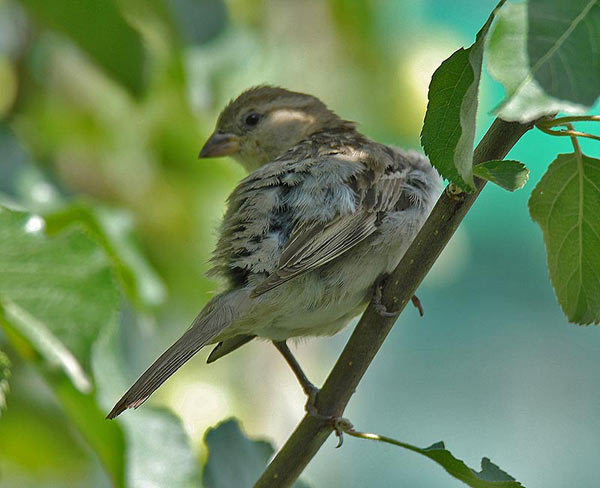
House Sparrow (Passer domesticus) Female by Nikhil
House Sparrow (Passer domesticus) by Nikhil
Matthew Henry - Lev 14:1-9 - The priests could not cleanse the lepers; but when the Lord removed the plague, various rules were to be observed in admitting them again to the ordinances of God, and the society of his people. They represent many duties and exercises of truly repenting sinners, and the duties of ministers respecting them. If we apply this to the spiritual leprosy of sin, it intimates that when we withdraw from those who walk disorderly, we must not count them as enemies, but admonish them as brethren. And also that when God by his grace has brought to repentance, they ought with tenderness and joy, and sincere affection, to be received again. Care should always be taken that sinners may not be encouraged, nor penitents discouraged. If it were found that the leprosy was healed, the priest must declare it with the particular solemnities here described. The two birds, one killed, and the other dipped in the blood of the bird that was killed, and then let loose, may signify Christ shedding his blood for sinners, and rising and ascending into heaven. The priest having pronounced the leper clean from the disease, he must make himself clean from all remains of it. Thus those who have comfort of the remission of their sins, must with care and caution cleanse themselves from sins; for every one that has this hope in him, will be concerned to purify himself.

Gill - "and shall let the living bird loose into the open field; as a token of the freedom of the leper, and that he was at liberty to go where he pleased: the Misnic doctors say, when he came to let go the living bird, he did not turn its face neither to the sea, nor to the city, nor to the wilderness, as it is said, "but he shall let go the living bird out of the city into the open field", as in Lev. 14:53;... this may be a figure of the resurrection of Christ from the dead, and of his justification upon it, as the head and representative of his people, and of their free and full discharge from guilt, condemnation, and death, through him, and of his and their being received up into heaven, and whither their hearts should be directed, in affection and thankfulness for their great deliverance and salvation; see 1Timothy 3:16. "

Hill Pigeon (Columba rupestris) by Nikhil Devasar
Hill Pigeon (Columba rupestris) by Nikhil
Clarke - "Shall let the living bird loose - The Jews teach that wild birds were employed on this occasion, no tame or domestic animal was used. Mr. Ainsworth piously conjectures that the living and dead birds were intended to represent the death and resurrection of Christ, by which an atonement was made to purify the soul from its spiritual leprosy. The bird let loose bears a near analogy to the scapegoat. See Leviticus 16."

They all seem to see the cleansing as not only for the current situation, by also, representing the future sacrifice of Christ for our sins and the cleansing (forgiveness of sin) that comes from His shed blood. I praise the Lord that He has given His life for us and that we no longer have to go through sacrifices like they did prior to Christ. I am sure the animals and birds also feel blessed.
Consequently, he is able to save to the uttermost those who draw near to God through him, since he always lives to make intercession for them. For it was indeed fitting that we should have such a high priest, holy, innocent, unstained, separated from sinners, and exalted above the heavens. He has no need, like those high priests, to offer sacrifices daily, first for his own sins and then for those of the people, since he did this once for all when he offered up himself. For the law appoints men in their weakness as high priests, but the word of the oath, which came later than the law, appoints a Son who has been made perfect forever. (Hebrews 7:25-28 ESV)
The Gospel Message and Wordless Birds

See More Birds of the Bible

Friday, June 18, 2010

Birds of the Bible - Ravens II

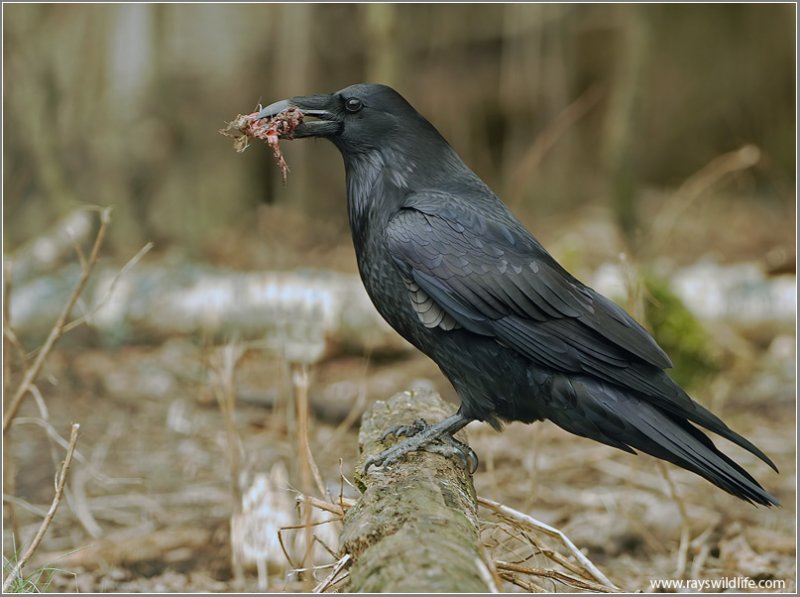
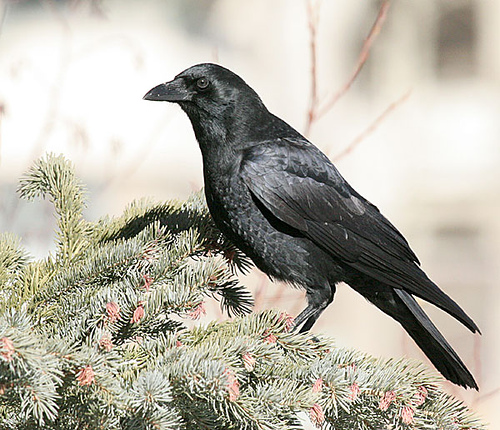
Northern Raven (Corvus corax) by Ray
The first Birds of the Bible - Raven article covered many aspects of the Raven. It was written in February of 2008 when I first started writing about the Birds of the Bible. There is always more to learn about birds or the Lord for that matter. We never "arrive" in our learning.

Some verses about the Raven that are interesting have to do with the Lord or God providing for them.
Who provideth for the raven his food? when his young ones cry unto God, they wander for lack of meat. (Job 38:41 KJV)

He giveth to the beast his food, and to the young ravens which cry. (Psalms 147:9 KJV)

Consider the ravens: for they neither sow nor reap; which neither have storehouse nor barn; and God feedeth them: how much more are ye better than the fowls? (Luke 12:24 KJV)
With all the providing by the LORD God for the Raven, He (LORD God) then uses the Ravens to feed Elijah during a drought. Elijah was told to go to the brook Cherith and there he would be fed. Notice that the ravens came twice a day and brought "bread and flesh."
Get thee hence, and turn thee eastward, and hide thyself by the brook Cherith, that is before Jordan. And it shall be, that thou shalt drink of the brook; and I have commanded the ravens to feed thee there. So he went and did according unto the word of the LORD: for he went and dwelt by the brook Cherith, that is before Jordan. And the ravens brought him bread and flesh in the morning, and bread and flesh in the evening; and he drank of the brook. (1 Kings 17:3-6 KJV)
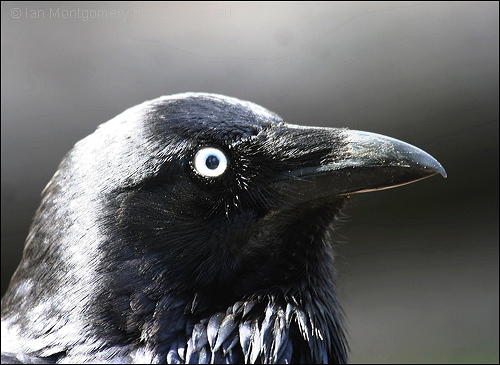
Australian Raven (Corvus coronoides) by Ian
Here are some interesting remarks from commentators about this:
Wesley - 1Ki 17:4,6 "God is said to command both brute creatures, and senseless things; when he causeth them to do the things which he intends to effect by them. The ravens - Which he chuseth for this work; to shew his care and power in providing for the prophet by those creatures, which are noted for their greediness, that by this strange experiment he might be taught to trust God in those many and great difficulties to which he was to be exposed. God could have sent angels to minister to him. But he chose winged messengers of another kind to shew he can serve his own purposes as effectually, by the meanest creatures as by the mightiest. Ravens neglect their own young, and do not feed them: yet when God pleaseth, they shall feed his prophet."
"And flesh - Not raw, but boiled by the ministry of some angel or man, and left in some place 'till the ravens came for it: in all which, there is nothing incredible, considering the power and providence of God."

K&D - "Through this miracle, which unbelievers reject, because they do not acknowledge a living God, by whom, as the Creator and Lord of all creatures, even the voracious ravens are made subservient to His plans of salvation, Elijah was not only cut off from (interaction) with men, who might have betrayed his place of abode to the king, but was mightily strengthened himself, through the confidence inspired in the almighty assistance of his God, for his approaching contests with the worshippers of idols, and for the privations and sufferings which awaited him in the fulfilment of his vocation."
Common Raven (Corvus corax) by Kent Nickell
Common Raven (Corvus corax) by Kent Nickel

Matthew Henry - "Elijah was commanded to hide himself. If Providence calls us to solitude and retirement, it becomes us to go: when we cannot be useful, we must be patient; and when we cannot work for God, we must sit still quietly for him. The ravens were appointed to bring him meat, and did so. Let those who have but from hand to mouth, learn to live upon Providence, and trust it for the bread of the day, in the day. God could have sent angels to minister to him; but he chose to show that he can serve his own purposes by the meanest creatures, as effectually as by the mightiest. Elijah seems to have continued thus above a year. The natural supply of water, which came by common providence, failed; but the miraculous supply of food, made sure to him by promise, failed not. If the heavens fail, the earth fails of course; such are all our creature-comforts: we lose them when we most need them, like brooks in summer. But there is a river which makes glad the city of God, that never runs dry, a well of water that springs up to eternal life. Lord, give us that living water!"

Gill - "...it seems better to interpret them of ravens, as we do, these creatures delighting to be in solitary places, in valleys, and by brooks; nor need it be any objection that they were unclean creatures by the law, since Elijah did not feed upon them, but was fed by them; and supposing any uncleanness by touch, the ceremonial law might be dispensed with in an extraordinary case, as it sometimes was; though it is very remarkable that such creatures should be employed in this way, which are birds of prey, seize on anything they can, live on carrion, and neglect their own young, and yet feed a prophet of the Lord; which shows the power and providence of God in it."

Elijah and the ravens help illustrate the following verse:
But seek ye first the kingdom of God, and his righteousness; and all these things shall be added unto you. (Matthew 6:33 KJV)

Friday, June 11, 2010

Birds of the Bible - Cranes II

Sandhill Crane (Grus canadensis) with 2 juveniles by Lee
Sandhill Crane (Grus canadensis) at Lake Ashton by Lee
Last evening we were with our friends at Lake Ashton in Winter Haven, FL and they gave us a tour of the wildlife there. This time of the year there are numerous Sandhill Crane families around. We saw several young Sandhills as we were being shown around. We took some photos and also got video of two adult Sandhill Cranes giving a duet. Thought that sounded like a good topic for this weeks Birds of the Bible.

The crane is mentioned twice in the Bible and one has to do its migration.
Yea, the stork in the heaven knoweth her appointed times; and the turtle and the crane and the swallow observe the time of their coming; but my people know not the judgment of the LORD. (Jeremiah 8:7 KJV)
The second mention of the Crane has to do with its voice.
Like a crane or a swallow, so did I chatter: I did mourn as a dove: mine eyes fail with looking upward: O LORD, I am oppressed; undertake for me. (Isaiah 38:14 KJV)
As you will see and hear by the video I took of the two cranes doing their duet, you can hear a bit of "chatter."


We are lucky here in Central Florida to see the Sandhill Cranes quite frequently and occasionally a Whooping Crane.

Sarus Crane (Grus antigone) by Nikhil Devasar
Sarus Crane (Grus antigone) by Nikhil Devasa
Around the world there are 15 crane species in the Gruidae Family of the order Gruiformes. The cranes are the Grey Crowned, Black Crowned, Demoiselle, Blue, Wattled, Siberian, Sandhill, Sarus, Brolga, White-naped, Common, Hooded, Whooping, Black-necked, and Red-crowned.

Cranes are large, long-legged and long-necked birds Unlike the similar-looking but unrelated herons, cranes fly with necks outstretched, not pulled back. Cranes live on all continents except Antarctica and South America.

They are opportunistic feeders that change their diet according to the season and their own nutrient requirements. They eat a range of items from suitably sized small rodents, fish, amphibians, and insects, to grain, berries, and plants.

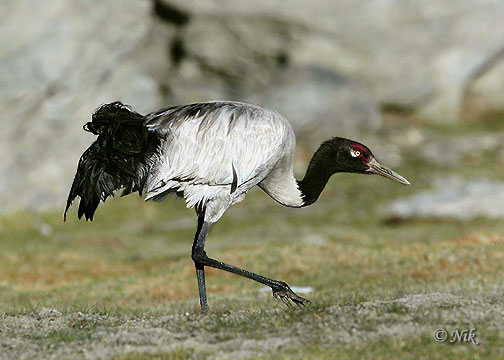
Black-necked Crane (Grus nigricollis) by Nikhil Devasar
Most have elaborate and noisy courting displays or "dances". While folklore often states that cranes mate for life, recent scientific research indicates that these birds do change mates over the course of their lifetimes (Hayes 2005), which may last several decades. Cranes construct platform nests in shallow water, and typically lay two eggs at a time. Both parents help to rear the young, which remain with them until the next breeding season.

Some species and populations of cranes migrate over long distances; others do not migrate at all. Cranes are gregarious, forming large flocks where their numbers are sufficient.

See:
Birds of the Bible - Cranes I
Wordless Birds

Wednesday, June 9, 2010

Death and Birth

(by Lou Gentry)

Pastor Osborne has touched upon the subject of death during the past several Sunday morning sermons. First, he preached on the death of Lazarus and his resuscitation by Jesus. Secondly, he preached about how the Jewish leaders had begun to plot the death of Jesus. Thirdly, as he began a series of sermons on the last week of Jesus' life before the crucifixion, he used an illustration of a little boy dying of cancer as his mother held him in her arms.

All of these references triggered a recall in my feeble memory of a passage in the last chapter of a book I had read, Foundations of the Faith: The Doctrines Baptists Believe, by Dr. Roy T. Edgemon. The title of the last chapter is "God's Final Victory." Here Dr. Edgemon offers a beautiful comparison of dying and being born which I believe all Christians will find comforting:
"Death for the Christian has been compared to birth. When the infant is in the process of being born into this earthly life, he resists. The womb is a comfortable environment; it is the only one he has known and he does not want to leave it. The pain of birth causes him to resist. But when he enters the world outside the womb, he discovers a much larger world, so large that he spends his life learning about it. Love and joy and hundreds of other emotions enrich his existence.

Christians may dread the experience of death, for it is painful and the world beyond is unknown. The womb of this world is comfortable, and it is the world they know. Yet when Christians pass through the womb of death, they are born into a new world that is much greater than earthly life--just as earthly life proved to be greater than life in the mother's womb. Eternal life with the Master, absence of sin and sorrow, love and joy, and thousands of other experiences await those who die in the Lord."

Monday, June 7, 2010

Graduation Day


(by Lou Gentry)

Six years ago, I attended commencement exercises to see my oldest son receive his Ph.D. from Michigan State University. At such ceremonies in large universities, it is not unusual for several honorary doctorates to be given to notables and large contributors to the university, and Michigan State was no exception to this tradition. Each recipient had about thirty seconds for comments. I was particularly struck by the comments of one recipient who gave more sage advice in thirty seconds to those graduation than the commencement speaker gave in thirty minutes.

This is what the man said: "I have had a long and successful career in business, and I attribute my success to three principles I've lived by. I now pass them on to you:
  1. Always be honest, that way you don't have to worry when you've forgotten what you said.
  2. Do unto others as you would have them do unto you.
  3. When you run out of brains, use common sense."
His third point related to future situations the graduates will encounter for which their education (i.e., 'book-learning') has not prepared them.

You've already noted that the man's first two principles are based on Scripture. I couldn't help but wonder, however, how many of those who were graduation had never been in church and, therefore, would not recognize these principles as God-given. It encouraged me to hear these words delivered to the young people in attendance, and even if they didn't know the source of these principles, accepting and applying them to their lives could make a difference in our society in the future. It is my hope and prayer that many there really heard this man, and will apply his principles for living to their own lives. If all graduates this year, high school and college, throughout our country would adopt and apply these three principles, what a change we would begin to see in our society.

Thursday, June 3, 2010

Birds of the Bible - Bird Names II

White-tailed Hawk (Buteo albicaudatus)
In the first Names of Birds, I covered the English names of birds. This time the scientific names are going to be looked at, especially the second one. (The first part of the scientific name is the bird's genus or group) "Birds normally have a scientific name and a common name. The scientific name is usually Latin-bases and is agreed upon by biologists across the world. The common name will vary by region, culture, and language." (birding.com) No matter what the bird is called in different countries or by different ornithology groups, the scientific name refers to one specific bird. Birds do migrate many miles and spend time in many countries. This naming system helps keep from having the same bird counted numerous times in lists.

As I have worked with the list of the Birds of the World, I have observed similarities in the naming of the birds. For instance, "alba" is the second part of all of these birds--Western Great Egret, White Cockatoo, Sanderling, White Tern, White Wagtail, African Spoonbill, Phoenix Petrel, Western Barn Owl. Could you figure out what color they all are?
White-throated Honeyeater (Melithreptus albogularis) by Tom Tarrant
White-throated Honeyeater (Melithreptus albogularis)
How about "albicauda"--White-tailed Shrike-Tyrant, White-tailed Blue Flycatcher, White-tailed Lark, White-tailed Hawk? Or "albogularis"--White-throated Jacamar, Rufous-banded Honeyeater, White-throated Pewee, White-throated Canary, White-throated Laughingthrush, White-throated Screech Owl, White-throated Honeyeater, White-throated Francolin, White-throated Caracara, White-throated Treerunner, White-spotted Fantail, White-throated Seedeater, White-throated Kingbird, White-chested White-eye? That last group was not all "white-throated," in name, but they have white throats.

We know that Adam named the birds and other critters as the Scripture tells us:
Out of the ground the LORD God formed every beast of the field and every bird of the air, and brought them to Adam to see what he would call them. And whatever Adam called each living creature, that was its name. So Adam gave names to all cattle, to the birds of the air, and to every beast of the field. But for Adam there was not found a helper comparable to him. (Genesis 2:19-20 NKJV)
Blue-throated Bee-eater (Merops viridis) by Ray

Did Adam use scientific names? I doubt it. Adam didn't have to go though all this. Today the ornithologist (those who study birds) use this method of naming along with a common name in whatever language they speak.

Thought you might find it interesting to see some of the species' second scientific names:
Colors:
albus/alba, white; cf albino, ater/atra, matt black, brachy-, short (Greek), brunne-, brown, caeruleus, blue, canus, grey, chloro-, green or yellow (Greek), cinerea-, grey or ash-coloured; cf cinders, crocus, cyan, blue, erythro-, red (Greek), flava, yellow, fuscus/fusca, dusky, guttatus, speckled or spotted, haema-, blood-red (Greek); cf haemoglobin, leuco-, white (Greek), lineatus, lined or striped, livia, blue-grey, longi-, long, luteus/lutea, yellow, major, greater, mega-, great (Greek), melas, black (Greek); cf melanistic, minor, lesser, niger/nigra, glossy black; cf negro, punctatus, spotted; cf punctuation, pusilla, tiny, rosea, rosy, ruber, red, rufus/rufa, red, striatus/striata, striped, versicolor, many-collored, varied, viridis, green, albogularis - White-throated
Countries:
abyssinicus, africana, americana, angolensis, antarctica,
Characteristics:
cauda, tail, -cephalus, head (Greek), -ceps, capped, headed, cilla, tail, collis, neck, cristatus, crested, dactyl, finger or toe (Greek), frons, front, i.e. forehead, -gularis, throat, -ops, eye, -opsis, face, ptera, wing (Greek), -rhynchos, bill (Greek), -rostris, bill, torquatus, collared

Names are important and have meaning. Christ was named long before He was born. It was foretold.
Now all this was done, that it might be fulfilled which was spoken of the Lord by the prophet, saying, Behold, a virgin shall be with child, and shall bring forth a son, and they shall call his name Emmanuel, which being interpreted is, God with us. (Matthew 1:22-23 KJV)
After this manner therefore pray ye: Our Father which art in heaven, Hallowed be thy name.  (Matthew 6:9 KJV)
And in his name shall the Gentiles trust. (Matthew 12:21 KJV)
And Jesus came and spake unto them, saying, All power is given unto me in heaven and in earth. Go ye therefore, and teach all nations, baptizing them in the name of the Father, and of the Son, and of the Holy Ghost: Teaching them to observe all things whatsoever I have commanded you: and, lo, I am with you alway, even unto the end of the world. Amen.
(Matthew 28:18-20 KJV)
(Some information from Scientific bird names explained and How Do Birds Get Their Names?)
Also see: Story behind the common names of birds

Wednesday, June 2, 2010

Upward Soccer Recap

As you know, our Upward Season has come and gone. Saturdays at FBC are much quieter! Jonita Barram recently wrote an excellent article 'recapping' our Upward Season. Enjoy.
In March to May, if you came by Faith Baptist Church on a weeknight or a Saturday, you saw several soccer fields set up in the church’s “backyard” and kids kicking around a soccer ball. Usually this activity came with sound effects: coaches coaching, parents cheering, whistles blowing, and kids panting as they ran up and down the field and back again. It was Upward Soccer season once more.

Upward Soccer for Dummies
If you’re already familiar with Upward Soccer, skip ahead. If you haven’t a clue, hang on. There’s a lot more to Upward Soccer than meets the eye or blasts the eardrum. Pastor Peter Brock, the Upward Soccer director at Faith, says: “It has been a great tool for us. Upward really provides just about everything you need—from registration to uniforms. They set it up so you can have people coaching who are not from a sports background.” One of this year’s coaches who had little knowledge of soccer was Helen Durham. She was “out there relating to the kids,” says Pastor Pete. Upward gave Helen and others like her an opportunity to minister in their area of giftedness—working with children.

Parents like Upward for a variety of reasons. One is that it takes only an hour during the week and one game on Saturday. Although Upward Sports Ministries provides the team rosters, based on the players’ abilities, Pastor Pete says: “We’ll tweak the rosters a little bit because some of the kids can only practice certain nights—if a family has three or four kids playing, we try to get practice on the same night—that kind of thing.”

Another plus for parents is the cost. “One of the advantages of Upward is that it’s somewhat inexpensive,” says Pastor Pete. “The player’s kit includes a reversible uniform shirt, socks, a water bottle, and devotional material. It’s very reasonable compared to other soccer leagues.”

Skill-building
With only an hour’s practice a week, do players really improve their skills? Stephen Allen, who played on one team and helped coach another, says that he prefers Upward to rec-center soccer “because in Upward you get to play different positions, switching off. In rec [soccer] you have to stay in the same position.” He prefers offense, because, as he says with a smile, he scores a lot.
Stephen also says: “Playing has helped me with my feet; I’m better with the ball now. Also, because I’ve played a long time, I get to tell my teammates where they should be and what to do.”

Maddie Hill enjoys Upward Soccer because “we have fun and we play hard. It has helped me a lot with my dribbling skills and my shooting skills.” She adds, “I encourage other people to play it.”

Faith’s senior pastor, Nathan Osborne, says that while the players do improve their skills, “in Upward, we are not getting these kids ready to play soccer. They are out there having fun—every kid plays, and every kid plays the same amount of time. And their parents, their grandparents, their aunts and uncles, and their brothers and their sisters LOVE it.”

And it really is about having fun. Pastor Pete says, “Technically we don’t keep score. The kids do, they know the scores. But we don’t announce a game’s score. We don’t announce the winner of the game. We don’t make a big deal out of it.”

“If it’s all fun and games,” you might ask, “why bother?” The answer is to connect with people and share the gospel. Pastor Nate says that for him, “the highlight is always the relationship I begin with the parents. I enjoy that; I enjoy their interaction; I enjoy the joy on their faces as they watch their kids play. . . . I just love the interaction with the kids, but especially with their parents.”

Devotions
During the Upward Soccer season, the coaches have a devotional time with their players during every practice. Pastor Pete says, “Upward supplies devotionals that build toward a presentation of the gospel in the seventh week. So the kids hear the gospel.”

Rick Allen, who coached two boys’ teams, says, “The devotions this year were really, really well done. They’ve all been pretty good, but this year we got some great examples so that we can not only give the message, but we can also give a word picture. We just kind of plant the seed and water the seed through the season. Then hopefully when the invitation is given, they’ll move on that thought that we’ve presented throughout.” One of the reasons both Maddie and Stephen like Upward Soccer is that they learn more about Christ and God.

Testimonies
The players aren’t the only ones who learn “about Christ and God.” Each Saturday during the season someone from Faith gives a testimony during halftime. Shelsetta Douglas was one of those people. She says: “I was nervous for days leading up to it. My husband and I both—he did his and I did mine. We did a couple different fields, so we were bouncing back and forth between games. It was gratifying. It was definitely worth it; it’s just getting over the nervousness.”

She tells how she decided what to say: “I think a lot of people try to get up and give a few quick verses that might catch somebody’s attention or direct them toward the front door of the church in the short amount of time that they have. I decided . . . to share some of my story and how God has gotten me through some tough times. I think it’s important to share where God has gotten you. Everybody’s story is going to be different.”

She knows that people who hear her testimony “may not jump up and say, ‘Wait. I need to talk to you now’ ”; “but,” says Shelsetta, “at least at some point they may come to a breaking point and think back and realize maybe it’s time to do something.”

Celebrate!
The 2010 Upward Soccer season ended with a Celebration on Saturday, May 15. During the event, the teams were announced by Danette Karnes. As she introduced each team (accompanied by a photo), the coaches and the players ran up on stage to the audience’s applause.

After all the teams were announced, the audience enjoyed a show by Todd K, a silent magician. Then Deacon Bob Wamsley presented the gospel in a unique way, including breaking several blocks as they rested on the stomach of coach Cody Peters. The Upward Soccer staff, the players, and their families then gathered in the fellowship hall for refreshments, to collect gifts, and to view displays of the various children’s ministries at Faith. These included Camp Gilead and Faith’s VBS 2010.

The Blessing to Faith
Upward Soccer takes a lot of work. One of the men who organized this season’s program and was responsible for setting up and taking down the soccer goals several times a week was Rick Allen. Rick also coached two teams and is Stephen Allen’s father.

As a parent, Rick sees the value of Upward Soccer because it “provides a very great learning environment for the children. And it’s not so competitive that somebody who has average talent can’t enjoy the sport. And it also teaches about Jesus.”

As a coach, Rick says: “The kids’ attitudes are very positive, and we promote the ‘positiveness’ of the sport as well as of the actions of the coaches and the referees. So it’s a very positive, win-win experience for everybody involved.”

As a member of Faith, Rick tells of the advantages to the church: “Number one, we get to involve all the youth in the program. They learn to handle the children as well as give testimonies throughout the season. They support their faith, and they also get to practice giving their testimonies. So they learn quite a bit. And we learn as adults by listening to other people’s testimonies and picking up tips from the older, more experienced coaches as well.”

Pastor Pete says: “Upwards gets people on the church grounds when you’re not doing church. For a lot of people, that’s very important. During our closing celebration time, they’ll be in the auditorium, but we’re not doing church. That takes a lot of uncertainty away from people. And those kinds of people will come back. Some will join the church, some will not. Some will attend and not join. But others have joined and have been very, very active and involved.”

In addition to introducing families to Faith, Upward Soccer gives present members an opportunity for ministry. Pastor Pete says: “It gets people involved in ministry where normally they may not be. Some people are involved in other things. Some people feel they have some giftedness toward working with kids, and this gives them a great opportunity to do that.”

“Then there are people who are not involved in any other ministries of the church, but they help coach Upward. It gives them an opportunity to minister. And that’s an encouraging thing to me. And it’s neat to see. A lot of times people get involved and say, ‘No, I can’t do that.’ But they’ll do it, and they just fall in love with it.” Pastor Pete says that the soccer ministry has gone well. “The Lord has blessed it, and we’ve seen several families begin attending church. I don’t think they come because of Upward, but it was a factor in it.”

Monday, May 31, 2010

Memorial Day

(by Lou Gentry)

Today is Memorial Day - a time in which we honor our armed services personnel who paid the ultimate price in the defense of our country. A few years ago, I viewed the "Band of Brothers" when it initially premiered as a mini-series on The History Channel. The mini-series has subsequently appeared not only on the The History Channel, but also other television channels as well. If you like military history, you will be reminded of the sacrifices made by those who fought and died in World War II in the defense of our freedom as you view this series.

"Band of Brothers" was produced by the academy award winning actor Tom Hanks, and the well-known movie producer and director, Steven Spielberg. This historical dramatization allowed you to follow the men who formed Easy Company within the 101st Airborne, from their basic training in Fort Toccoa, Georgia, through the Normandy Invasion, to the end of the war. It probably reflected more realistically what our servicemen experienced in that war than any other war movie I've ever seen. That was because Hanks, Spielberg and their associates actually went out and found surviving members of Easy Company - men in their late 70's and early 80's - interviewed them, and incorporated their stories into this mini-series. Portions of these interviews were shown throughout the series, usually at the beginning or end of each of the ten parts. For me, this was the most interesting part of the program as these men shared their own individual thoughts of what they were going through as young men fighting far from home. When the series concluded, I was left with a greater appreciation of what is meant by the phrase, "The Greatest Generation."

My heartfelt thanks to all who fought in this and subsequent wars, and who are fighting this day to protect the freedoms we enjoy in this country. May we never take these freedoms for granted, and may we never forget those who paid the ultimate price to protect them. may God grant our servicemen and servicewomen and their families a special blessing on this Memorial Day.

Friday, May 28, 2010

Birds of the Bible - The Bat?

And the stork, the heron after her kind, and the lapwing, and the bat. All fowls that creep, going upon all four, shall be an abomination unto you. (Leviticus 11:19-20 KJV) and
And the stork, and the heron after her kind, and the lapwing, and the bat. (Deuteronomy 14:18 KJV)

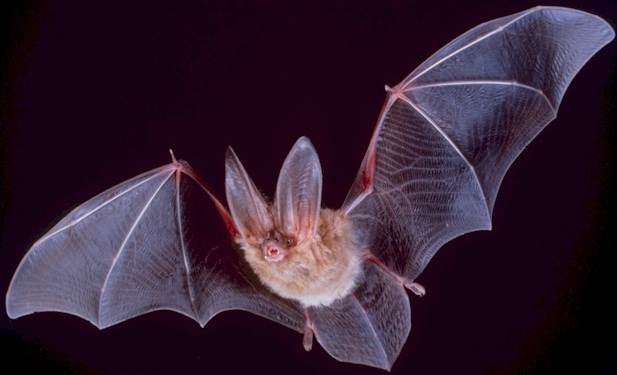
Townsends Big-eared Bat from Wikipedia
These verses show up at the end of the list of "unclean birds." I have heard people say or write that since the Bat is not a bird, that make the Scriptures incorrect and not true. Let's look at this a little closer. For one thing, the following verses go on to mention "fowls that go upon all fours" and other critters that are not birds. "Fowl" in the Bible refers to being covered with wings and that includes birds, bats, insects, and others that fly.

Here is what some of the commentators say about these verses.

Gill - "and the bat; a little bird which flies in the night, Aben Ezra says; Kimchi (s) describes it a mouse with wings, which flies in the night, and we sometimes call it the "flitter mouse"; it is a creature between a fowl and a beast; and, as Aristotle says (t), it partakes of both, and is of neither; and it is the only fowl, as Pliny (u) observes, that has teeth and teats, that brings forth animals, and nourishes them with milk. It is a creature so very disagreeable, that one would think almost there was no need of a law to forbid the eating of it; and yet it is said by some to be eatable, and to be eaten, as Strabo (w) affirms, yea, to be delicious food. It is asserted (x), that there is a sort of them in the east, larger than ordinary, and is salted and eaten--that there are bats in China as large as pullets, and are as delicate eating."

Dan holding a bat at Avon Park AF Range
Clarke - "The bat - עטלף atalleph, so called, according to Parkhurst, from עט at, to fly, and עלף alaph, darkness or obscurity, because it flies about in the dusk of the evening, and in the night: so the Septuagint νυκτερις, from νυξ, the night; and the Vulgate vespertilio, from vesper, the evening. This being a sort of monster partaking of the nature of both a bird and beast, it might well be classed among unclean animals, or animals the use of which in food should be avoided." "Lev 11:20 All fowls that creep - Such as the bat, already mentioned, which has claws attached to its leathern wings, and which serve in place of feet to crawl by, the feet and legs not being distinct; but this may also include all the different kinds of insects, with the exceptions in the following verse."

JFB - "the bat — the great or Ternat bat, known in the East, noted for its voracity and filthiness." Lev 11:20 All fowls that creep, etc. — By “fowls” here are to be understood all creatures with wings and “going upon all fours,” not a restriction to animals which have exactly four feet, because many “creeping things” have more than that number. The prohibition is regarded generally as extending to insects, reptiles, and worms."

Here are some interesting facts about the bat (not a bird) from Wikipedia:

1) Bats are flying mammals in the order Chiroptera (pronounced /kaɪˈrɒptərə/). The forelimbs of bats are webbed and developed as wings, making them the only mammals naturally capable of true and sustained flight. By contrast, other mammals said to fly, such as flying squirrels, gliding possums and colugos, glide rather than fly, and only for short distances. Bats do not flap their entire forelimbs, as birds do, but instead flap their spread out digits, which are very long and covered with a thin membrane or patagium. Chiroptera comes from two Greek words, cheir (χείρ) "hand" and pteron (πτερόν) "wing."
Fruit Bat at Avon Park AF Range
2) There are about 1,100 bat species worldwide. About seventy percent of bats are insectivores. Most of the rest are frugivores, or fruit eaters. A few species feed from animals other than insects. Bats are present throughout most of the world and perform vital ecological roles such as pollinating flowers and dispersing fruit seeds. Many tropical plants depend entirely on bats for the distribution of their seeds.
3) Bats range in size from Kitti's Hog-nosed Bat measuring 29–33 mm (1.14–1.30 in) in length and 2 g (0.07 oz) in mass,[4] to the Giant Golden-crowned Flying-fox, which has a wing span of 1.5 m (4 ft 11 in) and weighs approximately 1.2 kg (3 lb).
4) Bat echolocation is a perceptual system where ultrasonic sounds are emitted specifically to produce echoes. By comparing the outgoing pulse with the returning echoes the brain and auditory nervous system can produce detailed images of the bat's surroundings. This allows bats to detect, localize and even classify their prey in complete darkness. At 130 decibels in intensity, bat calls are some of the most intense airborne animal sounds.
5) The finger bones of bats are much more flexible than those of other mammals. One reason is that the cartilage in their fingers lacks calcium and other minerals nearer the tips, increasing their ability to bend without splintering. The cross-section of the finger bone is also flattened compared to the circular cross section that human finger bones have, and is very flexible. The skin on their wing membranes has more elasticity and so can stretch much more than other mammals. The wings of bats are much thinner than those of birds, so bats can manoeuvre more quickly and more accurately than birds. It is also delicate, ripping easily. However the tissue of the bat's membrane is able to regrow, such that small tears can heal quickly.
6) The teeth of microbats resemble insectivorans. They are very sharp to bite through the hardened armor of insects or the skin of fruit.
7) Mammals have one-way valves in veins to prevent the blood from flowing backwards, but bats also have one-way valves in arteries.
8) One species of bat has the longest tongue of any mammal relative to its body size. This is beneficial to them in terms of pollination and feeding their long narrow tongues can reach deep into the long cup shape of some flowers. When their tongue retracts, it coils up inside their rib cage.

God has graciously created the Bat to fulfill its role in doing His will. He has given it exactly what it needs. To some, it may seem a contradiction, but to those of us who believe in creation, there is no conflict.

Below is something we read recently from Comments on Here and Hereafter by Bob Jones, Sr., p. 79-80.

"The animals and fowls decided to have a battle, so the story goes. The animals lined up one one side and the fowls on the other. In the crowd was a little bat. The animals came upon the bat, and he dropped his wings, showed his teeth and said, 'I am an animal.' the fowls came upon the bat. He stretched his wings and said, 'I am a fowl.' I have known people like the bat. Whatever crowd they are in, that is what they are. They are like the chameleon. They are colored by their surroundings. God's people, instead of being affected by their surroundings, should affect their surroundings. A good, consecrated Christian who will be faithful to his trust will have some influence upon his environment."

Friday, May 21, 2010

Birds of the Bible - Hair Like Eagles' Feathers

That very hour the word was fulfilled concerning Nebuchadnezzar; he was driven from men and ate grass like oxen; his body was wet with the dew of heaven till his hair had grown like eagles' feathers and his nails like birds' claws. (Daniel 4:33 NKJV)
Greater Spotted Eagle (Aquila clanga) by Nikhil
I have wanted to include this verse in a Birds of the Bible article, but just never got to it. Last night our pastor mentioned this verse again in his message and I decided to use it for this weeks blog. Plus, Dan is teaching the Book of Daniel in our Sunday School class.

Many times the birds mentioned in the Bible are listed as "clean or unclean" or as an "object lesson" to teach some truth. This time the mention of Eagle feathers and birds' claws are used as a description of a man's appearance and there is a lesson to be learned here.

So, who was this man? It is actually a very important king, King Nebuchadnezzar of Babylon. The information about the King is found throughout the book of Daniel. To make the story short, the king had a dream and wanted an interpretation of that dream. Not only did he want his dreams interpreted, but he wanted the interpreter to tell him what the dream was about. The wise men and others told the king that was impossible, so the king commanded to kill them. Daniel prayed to God that He would reveal the dream and it's interpretation to him so he could tell it to the King. God answered that prayer and Daniel was able to reveal it to King Nebuchadnezzar.


King Nebuchadnezzar was the first world ruler and God had given the king great power. Later on, the king's pride takes over and he thinks he has made this kingdom and does not give God the credit. He even has a great statue made of himself and demands that all fall down and worship him.
Long nails like a bird's claws
Back to making this short. In Daniel chapter 4 the king has another dream and Daniel (Belteshazzar) prays for revelation and again interprets the dream. Daniel 4:9 to 4:18 tells the dream. (Birds are mentions several times in it.) Then Daniel interprets the dream in Daniel 4:19-33. Basically, the Most High is going to let the king learn humility and get rid of the pride that he has.
The king spoke, saying, "Is not this great Babylon, that I have built for a royal dwelling by my mighty power and for the honor of my majesty? (Daniel 4:30 NKJV)
For seven years will his kingdom be departed from him. He will be out in the field, "eating grass like oxen" and "until you know that the Most High rules in the kingdom of men, and gives it to whomever He chooses." It is during this time that his hair will grow like "eagles' feathers and his nails like birds' claws."

Did King Nebuchadnezzar learn his lesson?
And at the end of the time I, Nebuchadnezzar, lifted my eyes to heaven, and my understanding returned to me; and I blessed the Most High and praised and honored Him who lives forever: For His dominion is an everlasting dominion, And His kingdom is from generation to generation. All the inhabitants of the earth are reputed as nothing; He does according to His will in the army of heaven And among the inhabitants of the earth. No one can restrain His hand Or say to Him, "What have You done?" At the same time my reason returned to me, and for the glory of my kingdom, my honor and splendor returned to me. My counselors and nobles resorted to me, I was restored to my kingdom, and excellent majesty was added to me. Now I, Nebuchadnezzar, praise and extol and honor the King of heaven, all of whose works are truth, and His ways justice. And those who walk in pride He is able to put down. (Daniel 4:34-37 NKJV)