Showing posts with label Bird of the Bible. Show all posts

Wednesday, August 3, 2011

Birds of the Bible - Dove's Dung (by Lee Dusing)

Eurasian Collared Dove (Streptopelia decaocto) by Dan

Now here is an interesting verse found in 2 Kings 6:25:
And there was a great famine in Samaria, as they besieged it, until a donkey's head was sold for eighty shekels of silver, and the fourth part of a kab of dove's dung for five shekels of silver. (2Ki 6:25)
First let's find out what caused this event in the first place. Israel was being besieged and it was causing a very severe famine. Food was extremely scarce and the people were paying exorbitant prices for small amounts of anything edible.

Why were they under siege?
Afterward Ben-hadad king of Syria mustered his entire army and went up and besieged Samaria. (2Ki 6:24)
They were surrounded by the Syrian army and there was very little to eat. They may have been there for sometime or the inhabitants of Samaria were caught by surprise and didn't have time to lay up supplies. Then again, if you read the verses just prior, 2 Kings 6:8-23, another reason for the lack of food may be given. The Samaritans had fed the Syrian raiders before sending them back home. Most commentators say that there was at least a year between that event and when this one happens.

What ever the cause, the people were so hungry that they were paying 80 shekels of silver for a donkey's head. Several things about this:
  • Donkeys were very prized animals and well treated.
  • The head has very little meat on it.
  • "The head was the worst part of the animal." (JFB)
  • They were on the "do not eat" list.
  • "A vast price, especially for that which had on it so little meat, and that unwholesome and unclean." (Wesley)
Doves in Israel
Doves in Israel ©©

Now for the next food on their menu - "Dove's dung." Looking at the different versions of Scripture, here are some of the ways this is translated:
  • small measure of doves' droppings was five shekels of silver - BBE
  • one-fourth of a kab of dove droppings for five shekels of silver - NKJV
  • fourth part of a (cab or kab) of dove's dung at five pieces of silver - ASV Brenton ESV JPS KJV LITV NASB RV WEBSTER
  • small bowl of pigeon droppings cost about two ounces of silver - CEV
  • fourth part of a cab of dove's dung five silver-pieces - Darby
  • fourth part of a cabe of pigeons' dung, for five pieces of silver - DRB
  • forth of the cab of dovesdung at five silverlings - YLT
  • one pint of dove's dung sold for five pieces of silver - ERV
  • one quarter of a unit of dove's dung cost five silver coins - ISV
  • half a pound of dove's dung cost five pieces of silver - GNB
  • two pounds of silver and a half-pint of dove manure for two ounces of silver - GW
One thing they all agree on is that it was either a Dove or a Pigeon, which are both in the same family and their names are changed back and forth even today. Most agree it was a forth of something. The cab or kab according to the commentaries is described as:

A kab - A measure containing twenty - four eggs. and a kab was the usual measure of all sorts of grains and fruits of that sort. (Wesley)
Cab - This measure is not mentioned elsewhere in Scripture. According to the rabbinical writers it was the smallest of all the dry measures in use among the Jews, being the sixth part of a seah, which was the third part of an ephah. If it was about equal to two of our quarts, the “fourth part of a cab” would be about a pint. (Barnes)
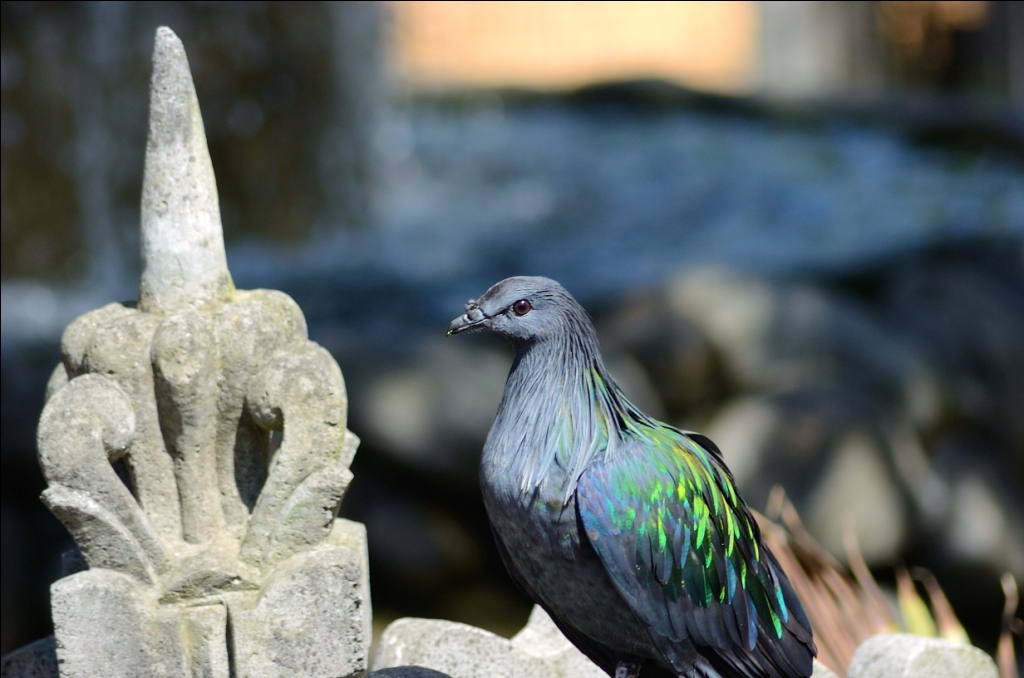
Nicobar Pigeon at Lower Park Zoo by Dan
Nicobar Pigeon at Lowry Park Zoo by Dan

Up to now, we know that it was expensive for a small amount. What keeps the commentators of differing opinions is what the "Dove's Dung" really was. Many say that it was a pulse or pease made from a pea or bean and that it had the color or texture of a dove's droppings. Others say it was from the actual droppings and that (this is yuk) they picked through it for edible parts. (For an interesting study, load the e-Sword program - it's free - and after loading the Bibles, dictionaries and commentaries, do a study of 2 Kings 6:25)

"dove's dung: This probably denotes, as Bochart, Scheuchzer, and others suppose, a kind of pulse, or vetches, which the Arabs still call pigeon's dung. "They never," says Dr. Shaw (Travels, p. 140), "constitute a dish by themselves, but are strewed singly as a garnish over cuscasowe, pillowe, and other dishes. They are besides in the greatest repute after they are parched in pans and ovens; then assuming the name leblebby;" and he thinks they were so called from being pointed at one end, and acquiring an ash colour in parching.

"Dove’s dung - Most commentators understand by this expression a sort of pulse which is called “dove’s dung,” or “sparrow’s dung” in Arabic. But it is possible that the actual excrement of pigeons is meant. The records of sieges show that both animal and human excrement have been used as food - under circumstances of extreme necessity." (Barnes)

I am inclined to think that it could have actually been the real droppings. The reason for that is what is mentioned after verse 25. Two ladies had agreed to eat their sons. See 2 Kings 6:26-29.

Now as the king of Israel was passing by on the wall, a woman cried out to him, saying,
"Help, my lord, O king!" And he said, "If the LORD will not help you, how shall I help you? From the threshing floor, or from the winepress?" And the king asked her, "What is your trouble?" She answered, "This woman said to me, 'Give your son, that we may eat him today, and we will eat my son tomorrow.' So we boiled my son and ate him. And on the next day I said to her, 'Give your son, that we may eat him.' But she has hidden her son." (2Ki 6:26-29)
Oriental Turtle Dove (Streptopelia orientalis) by Nikhil Devasar

Another thought, were there any doves left that hadn't been eaten?

I'll end with a quote from the Wesley commentary. "Learn to value plenty, and to be thankful for it; see how contemptible money is, when, in time of famine, it is so freely parted with for anything that is eatable."

Related Posts:


Interesting articles from the Internet:

Friday, July 8, 2011

Birds of the Bible - Birds of Samuel & Kings (by Lee Dusing)

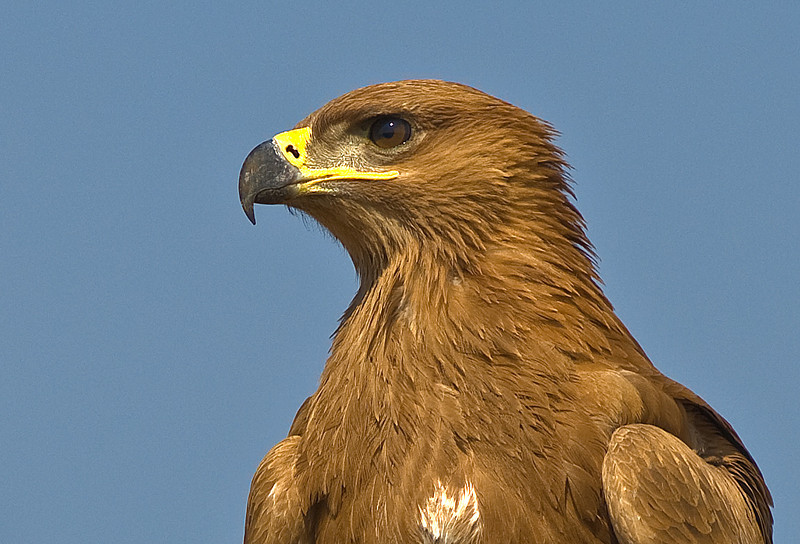
Tawny Eagle (Aquila rapax) by Africaddict

I have been reading through 1st and 2nd Samuel and 1st Kings lately in the English Standard Version (ESV). So far I have found seven references to "birds", "birds of the air", or "birds of the heavens."

Five of the verses have to do with the birds coming to do something, especially to eat. I'll save that for later. One verse is keeping the birds from eating and the other is totally unrelated to eating.

European Goldfinch (Carduelis carduelis) by Ian

Let's start with the easy one. In 1 Kings, Solomon was made king after his father, David, passed away. He asked the Lord for wisdom to know how to rule and do what was right. He was still a youngster. He was given wisdom that has surpassed any.
And God gave Solomon wisdom and understanding beyond measure, and breadth of mind like the sand on the seashore, so that Solomon's wisdom surpassed the wisdom of all the people of the east and all the wisdom of Egypt. For he was wiser than all other men, wiser than Ethan the Ezrahite, and Heman, Calcol, and Darda, the sons of Mahol, and his fame was in all the surrounding nations. He also spoke 3,000 proverbs, and his songs were 1,005. He spoke of trees, from the cedar that is in Lebanon to the hyssop that grows out of the wall. He spoke also of beasts, and of birds, and of reptiles, and of fish. (1 Kings 4:29-33 ESV)
To save a war, seven sons were given to the Gibeonites, who hanged them. Then the mother of two of them, Rizpah, came and spread sackcloth over their remains and protected them from the birds of the air. That is told in 2 Samuel 21.
Then Rizpah the daughter of Aiah took sackcloth and spread it for herself on the rock, from the beginning of harvest until rain fell upon them from the heavens. And she did not allow the birds of the air to come upon them by day, or the beasts of the field by night. (2 Samuel 21:10 ESV)
Lappet-faced Vulture (Torgos tracheliotus) by Africaddict

The next five incidents have to do with judgment and the birds coming to feed on the carcases of those who died.
Goliath, the giant Philistine threatened David with:
The Philistine said to David, "Come to me, and I will give your flesh to the birds of the air and to the beasts of the field." (1 Samuel 17:44 ESV)
Then David told Goliath that the LORD would cause the Philistines to be delivered to David and the birds would be feasting on him and the other Philistines there.
This day the LORD will deliver you into my hand, and I will strike you down and cut off your head. And I will give the dead bodies of the host of the Philistines this day to the birds of the air and to the wild beasts of the earth, that all the earth may know that there is a God in Israel, (1 Samuel 17:46 ESV)
Keep reading in 2nd Samuel 17 and you will find out who the birds feasted on.

Peregrine Falcon Lift Off Into The Mist
Peregrine Falcon Lift Off Into The Mist by Ray
In 1 Kings 14:11, 1 Kings 16:4 and 1 Kings 21:24, three bad kings and their families were judged for the evil they did of not serving the LORD and causing their subjects to also fall into sin.
Jeroboam, Baasha, and Ahab all died and the birds of the heavens were invited to come and eat. Not a pretty picture, but God keeps His Word.
Anyone belonging to Jeroboam who dies in the city the dogs shall eat, and anyone who dies in the open country the birds of the heavens shall eat, for the LORD has spoken it. (1 Kings 14:11 ESV)
Anyone belonging to Baasha who dies in the city the dogs shall eat, and anyone of his who dies in the field the birds of the heavens shall eat. (1 Kings 16:4 ESV)
Anyone belonging to Ahab who dies in the city the dogs shall eat, and anyone of his who dies in the open country the birds of the heavens shall eat. (1 Kings 21:24 ESV)
Not knowing for certain which birds actually came and did the eating, my guess is that it would be those from the birds of prey families. Those birds are known to be carnivorous and would have arrived at the LORD's will as prophesied.

Some of the birds of the large Order of Accipiitriformes - Raptors would have been involved. Those are the New World Vultures, Secretarybird, Ospreys, Kites, Hawks and Eagles. Then the Falcons and Caracaras of the Falconiformes Order possibly would have arrived. Owls from the Strigiformes Order might also have come.
But if you will not do so, behold, you have sinned against the LORD, and be sure your sin will find you out. (Numbers 32:23 ESV)
Related Posts:

Friday, July 24, 2009

Birds of the Bible - Pelican Study (by Lee Dusing)

Great White Pelican by Birdway
In Previous articles about the Pelicans; Birds of the Bible - Pelicans and Pelicans II they were introduced as being in the Pelecanidae family. Here in the U.S. we have the American White Pelican and the Brown Pelican. They are listed as "unclean" in the Scriptures (Levitucus 11:18 and Deuteronomy 14:17), meaning they were not to be eaten by the Israelites.

Depending on which version of the Bible you use, "Pelican" is not always used in one, but shows up in another. That is what makes "birdwatching the Scriptures" so interesting. Take for instance Isaiah 34:11:
But the pelican and the porcupine shall possess it, Also the owl and the raven shall dwell in it. And He shall stretch out over it The line of confusion and the stones of emptiness. (NKJV)
Using e-Sword Free Bible Program's" compare feature, observe these differences.
Pelican and porcupine - ASV, NKJV, RV
Pelican and hedgehog - NASB, NAS77, YLT
Pelican and bittern - Darby, JPS
Pelican and herons - GW
Cormorant and bittern - KJV, MKJV, Webster
Hawk and porcupine - ESV
Owls and ravens only mentioned - GNB
Owls, hawks, and wild animals - CEV
Birds of the waste land - BBE

Another interesting verse:
Flocks will lie down in her midst, All beasts which range in herds; Both the pelican and the hedgehog Will lodge in the tops of her pillars; Birds will sing in the window, Desolation will be on the threshold; For He has laid bare the cedar work. (Zephaniah 2:14 NASB)
This verse uses pelican, raven, hedgehog, owl, cormorant depending on the version.

When Nave's Topical Bible's - Pelican and Torrey's Topical Textbook's - Birds are referenced, it appears that they used the King James Version (KJV).

Australian Pelican by Birdway
All of that said to help you realize as you study the Bible, looking for birds, be aware that just because it's not found on the first search, try another version and the bird may appear. I personally prefer to use the KJV, NKJV, NASB, and ESV as my main versions. The others are fine, some better than others, but those mentioned, in my opinion, are closer to the originals. Why they vary, I am not sure. The Strong's Hebrew and Greek Dictionaries in the KJV and NASB use H6893, which is kaw-ath' , which means "probably the pelican (from vomiting): - cormorant."
We do know that the Pelicans are mentioned in the Bible and I really enjoy watching them. We get to see the American White and the Brown Pelicans here in Florida. It would be neat to see the Austrailian, Dalmation, Great White, Pink-backed, Peruvian and Spot-billed Pelicans.

I also love to watch the pelicans skim over the water and also fly in formation like a squadron of bombers. I have included two videos of them skimming. Visit the Pelican Videos and Photos for more. See the Sidebar.

*All photos used with permission.


Pelican in flight in Cuba
Another by arlens47 that "Follows the flight of a pelican as he starts to go out to sea, then reverses course and lands in the water off the coast of Santa Cruz, California. Background music is Thorn Birds Theme by the Joe Reisman Orchestra.
Flight of the Pelican