Showing posts with label books. Show all posts

Friday, May 3, 2013

The God of the Amazon Jungle is Same God of Inwood (by Jonita Barram)


‘If He Did It Back Then/He’ll Do It Again’

The Southern Gospel group Signature Sound has recorded a song called “The God of Today.” The chorus says:
For the God of the past,
Is the God of today.
If He did it back then,
He'll do it again,
He forever remains the same,
So trust in His unchanging power,
And follow Him come what may,
For the God of the past,
Is the God of today.

The Kingdom of Darkness

Several years ago, I got to read Port of Two Brothers: The Amazing Story ofTwo Missionary Brothers and Their Work on the Amazon, by Paul Schlener. Paul and his brother John evangelized and discipled a tribe of Indians called the Ticuna. These pagans were some of Satan’s choicest servants in the kingdom of darkness until “the Father … qualified [them] to be partakers of the inheritance of the saints in the light,” delivering them “from the power of darkness” and conveying them “into the kingdom of the Son of His love, in whom we have redemption through His blood, the forgiveness of sins” (see Colossians 1:12–14). Schlener writes:
“Those people were in a sad state of spiritual, moral, and intellectual darkness.”
Any evil thing that goes on in Winter Haven went on in the Amazon Jungle, and the book gives some horrific details. Drunkenness, knife fights, revenge killings, physical and sexual abuse, thievery—all were a way of life. After the Schleners started ministering among the Ticunas, the two brothers “were convinced that Satan would not let these people go without a fight.” But God gloriously saved many of the Ticunas and transformed their tribe, much like Pastor Osborne’s vision for Winter Haven.

The Kingdom of the Son of God’s Love

When the Schleners started holding Brazilian church services, “in an unprecedented manner, our Indian friends crowded the Brazilian services on Sunday morning,” says Schlener. The missionaries then began Indian services, which were, he says, “inaugurated with at least 100 in attendance. Within a few weeks, the congregation increased to almost 500.” An American pastor who had visited the Schleners’ work encouraged the brothers, writing:
We’re asking God for a great harvest of souls—1,000 of them—why not? Is not our God able? Is this not His will? And if you are faithful, and if we are faithful, what can keep this from being accomplished? God bless you!

God did bless, and the church grew.


Schlener says
the Ticuna “didn’t have a written language, nor could they read or write Portuguese, the language of Brazil. . . . Officially the Indians were considered minors, a nation within a nation.”
So the missionaries opened a small school. Every night, a handful of their students went home and taught their families and neighbors to read and write. Christian Indians later began additional schools, camps, and churches. Several went to seminary and became pastors.

Schlener says:
“Literacy, accompanied with biblical teaching, brought higher moral standards, making life better for everyone in the Port of Two Brothers area, including the traders. The Indians began to produce more, but cheat and steal less. It took years of perseverance, maintaining an acceptable reputation in the area, to gain a good relationship with the business people.”
The following testimony illustrates the change in the Ticunas’ lives.

Nearly 800 were present one Sunday when a youth interrupted the service by walking the aisle during Paul Schlener’s sermon. He said:

My father was a pajeh [witch doctor]. No like Christians. Never come church. Come home drunk; beat my mother; beat us whole family. We run, hide in jungle. We poor. No shoes, ragged clothes. We hear neighbors across creek singing. They happy, we sad. 
Always neighbors invite Dad go church. Never go. One day Dad go, but stay in soccer field. Listen singing. Hear you two holler. Next time come closer. Stay outside, just listen. Next time come inside, stand in back. One time, he accept Christ as Savior. No more get drunk. Not pajeh no more. No more beat my mother. Work hard. All family have shoes now. Little brothers learn to read and write. Pray before eat. Nighttime recite Bible verses brothers learn in school. If God do that for Dad, can do for me, too. I’m oldest brother, need Christ, too. I accept Him today.
As their lives changed, the believers influenced their unsaved peers. For example, when the missionaries noticed a man and his son-in-law absent from church services, they asked around and learned their family had moved. They also found out why: the two men had murdered a third man on advice from a witch doctor, and their neighbors objected:

All neighbors around, explained one of the Christians, don’t want them live here no more. Can’t do that no more. Old life, long ago; we know God now. Still some believe pajeh, not accept God’s Son yet.

Souls saved. Illiterates educated. Families healed. Work ethic transformed. Generosity increased. Testimonies confirmed.


If God “did it back then” for the Ticuna Indians of Brazil (and He certainly did!), “He’ll do it again” for unbelievers in Winter Haven, particularly Inwood.

When we pray, serve, and give, we have a part in that glorious work!

Saturday, March 16, 2013

The Conviction to Lead: 25 Principles for Leadership That Matters (a book recommendation)


I recently finished Albert Mohler's new book, The Conviction to Lead:  25 Principles for Leadership that Matters.  It was fantastic and I highly recommend it.  With only 213 pages, the book was easily accessible and I never felt bogged down.  Mohler structured the book around 25 short leadership principles and spent one chapter on each one.  My favorite chapters were Leaders are Readers (12), Leadership as Stewardship (16), The Leader as Writer (20), and The Leader's Legacy (25).

Here are some highlights from the book.
  • "Management is not the same as leadership."  p. 16
      
  • "You can divide all leaders into those who merely hold an office or position and those who hold great convictions."  p. 25
      
  • "This book is written with the concern that far too much of what passes for leadership today is mere management.  Without convictions you might be able to manage, but you cannot really lead."  p. 26
      
  • "A robust and rich model of Christian thinking - the quality of thinking that culminates in a God-centered worldview - requires that we see all truth as interconnected."  p. 45
       
  • "Passion must arise out of conviction."  p. 52
        
  • "When the mission is ambiguous and the beliefs of the organization are nebulous, passion dissipates quickly."  p. 55
        
  • "The conscious denial of reality is a central danger of leadership, and the leader must defend against this temptation."  p. 61
        
  • "If the right decision were always clear to everyone, we would not need leaders."  p. 63
         
  • "The best leaders know that the road to great effectiveness is paved with intentional communications, and the very best leaders are always learning how to be even more effective as communicators."  p. 92
       
  • "If a leader has to look for a message, his leadership is doomed."  p. 92
        
  • "When a true leader shows up, we already know what he is going to say."  p. 97
        
  • "A leader without accountability is an accident waiting to happen."  p. 112
        
  • "Common goals are the product of intensive communication, enduring influence, and constant affirmation."  p. 118
        
  • "The sovereignty of God puts us in our place, and that place is in God's service." p. 135
        
  • "Leaders have to be concerned not only with what their organization is doing but with what it ought to be doing."  p. 138
        
  • "Indecisiveness is one of history's greatest leadership killers."  p. 142
        
  • "Leaders will be humble, or they will be humbled."  p. 154
        
  • "Leaders write because words matter and because the written word matters longer and reaches farther than the words we speak."  p. 172
       
  • "The leaders who make the biggest difference are those with long tenure."  p. 191
        
  • "Leaders often overestimate what can be accomplished in a single year, but underestimate what can be accomplished in a decade."  p. 194
        
  • "There is no place as humbling as a cemetery - and there is no place more likely to remind the leader of the limits of one's leadership."  p. 201
         
  • "There are no indispensable people, only indispensable convictions."  p. 202
        
  • "The leader's central concern with regard to legacy is the perpetuation of conviction."  p. 208
        
Buy this book today from Amazon.

Monday, February 18, 2013

12 Books I Read in 2012 (by Stephen Simpson)


A few years ago, I started keeping a list (via spreadsheet) of all the books that I finish.  I have found it tremendously useful in helping me remember what I have read.  Here is a quick look at what I read in 2012.

  • The Myth of the Garage - read this book for free on my kindle; I think I know why it was free; 
  • Going Public - Your Child Can Thrive in Public School - an excellent book; probably the best book I read in 2012.  Read a blog post I wrote about this book.
  • The Rockefellers - This book I borrowed from Pastor Osborne's office.  It is a long book.  But, I enjoyed learning about this family and the vast amounts of wealth that they had to deal with. 
  • License to Pawn - If you like the show Pawn Stars, you will like this book.  It is the story of Rick Harrison, the main character of the show.  He has not lived the cleanest life, so it is not the cleanest book.  But, I found it very interesting. 
  • The Hunger Games Trilogy - Brace yourself...I did not enjoy these books.  I read them all and just failed to connect with the story.  To me, it was all pretty dumb.  But, that's just my opinion.
  • Seal Team Six - Memoirs of an Elite Navy Seal Sniper - The author, a retired member of Seal Team 6, writes about his experiences.  I found this book fascinating.
  • The Hands-On Dad - heard this author speak at the FPEA Homeschool Convention and borrowed his book from the library.  Short book, but really good for Dads of homeschoolers.
  • Liar's Poker - another book I read for free on my kindle; another waste of time
  • Ivanhoe - classic book; Robin Hood, Richard the Lionheart, a timeless tale; what more could you ask for?  I literally could not put this book down.  
  • Tempted and Tried - I loved the first book by this author (Adopted for Life).  I struggled to connect with this one.  It dealt with the temptations of Jesus.  I think it is an excellent book, my brain just had a difficult time working through it.

As I look back on what I read in 2012, frankly I am somewhat disappointed.  I did not enjoy nor benefit from much of what I read.  The highlights were Going Public, The Rockefellers, and Ivanhoe.  They stood out far above the rest.  Others like License to Pawn and Seal Team Six were 'just for fun' and I enjoyed them.  The rest of these books were notable in that they were dreadfully forgettable.  

I am resolved to make better choices in what I read in 2013.  With all of the books that are available to read, there is no excuse for reading a dud!

Now it's your turn.  Leave a comment below.  Did you read any of these books?  What did you think about them?  What books did you read in 2012?  

Related Posts:

Wednesday, March 28, 2012

Can Your Child Thrive in a Public School? (by Stephen Simpson)


Can your child thrive in a public school?  I believe the answer is YES!  Should your child attend a public school?  This is a much more difficult question to answer.  The answer to that question will vary from family to family.

My wife and I are currently facing this decision.  Our oldest daughter starts kindergarten this fall.  Needless to say, this is no easy decision.

Naturally, we have been doing some reading on these subjects and have talked with many people to get their counsel.  Recently, we came across a book entitled Going Public: Your Child Can Thrive in Public School.  Written by Christian authors, this book tells the story of one family who has sent all eight of their children through public schools.

Before we continue, please realize that the purpose of this post is not to settle the question of public school vs. private school vs. home-school.  The purpose of this post is simply to tell you about an excellent book.

Going Public does not promote or advocate public schools for everyone.  The authors do not say public school is the best option for everyone.  They have written their book for families who find themselves in public schools.  Many christian families send their children to public schools.  There are numerous reasons why public schools are the best (or only) option for these families.  Going Public was written to encourage these families and to let them know how their children can thrive in public schools. 

If your children are in public school, I cannot recommend this book highly enough.  The authors make several points that I especially appreciated.  Here are just a few highlights.
  1. Everybody Should "Homeschool" - "God gave these children to us.  He gave your children to you.  He will hold each of us accountable for their upbringing.  We are their first and ultimate teachers.  What goes into their minds and souls is our responsibility." (p. 155)  This is so true!  Regardless of where our children go to school, we are responsible for their education.  We, as parents, are the ones who will give account to God for our children.  "We view ourselves as the primary instructors, and the classroom teacher as our deputy.  The ultimate outcome rests squarely on our shoulders."  (p. 157)  Imagine how our public schools would be different if every parent had this mindset!
  2. Don't Complain! - "If we parents don't provide the school with a student who is (a) awake, (b) alert, (c) fed and (d) cooperative, we have no right to complain about test scores...If by some miracle, every public-school student showed up to class tomorrow morning with an obedient spirit, American education would be instantly revolutionized."  (p. 76)  
  3. The Magic of Being Nice - The authors devote an entire chapter to encouraging parents to be nice in their interaction with teachers and school officials.  "The question is not whether to deal with substantive issues and disagreements.  The question, rather, is how to deal with them."  (p. 103)  This chapter is absolutely golden!  Consider the power of disagreeing with respect and with a soft answer.  Consider the power of humbly submitting to the authority of school officials - even if you disagree with their decision.  One of the most important lessons you can ever teach your children is how to properly submit to authority. 
All in all, this book will prove tremendously helpful to the parent of public-school children.  In fact, any parent would profit by reading this book - regardless of their schooling situation.

Other posts by Stephen Simpson that you might enjoy:
  
 This Post Sponsored by:

Friday, January 27, 2012

Some Books I’ve read in 2011, and Some Books I Intend to Read in 2012 (by Peter Brock)

    
5 Books I Read in 2011
  • Unbroken (by Laura Hillenbrand) – A story that demonstrates the depths of man’s sin and the greatness of God’s grace. The book is a biography of the life of Louis Zamperini, Olympic distance runner and WW2 POW. A must read.  (Read an extended review on our blog.)
      
  • The Valley of Vision - A Collection of Puritan Prayers and Devotions (by Arthur Bennett) This is a resource that I go to several times throughout the year. The audio version is nice as well. The prayers of the Puritans challenge me like nothing else when it comes to my spiritual life. Their desire for holiness and sensitivity to sin causes me to look inward in honest evaluation each time I read or listen. Highly recommended.
      
  • John MacArthur-Servant of the Word and Flock (by Iain H. Murray) - This is a good book for those who want to know of MacArthur’s background as well as ministry successes and challenges. Recommended for those seeking to serve in the pastorate.
       
  • The Practice of Godliness (by Jerry Bridges) – An older book that I actually reread. Great for refocusing priorities and self-examination.
      
  • At the Throne of Grace – A Book of Prayers (by John MacArthur) - Nice collection of prayers by MacArthur that are built around various themes.
    
6 Books I Intend to Read in 2012
   
Related Posts:

Friday, January 13, 2012

13 Books I Read in 2011 (by Stephen Simpson)


One of my goals for 2011 was to finish at least one book per month.  As I reviewed my goals list for 2011, I got really excited when I realized that I read a total of 13 books.  Some were better than others.  But I thought you might be interested in what I read in 2011.  I’ve included some of my thoughts along with each book.
   
  • Decision Points (by George W. Bush) President Bush reviews the major decisions/events of his presidency.
       
  • Strong Fathers, Strong Daughters (by Meg Meeker) A very good book.  It helped me better understand the importance of my role as a father to two daughters.  Should be required reading for every man who has a daughter.  Read more about this book.
       
  • Shepherding a Child’s Heart (by Tedd Tripp) The classic book on parenting.  Should be required reading for every parent.
        
  • Slave: The Hidden Truth About Your Identity in Christ (by John MacArthur) Good book.  A little repetitive at times.  Read a review of this book.
        
  • Open:  An Autobiography (by Andre Agassi)  Growing up, I was a big Andre Agassi fan.  He and Pete Sampras had one of the best tennis rivalries ever.  In this book, he tells his story.  It was very interesting to read.  But, it felt very one-sided.  I would imagine this one-sided perspective is common to autobiographies.  Nonetheless, I enjoyed this book.
       
  • Dr. Gray at Moody Bible Institute (compiled/edited by William M. Runyan) A biographical look at Dr. James Gray and his time at Moody Bible Institute.  Short but interesting.
       
  • Amazing Grace:  William Wilberforce and the Heroic Campaign to End Slavery (by Eric Metaxas) Excellent book.  Highly recommended.  I’m also looking forward to reading Metaxas’s biography of Bonheoffer.  Read a post on our blog inspired by this book.
       
  • Guerrilla Marketing for Nonprofits (by Jay Conrad Levinson, et al.) Highly practical book.  I will revisit this book often.
       
  • An Unexpected Journey (by W. Robert Godfrey) I did not enjoy this book as much as I thought I would.  I was hoping it would be more biographical than it ended up being.
       
  • Servanthood as Worship: ThePrivilege of Life in a Local Church (by Nate Palmer) Short book.  Pretty good.  Read more about this book.
       
  • Rawhide Down:  The Near Assassination of Ronald Reagan (by Del Quentin Wilber) A minute by minute account of the events surrounding the attempted assassination of President Reagan.  This book was hard to put down.  Highly recommended.
       
  • Linchpin:  Are You Indispensable? (by Seth Godin) A good book on being an indispensable worker.  In my opinion, the format of Godin’s books makes them difficult to read.
       
  • Steve Jobs (by Walter Isaacson) A fascinating book.  I enjoyed it immensely.  It is so sad that in spite of all of the unbelievable talents that Jobs possessed, he was an awful and ungodly person.  His life, in spite of all of his accomplishments, was truly tragic. 


What books did you read in 2011?

Friday, July 22, 2011

Why Do You Serve in Your Local Church? (a book recommendation)


(recommended by Stephen Simpson)

Serving is part of the fabric of any healthy local church.  Most churches would cease to exist without the hundreds of individuals who serve on a weekly basis.  Nate Palmer's book Servanthood as Worship: The Privilege of Life in a Local Church helps address the reasons for why we should serve in a local church.  I highly recommend this book.  It will challenge you to evaluate the motivations behind your service.

"The purpose of this book is to present a biblical vision of service so that believers from all sorts of churches can say, along with Joshua, 'but as for me and my house, we will serve the Lord.' (Joshua 24:15)" (p. 12)

Some highlights from the book:
  • "Most of the time we are simply serving ourselves." (5)
      
  • "We always serve who we see as the king of our kingdom."  (6)
      
  • "When Christians are gathered into a local church, that form of worship called biblical servanthood can be practiced and expressed in ways that are not possible in any other context."  (25)
      
  • "God is calling us to serve despite our inconvenience and discomfort, because his top priority is the glory he will receive as our lives become more and more conformed to his image.  He wants to do real work in the church - through us - to help clean up the mess that is our collective sin." (29)
      
  • "One reason the church is the primary context for serving is because it is where messy people go when they know they need help." (29)
      
  • "Through the practice of servanthood-as-worship in local churches, believers and the lost alike come to more clearly taste and see God's provision and love.  As chairs are arranged, children watched, books sold, instruments played, local outreaches conducted, prayers prayed, and Bible studies taught, a great testimony of praise is offered up."  (34)
      
  • "Biblical servanthood is a reaction to God, a response to a holy God's forgiveness of our sins.  We do not serve for salvation but from salvation.  Serving is intended to magnify the gospel, not replace it."  (43)
       
  • "When trials come knocking, we are tempted to just quit serving God and start serving ourselves again - and apart from cultivating the work of the Spirit in our lives, that's exactly what we will do."  (59)
       
  • "Some acts of service God calls us to may be heroic, but most are quite simple.  Meals do not cook themselves, lawns do not mow themselves, and clothes do not give themselves away.  Babysitters do not appear by magic, and taxis don't take people to church or the grocery store for free.  But we can do these things.  They are not difficult, and when we do them our lives point to God."  (70)
Other Recommended Books:

Monday, June 6, 2011

What I Learned from John Piper (by Matthew DelValle)

John Piper at 2011 Ligonier National Conference

I didn’t encounter John Piper until age 16. I had not heard much about Dr. Piper at this point. I remember Pastor Pete had assigned his book Don’t Waste Your Life to some of my older friends for a missions trip, and I remember said friends commenting how the book was too deep and they didn’t understand it at all. But I had not read or listened to Dr. Piper myself.

This all changed when Pastor Bobby assigned Let the Nations Be Glad! to read for the missions trips in 2007. I’ll never forget the opening lines of the book. They are etched into my memory:

Missions is not the ultimate goal of the church. Worship is. Missions exists because worship doesn’t. Worship is ultimate, not missions, because God is ultimate, not man. When this age is over, and the countless millions of the redeemed fall on their faces before the throne of God, missions will be no more. It is a temporary necessity. But worship abides forever.

The main reason why we go out and preach the gospel to all people is not mainly because we don’t want to see people go to hell, but because we want God to be worshiped. That is why God ordains the missionary task. He wants to be worshiped. His glory is not honored, his holiness is not reverenced, his greatness is not admired, his name is not praised, his faithfulness is not trusted, his commandments are not obeyed, his justice is not respected, his wrath is not feared, his grace is not cherished, and his person is not loved. Therefore, missions exists because worship doesn’t.

I grew to love the God-centered worldview of Dr. Piper. Something about his teaching just resonated within me. I had to read more of this man who wrote so convincingly about the supremacy of God’s glory as the center of all things.

Later that year Pastor Bobby again introduced me to another book from Dr. Piper: Desiring God: Meditations of a Christian Hedonist. I found the term “Christian Hedonist” intriguing. I wanted to know what Piper meant by it. I was not disappointed. The thesis of the book is Dr. Piper’s most famous sentence: “God is most glorified in us when we are most satisfied in him.”

Now everything was coming together. Both R.C. Sproul and John Piper had convinced me that the glory of God is the most important thing in the universe. Nothing is more ultimate in the mind of God than the glory of God because nothing is more valuable in the heart of God than the glory of God. But Dr. Piper helped me see another wonderful truth: God’s glory coincides with my joy.

God’s passion for his own glory is the measure of his passion for my joy. If he were to make something else more ultimate than his own glory, he would sell me short. The more God seeks his glory, the more he seeks my happiness in him.

Likewise, the more I pursue God’s glory, the more I pursue my own happiness in God. Nothing can fully satisfy the human heart other than God himself. I was created to enjoy God. “In your presence is fullness of joy; at your right hand are pleasures forevermore” (Psalm 16:11). That’s why God actually commands me to enjoy him: “Delight yourself in the Lord” (Psalm 37:4).

The value of the gospel is just as important as the truth of the gospel. Or as Piper himself writes, “The most precious truth in the Bible is that God’s greatest interest is to glorify the wealth of His grace by making sinners happy in Him.” This is indeed a precious truth. I love the gospel more now than before because I love God more now than before.

This is what John Piper taught me. I am eternally grateful to God for raising up this pastor and teacher to build up the body of Christ. I thank God for what he has accomplished in my life through this man’s teaching (cf. Romans 15:18). It is a wonderful truth that God indeed is most glorified in me when I am most satisfied in him. God gets the glory; I get the grace. He is honored; I am happy. Praise the Lord!

Posts in this series:

Friday, May 27, 2011

Teach Your Toddler That They Are Under Authority (by Stephen Simpson)


What is the most important thing that you need to teach your children when they are toddlers?  In his book Shepherding a Child's Heart, Tedd Tripp states it clearly:
The most important lesson for the child to learn in this period is that he is an individual under authority. (p. 129)
When I read that, I had one of those moments where I learned something that I should have already known and the fact that I didn't already know it made me feel pretty dumb.  I had simply thought that my primary objective with my toddlers was to get them to obey. 

Obedience is fine and well.  But, obedience is simply a result of properly teaching our primary objective. Our primary objective is to teach our toddlers that they are under authority.  God has placed me in a position of authority over my children. 

Our children also need to learn that they will be under authority all of their lives.  There will always be some authority that they must interact with.  It may be a teacher, a coach, a police officer, a local church, the IRS, or a boss.  Regardless of who it is, our children must learn how to live 'under authority.'
Submission to earthly authority is a specific application of being a creature under God's authority.  (p. 130)

Did you catch that?  Maybe you should go back and read that quote again.  I believe this even applies to adults.  How we submit to earthly authority reveals how we submit to God's authority.  Sadly, there are too many adults that cannot deal properly with authority.  No one taught them that they are under authority.  They think that they are their own authority.  They are in for a rude awakening. 

Do your children a favor.  Teach them that they are under authority.

Other Posts on Parenting:

Monday, May 23, 2011

Social Gospel, Seeds Family Worship, and 'Tempted and Tried'


Past editions of Headlines:

Monday, May 9, 2011

Book Review - "Your First Two Years in Youth Ministry" (by Doug Fields)

Your First Two Years in Youth Ministry

(reviewed by Dave Totman)

Some books aren’t worth reading even one time, but others are worth reading over and over. In February 2005, just before I began my current post as the youth pastor at Sahel Academy, I picked up a copy of the book, Your First Two Years in Youth Ministry by Doug Fields. I had already read another of his books, Purpose Driven Youth Ministry and hoped this book would be as helpful and encouraging as the first.

Your first two years . . . was completely different than Purpose Driven and struck some chords in my heart that have continued to resound over the past half-decade. So, this spring, I decided to pick it up and go over it again as an evaluation tool of how the last six years of youth ministry have gone and to explore how I might be able to improve some areas of weakness.

Now, you may be saying, “Well, this is a pretty narrow subject; I’m not in youth ministry, so this book obviously isn’t for me.” Not so fast, I say – I have found several excellent principles within these pages that apply well beyond the walls of a youth room.

Three principles have struck a chord in my heart:
  1. “You can’t minister to everyone.” (p. 86) As someone who loves to help others and has lessons yet-to-be learned about boundaries and margin, this principle jumped off the pages (of the book) at me. Doug writes that you can’t (and shouldn’t) minister to everyone on your own (not even Jesus attempted this). I must learn my role and niche and look for others to play their roles as well. It is a great reminder that as believers, we are meant to live and serve in the body of Christ. I am only one part and I am meant to function as a part of many pieces working together. So, I need to be looking around me and identifying the team, their niches, and how we should all be working together to accomplish the overall task.
      
  2. “During conflict . . . be a leader.” (p. 129) Conflict is an interesting subject. For some it raises their stress level, others seem to create conflict to relieve stress. I can identify times in my life when I have avoided conflict and other times when I have sought to create it. Conflict isn’t always bad; in fact, many times it can be very helpful. Doug’s point in this portion of the book is to remind spiritual leaders that God has placed them in leadership to help navigate the conflict process and so we shouldn’t shy from it or avoid it, but rather be the leader that God wants. Doug goes on to chart a model of conflict resolution that is very helpful (p. 137). It was good for me to look over the conflict process and ask myself if I am responding to the conflicts in my life negatively or positively and to reflect on how I need to be a better leader through this process.
      
  3. “Why you want to develop student leaders.” (p. 196) I have believed for a long time that student leadership should be a priority in every youth ministry. That has been easier to believe than implement because the natural high turnover rate in youth ministry is only exacerbated when that youth ministry is dropped into the context of an international school and community. Doug’s encouragement, examples and advice on how to develop student leadership was very helpful. The bottom line for me is that as a follower of Christ, I want to push others around me into deeper relationships with Christ. The most effective way for me to do that (since I cannot minister to everyone . . . see point 1 above), is to reach out to leaders around me (including young and emerging leaders) and help them learn to minister to others.
All of this is obviously applicable in the context of a youth ministry. But it is equally applicable in many other contexts (sports teams, classrooms, boardrooms, etc.). Your First Two Years in Ministry is an incredibly helpful book in addressing many of the heart issues a youth minister deals with and I encourage anyone interested or already involved with youth ministry on any level to pick up a copy and give it at least one good read (maybe you’ll want to pick it up again years down the road, just as I have).

Other Books:

Friday, May 6, 2011

Book Review - "Triumph - The Untold Story of Jesse Owens and Hitler's Olympics" (by Jeremy Schaap)

Triumph: The Untold Story of Jesse Owens and Hitler's Olympics

(reviewed by Peter Brock)

Triumph: The Untold Story of Jesse Owens and Hitler's Olympics is a very compelling read for those who enjoy sports and history. Written by Jeremy Schaap, the reader is taken from Owens early days in high school and college at Ohio State through the 1936 Olympic Games in Berlin. The African-American son of sharecroppers won four gold medals and perhaps single-handedly brought down Hitler's myth of Aryan supremacy. Schaap paints the media portrayal of Owens remarkable achievements against a backdrop of Nazism, prejudice, Arianism, Hitler, and politics. Triumph is a fascinating reading of sports and geopolitics coming together on a world stage.
Other Book Reviews:

Wednesday, May 4, 2011

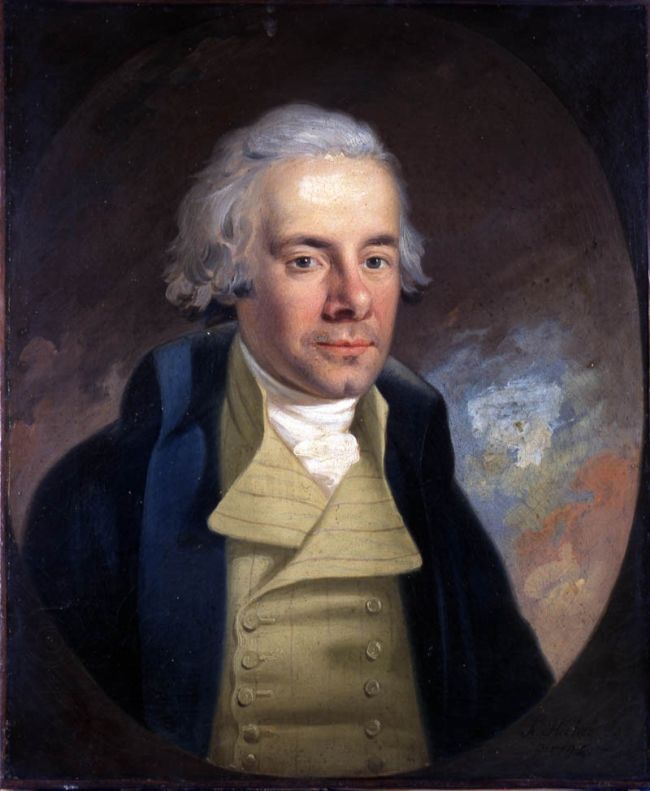
William Wilberforce - 'Two Great Objects' (by Stephen Simpson)


William Wilberforce stands as a giant in the world of Christian Politics.  I did not know this until a few years ago when I watched the movie Amazing Grace.  It introduced me to Wilberforce.  My understanding and appreciation of Wilberforce grew more as I read Eric Metaxas's excellent book Amazing Grace: William Wilberforce and the Heroic Campaign to End Slavery.

It is staggering to consider Wilberforce's contemporaries.  Born in 1759, Wilberforce shared the earth with men like George Washington, Benjamin Franklin, Thomas Jefferson, George Whitfield, Napoleon, and Beethoven.  He lived among giants and was a giant himself.
 
The 'Great Change'
The turning point in Wilberforce's life came in 1785.  At this point he held the most coveted seat in the House of Commons and his closest friend was the Prime Minister, William Pitt.  It was during 1785 that Wilberforce converted to Christ.  Metaxas describes his 'Great Change:'
Wilberforce's "Great Change" did not happen overnight or in an instant... but (his) transformation was much more gradual.  His conversion was much closer to St. Augustine's, who came to intellectual clarity about the doctrines of Christian faith but was frustrated by his inability to conform his behavior to his beliefs. (p. 52-53)
What a 'Great Change' it was!  Nearly every aspect of Wilberforce's life was dramatically changed.  His finances, attitudes, priorities, and time management were redeemed along with his soul. 

Two Great Objects
In 1787, Wilberforce wrote in his journal, "God Almighty has set before me two great objects, the suppression of the Slave Trade and the Reformation of Manners."  This is such a simple statement.  Yet, the entire world has been impacted these 'two great objects' that God set before Wilberforce.

In explaining the magnitude of what Wilbeforce did, Metaxas puts it well,
What Wilberforce vanquished was something even worse than slavery, something that was much more fundamental and can hardly be seen from where we stand today: he vanquished the very mind-set that made slavery acceptable and allowed it to survive and thrive for millennia.  He destroyed an entire way of seeing the world, one that had held sway from the beginning of history, and he replaced it with another way of seeing the world.  (from the introduction, p. xv, emphasis added)
William Wilberforce is a man that all of us should be acquainted with.  We should study his life.  We should emulate his example.  We should consider what 'great objects' God Almighty has set before us.  And we should pursue those 'great objects' with all of our strength.

Monday, May 2, 2011

Book Review - "Slave: The Hidden Truth About Your Identity in Christ" (by John MacArthur)

(reviewed by Stephen Simpson)

As Christians, we have bought from the slave market of sin and are now slaves to a new master.  I have recently finished a new book that explores our identity as slaves to Christ.  John MacArthur's new book is  entitled Slave: The Hidden Truth About Your Identity in Christ.  The slave-master relationship is present all throughout scripture but is often lost in our English translations.  Too often, 'slave' is translated 'servant.' In our minds, a servant is very different than a slave.  A servant is hired.  A slave is purchased.  MacArthur presents 5 parallels between Biblical Christianity and first-century slavery:
  1. Exclusive Ownership
  2. Complete Submission
  3. Singular Devotion
  4. Total Dependence
  5. Personal Accountability
As Christians we must embrace our identity as slaves to Christ.  Meditate on this thought
"I am a slave of Christ.  He bought me with His own blood.  Yet, He does not treat me as a slave.  He treats me as His bride."
Related Books:
In MacArthur's book, he frequently references another book that deals with this same topic:  Slave of Christ:  A New Testament Metaphor for Total Devotion to Christ by Murray J. Harris.

Wednesday, April 27, 2011

R.C. Sproul Helped Me See the Truth (by Matthew DelValle)

RC Sproul (Ligonier Ministries)

R.C. Sproul was the first theologian I ever read. I remember as a young teenager—around the age of 14—I picked up my father’s copy of Knowing Scripture by Dr. Sproul. My father and I had begun having conversations about God and the Bible and theology at this time, and I remember my convictions about certain truths being challenged. My entire way of looking at things began to change. As we talked, I would be pushed to the Scriptures to try to make sense of what we were discussing.

However, at this time—I must confess—I did not have much skill in rightly dividing the Word of truth. I needed help. So I rummaged around my dad’s library and found Knowing Scripture. I devoured the book. I think I read the entire book in two sittings. To this day, I still use the basic principles I learned in that book in reading the Bible.

So the first thing I learned from Dr. Sproul is biblical exegesis. Simply put, I learned to draw out (ex) of Scripture what is really there, and not put into Scripture what isn’t there. I learned that the aim of the interpreter is to guide (gesis) out of the text the intended meaning of the author.

The second thing I learned from Dr. Sproul is God’s sovereignty in salvation. Having gobbled up Knowing Scripture, I quickly turned to another book on my dad’s shelf from R.C. Sproul: Chosen by God. The absolute supremacy of God portrayed in that book just shattered my entire worldview.

Growing up I knew that I was supposed to do everything for the glory of God; I didn’t realize that God does everything for the glory of God. When God shows his love, he receives glory (Eph. 1:4-6). When God shows his mercy, he receives glory (Rom. 9:23). When God shows his justice, he receives glory (Rom. 3:5-7). When God shows his wrath, he receives glory (Rom. 9:22). Everything God does, he does for his glory.

It had never dawned on me that God is glorified in the damnation of unrepentant sinners. It had never dawned on me that God was in no way obligated to be merciful to me (Rom. 9:16). It had never dawned on me that God would create someone like Pharaoh just to make known his power in destroying him (Rom. 9:17).

You see, I had always thought God saved me because of me—because of who I am. I had it all wrong. God didn’t save me because of me; God saved me despite me. I am a sinner who deserves nothing short of eternal judgment. There is nothing good in me that would cause God to save me. I didn’t make myself a vessel of mercy. I am not in any way more qualified to receive mercy than anyone else. God could have given me
justice—but instead, he showed me mercy.

The reason why God saved me has nothing to do with me; it has everything to do with God. He did it for his glory—to show the riches of his grace (Eph. 1:7-14). I was created to make God look great. It’s not about me; it’s all about the glory of God.

That’s what R.C. Sproul taught me. And for that, I am eternally grateful to God.

Posts in this series:

Wednesday, April 20, 2011

Book Review - Peace Child (by Corky Fincher)

Peace Child: An Unforgettable Story of Primitive Jungle Treachery in the 20th Century
We would like to welcome Corky Fincher as our newest author to the blog.  Read below as he recommends the book Peace Child: An Unforgettable Story of Primitive Jungle Treachery in the 20th Century by Don Richardson.

In 1955 at Prairie Bible Institute, Mr. Ebenezer G. Vine challenged a group of students to look within their heart to see if God was leading them to go into foreign missions, primarily, Netherlands New Guinea. Seated in that audience that day was a young man by the name of Don Richardson, as a believer of only three years, Don felt the Lords call to service.  He would go, though at the time he didn’t know where!

A few years later, in 1962, he and his wife Carol set out with the help of Regions Beyond Missionary Union, later renamed World Team to Irian Jaya. Once there, Don quickly set out in search of new people groups who lived amongst the deep jungle and seemingly endless swamps of southwest Irian Jaya who had never heard the good news of the gospel.

His attention quickly turned to the Sawi speaking tribes; they lived next to the Kronkel River. Being highly feared by the outside world because of their practice of being head hunters and cannibals, outside contact with them had been very limited.

Don wanted to live amongst this tribe as a witness for Christ. This work meant establishing a written alphabet for their language. Their language was one of oral traditions, passed down from man to man over the span of human memory.

There was a long tradition of offering a male child from each warring tribe as a peace offering. As long as the child lived, so the peace treaty held, should the child die, the treaty was null and void. So all participants took great care of the child they had been entrusted with.

Now Don had found a way to communicate the love of God to these people by using the familiar to communicate the unfamiliar. Myao Kodon “the greatest Spirit” was now being introduced to this people for the first time, using their own Language.  Through this and other examples taken from their language, the Richardson’s where finally able to start seeing the results of countless hours of work.

I find this book interesting on two fronts. One, we need to reach out to those around us, missions starts at home, not in some distant land. Two, as we understand the culture that we live in, we as believers need to look for ways to present our message without compromising that message.

Friday, April 15, 2011

Book Review: "Meeting Him" by Beneth Peters Jones (reviewed by Lee Dusing)


My selection for a book to read is one mainly for our ladies. I have greatly enjoyed and have been challenged in my own life while reading, Meeting Him, by Beneth Peters Jones. I highly recommend this book. She is the wife of Dr. Bob Jones III and was also my freshmen Speech teacher. Please don't hold my speaking inability against her. She tried.

The promo for the book states,
"Jesus ministered to many women during His earthly ministry, and each one experienced something special when she met Him. View those memorable moments through the eyes of sixteen women in the New Testament, among them Mary, His mother; Peter's mother-in-law; and Jairus's daughter. These stories reflect our own personal relationships with Jesus Christ. Though we cannot see Him or hear His audible voice, we have the same needs and desires as those first-century women did-and He is the same caring Lord Who stands ready to heal and comfort."

Right from the forward, my attention was caught. It is a study into each of these sixteen women. Beneth Jones has taken the Scriptures about each woman and probed behind the scene of each incident where they met our Lord. In each case, there are attitudes, motives, sins, faith and lessons to be gleened.

The women presented are in order as Christ came into contact with them. Of course his earthly mother, Mary, was the first. Then Anna, Samaratian woman, Peter's mother-in-law, Widow of Nain, the sinful anointer, woman with an issue of blood, Jairus's daughter and a Canaanite follow. As you continue reading the woman taken in adultery, Mary and Martha of Bethany, the bowed-together woman, Salome, widow with two mites, and finally Mary Madalene are presented and discussed.

Her "purpose is simply to encourage practical, personal application" of the lessons presented. At the end of each chapter there is a section called, "Meeting Him With Her." At the end of the book, there is an overview where questions will help the reader to read, ponder and project (apply) the application into their lives. It would make a great Ladies Bible Study.

240 pages, softcover and can be purchased at BJU Campus Store or Amazon

Other Book Reviews: 

Monday, April 11, 2011

Shepherding a Child's Heart - Is Your Child a Blank Slate? (by Stephen Simpson)


For over a year, Nicki and I have attended a parenting class at another church.  While we have been in the class, we have worked through several different video series and book studies.  The interaction and discussion with other parents, both young and 'experienced,' has been most beneficial to us.

Currently, we are working through the book, Shepherding a Child's Heart by Tedd Tripp.  It is by far the best of the books that we have worked through.  It is the cream of the crop.

In the book, Tripp points out that our children are not a 'blank slate.'  He writes "Children are not born morally and ethically neutral."  (p. 101)  Too often, we think that our children are 'innocent' and 'just don't know any better.' We like to use these excuses to cover the truth that they are born sinners.  They enter this world with a heart that prompts them and urges them to sin.  They are not born a blank slate.  They are born an enemy of God and a slave to sin.

This is why it is so important for us to 'shepherd' their heart.  If you are a parent - buy this book and read it.

Related Links:

Friday, April 1, 2011

My Random Thoughts on the 2011 Ligonier Conference (by Peter Brock)

Steve Lawson (Ligonier Ministries)
  • Steve Lawson again confirmed that he is my favorite expository preacher.
  • John Piper's insights into God's Word humble and convict me.
  • The bookstore at the conference is wwaaaaayyyyy too tempting. That said, I did purchase the Valley of Vision on CD read by Max McLean.
  • I really need to read more Jonathan Edwards.
  • I love the term "narthex".
  • First Baptist Church of Orlando does a great job of hosting the conference.
  • Satan's attack on the holiness of God is directed through the degradation of His Word. - Lawson
  • I'm planning to get the books mentioned by the Lawson, Godfrey, Ferguson and Sproul Jr. on Thursday night.
  • I need to again evaluate the foundation of my joy.
  • Singing Holy, Holy, Holy on Saturday morning moved me.
  • I need to read C.S. Lewis', The Weight of Glory.
  • I also need to drink smaller cups of coffee before John Piper speaks.
  • Found some great resources from the displays.
  • "God makes much of us by making us fellow heirs with His Son, Who owns everything." - Piper
Holy, holy, holy! Though the darkness hide thee, though the eye of sinful man thy glory may not see, only thou art holy; there is none beside thee, perfect in power, in love and purity.

Wednesday, March 23, 2011

Book Review - Unveiling Islam: An Insider's Look at Muslim Life and Beliefs (by Ergun Mehmet Caner and Emir Fethi Caner)

(reviewed by Lou Gentry)

One of the "hot" topics in our society today, as well as that of most Western societies, is the religion of Islam. Because of worldwide Islamic terrorism, recent events in the Middle East and the growth of Islam in our own country, it behooves all of us to have a basic understanding of this religion. There are numerous books available on Islam and its founder, the prophet Muhammad, and I am sure many are quite good. I have only read a small fraction of what is available; however, if one is interested in acquiring a basic understanding of Islam, I strongly recommend Unveiling Islam: An Insider's Look at Muslim Life and Beliefs by Ergun Mehmet Caner and Emir Fethi Caner.

The Caners are brothers who have lived the Muslim life, having been raised as Sunni Muslims. I was drawn to the book because these former Muslims are now Christians and theology professors. I believe they offer a unique perspective on the religion of Islam. Dr. Richard Land (President of The Ethics & Religious Liberty Commission of the Southern Baptist Convention) notes, "Unveiling Islam is exactly what its subtitle describes; it is an insider's look at Muslim life and beliefs."

The book is an easy read and provides many examples of the differences between Christianity and Islam; the Doctrines of Salvation and Internal Security are two such examples. There is no comparable concept of salvation (i.e., Jesus paid the ultimate penalty for our sins) in Islam. For Muslims, It is hoped that "salvation" will be earned through one's good works, but it is up to the "will of Allah" as to whether they will enter Paradise or not; therefore, there is no security for the believer of Islam.

In reading the book, you will learn about:
  • the Muslims holy book, the Qur'an, and the other books of their religion
  • the many sects within Islam, although over 95% of Muslims are either Sunni or Shi'ite (the two major groups), or Sufi
  • the five fundamentals ("Pillars") of Islam to which all Islamic sects adhere
  • what the Qur'an says about Jesus--for example, He was born to Mary, a virgin
  • if Allah and Jehovah are one and the same
  • the life and background of Muhammad
  • Islamic eschatology (i.e. end times)
  • and much, much more.
Again, I highly recommend Unveiling Islam: An Insider's Look at Muslim Life and Beliefs. All of us need to know what we are or will be confronting as this religion continues to spread in the U. S. and throughout the world.

Other Recommended Books: